All Stories, Humour

Dear Claudia by Joseph Hare

Dear Claudia,

I know you don’t want to read this, but I need to tell you something I should’ve told you a long, long time ago.

This isn’t easy for me to write. No matter how many times I try, the words aren’t strong enough for what I feel inside. I only wish there was some way for me to just… tear my ribcage open and show you what you’ve done to me, you know? Show you how I feel inside. I know it’s all my fault.

Look, what I want to tell you is this; I’m sorry. I’m sorry, alright? I hate myself for everything that happened. I wish there was something I could do or say that would make you forgive me, even if I know I don’t deserve it.

But please, whatever you do, please don’t forget about me. Because I could never forget about you. I love you, Claudia. I loved you then and I love you now, and I’ll always love you, no matter what.

Michael

Continue reading “Dear Claudia by Joseph Hare” →
auld author, Short Fiction

Auld Author – The Hotel New Hampshire by John Irving

The Hotel New Hampshire by John Irving (1981)

This is the second John Irving book I’ve raised the flag for (A Prayer For Owen Meaney was the first). I do not know of any other recent American author as adept at creating his own universe as Irving. And for some his work is quirkiness smothered by oddities and first rate paradoxes. Yet he maintains a believable reality even though it is far removed from what most of us experience in life.

Continue reading “Auld Author – The Hotel New Hampshire by John Irving” →
All Stories, General Fiction

Balustrade Letter by Tobias Ásgautr

A prophecy.

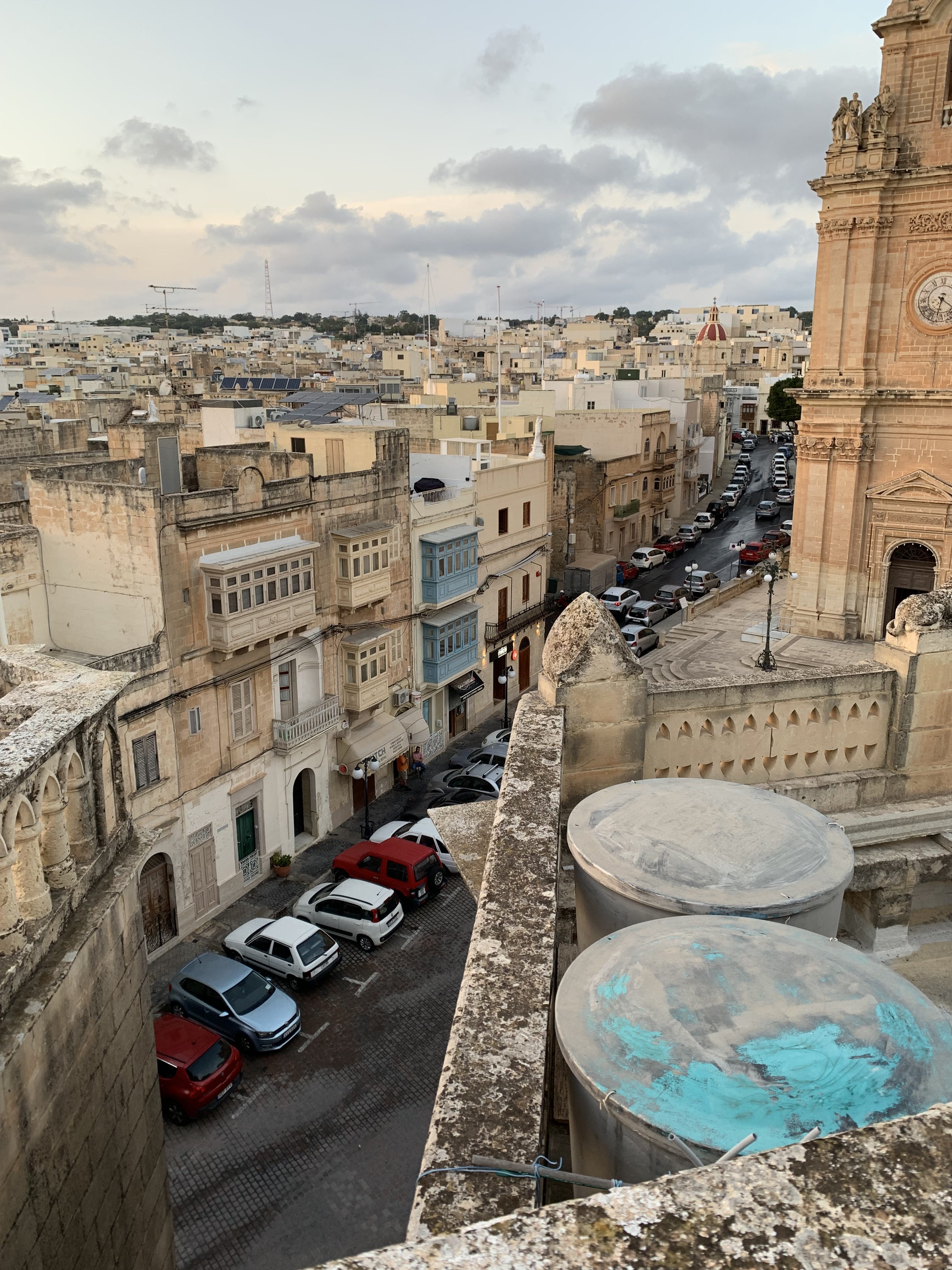
The rain has cleared and though grey clouds shadow the warm limestone of Catholic St. Helen’s, the more distant neighbourhoods of Birkirkana glow under a tentative robin-egg sky. The square is returning to life. White-haired heads smoke from open windows and in doorways amazed hands point out puddles. Outside this city such a sudden rain would leave dry fields covered with unexpected crotchets of white and red flowers, but here there’s damp heat only.

*

When I returned to Malta I was surprised how quickly much of what I had forgotten became ordinary. Not the language’s musicality—that wonder never fades. The indifference of drivers, I mean, spiced food, or, to take another example, the way people feel compelled to speak of the weather. This is more fascinating than gossiping about Priests. As a child I thought Priests wearing black cassocks looked like maids from long ago but then I thought the weather dull. In a country of little rain and many Priests such obsessions struck me, on my return, as quaint—thrilling—for only a moment, before becoming invisible. It is surprising what you get used to not noticing.

The rain gone, the wind quickens; the city groans like Lazarus. I don’t know what that makes me. I’m staring down on endless dudgeon instants. Stifling petrichor rises from the street to settle on the roof terrace. I step back from the balustrade to light a cigarette. Male blue rock thrushes with flame underbellies rest on humming air-conditioners—the birds sing their long song and are good company. I laugh. The birds fly toward St. Helen’s—they nest in the bell towers. Nine, ten, a big fat hen.

*

I prefer to live mindfully. This involves arranging with deliberation and thought your life so that you might be considerate of tomorrow. You mind yourself and, hopefully, others.

Let me give you an example. If you’re trying to be mindful, you won’t use the last of the cat food without replacing it in the cupboard from the store. You won’t put in the fridge a glass jar so crammed with olives or stuffed peppers you can’t close the lid—doing so ruins the oily food and the bamboo jar lid and the fridge shelf. If nevertheless you do such insignificant yet consequential things because you’re rushing, the next person at fridge is obliged to deal with the mess—they have to put off what they’re doing to go fetch cat food from the store too.

Living mindfully is graceful if you’re lucky and might bring a sense of peace until someone who doesn’t live that way moves in.

People who don’t live mindfully constitute a majority. I don’t want to single out anyone. I don’t believe this is unique to the English though it was there during my studies I first noticed thoughtlessness, and later, working in a university, also when I married. When we moved to New York it was the same—though they didn’t pretend politeness.

Being mindful sets you apart, leper-like.

*

It cannot have escaped your notice how with graceless ease most people assume they are extraordinary, entitled to call mindful people finicky or pedantic or, as in the case of my ex-wife, an arsehole.

She said to me, ‘Tobias,’ which is what she’d call me when mad (she called me much worse when livid), ‘Toby’ (trying to ingratiate herself), ‘everyone is born with an arsehole but that does not obligate them to be one.’

 ‘Do you mean “oblige them”? Can I get you more wine? It’s a fascinating and familiar creed. What’s the source?’

‘Facebook.’

Self-abnegation is a modern tragedy.

*

Maybe it was my abusive childhood that taught me the benefits of living mindfully. The itching in danger’s presence becomes intuitive. That’s some open wound that stays with you. Like a nursery rhyme—one, two, buckle my shoe: once learned its hard to shift.

Mindfulness is the gift that keeps giving. There are times I wish I was ordinary, able to turn down the perspective coming with alertness, but I’d rather remain aware of just how easily an ordinary life binds. Rather be cautious than embrace a heedlessness permitting such poison to worm deeper.

I figured being mindful was a way to not give in—don’t give your abusers any semblance of mastery. To be mindful then was to escape the bedroom unharmed.

Three, four, knock on the door. Don’t let them catch you at home.

*

When you live mindfully—adopt a calm thoughtfulness—you consider the implications of your thoughts as well as actions, such as when encountering a wonderfully sour and insipid example of Stupid (with a capital S) on Facebook.

I once had an account but I recovered after a few hours. It is the kind of space in which old people gather to vent their diseased spleens or grey matter or what have you without the burden of thinking—given it is mindful to critically consider what’s being presented, Facebook wasn’t for me. We didn’t get along.

We hardly dated if I’m honest.

*

I used to say to my ex that it never hurts to ask what it is the writer wishes to evoke.

You should ask—will my hips truly reduce four sizes with that snake oil? Are collagen capsules good for the habitats of orang-utan? Does this make my skin appear twenty-years younger? Will steroids get me laid? Are cat videos better than Malcolm X? Of course if you’re mindful the answer is no—incidentally, the moon is not hollow—but if you’re too busy rushing to the next endorphin fix to cross examine such statements  then you’re bordering on being mindless. Be assured. You are amongst the majority.    

Try saying this stuff out loud and see what happens.

*

Birkirkana is unreachably distant. Below a Priest talks to a woman in a wheelchair. She’s putting him straight. Two guys are sitting on damp seats outside a closed bar. A café has opened and the smell of grilled chicken adjourns wonder. Thrushes return to sing a lullaby.

The sky is primrose beautiful, heavy with evening’s promise. Street lights ignite. The purr that is people. Sweat flows down my back. Bare toes on rough balustrade. The priest looks up. He stumbles onto the woman in the wheelchair. I wonder which of them is disabled. Eleven, twelve, dig and delve.

*

It will strike you—as I have been repeatedly struck—that being an outsider to the madness of mainstream society fetches risks—denigration, divorce, five, six, pick up sticks—but also rewards such as a commensurate social quiet. Good for introverts.

You get hobbies done, like writing or baking or being kind to those who probably don’t deserve it but need it. You might continue to battle depression by declaring small day-light saving victories. Let real men get on with shooting things or riding their road bicycles on pavements while their trad wives burn books by Gloria Steinem. I always believed Jonathan Franzen to be a novelist but of late have come to admire this documentarian.

*

I met my future wife at university though she wasn’t the marrying kind. She later said she wished we hadn’t met. I wouldn’t disagree. We moved in together and immediately didn’t get along so we had kids. I tried mindlessness you see. 

*

The Priest’s pointing. He looks small but believes himself significant, drunk of eucharist. No-one points like a Catholic.

He’s joined by a Curate. Together they shout unheard sermons.

Thirteen, fourteen, maids a-courting.

*

It’s reasonable to wonder whether unthinking people serve a purpose. If unthinking is so widely dispersed—like Stupid—surely evolution selected it. Evolution is mindless. It abhors experts as readily as vacuums. Peer-review is not a seaside structure for the kiddies to enjoy. This is joke Stupid doesn’t get. Maybe unthinking people are easier to get into bed. They reproduce more than mindful people because the former pay no heed to what the latter fret about.

In England I walked university corridors smelling of incontinence and students decrying the books they had not read. I graduated, fell into an academic job.

The right to express yourself outweighs the need to know what you are talking about.

*

University manners were so ridiculously contrived I couldn’t not weep or laugh. Beyond gown in town people behaved equally odd. The street we lived was full of smiling liars and families scattering litter on our lawn. I got into trouble for laughing or crying at faculty meetings or in supermarkets—everyone seemed to be in a musical and I couldn’t fathom the choreography.

Getting married early and having kids might have lessened my emotional incontinence and aided my career by providing security had I only turned off my head. Conventional life, conventional behaviour, all that. The more unmindful I grew the more I was struck with the artificiality of society and if you stand back far enough from events the view from Golgotha is a hoot—the world appears all circus. I tried to behave like the normal people. Tried and tried. I didn’t find myself convincing.

*

I haven’t got to the point of my story but the end is inevitable—I have written this out beforehand. Maybe this is the gift of prophecy inherited from my grandmother.

*

When I first visited England I fell off Hellvellyn—it’s a little hill in the Lake District—and felt I’d never landed. Getting married and having kids was the equivalent of an airbag. I had a pension, why not the rest?

We socialised with other couples with kids. A lot of screaming. It seemed we suffered from the shared belief our children were as fascinating to others as they were to ourselves. I told people, boasted maybe, of first steps, crayon pictures, zoo trips. The complicity of friends—weren’t we all lying? I could not understand why they hung out with me. I didn’t get any pleasure hanging out with them. Yet we hung. When I asked, ‘Have you noticed—?’ they’d stare as if I were diseased. So I’d cry or laugh or talk about miles per gallon and sex positions and calm normality was restored.

It’s tasted beige.

*

I scrutinised my colleagues and friends, then my wife. I’d try to explain my sense of apartness. They began to extricate themselves, chose phones over faces. When we ate together people began to speak another language. Once, I mindfully observed myself making love with my wife and laughed at her bored expression—she messaged a colleague over my shoulder, smiling at some private joke.

People apologise without contrition and feign interest in conversations they are clearly bored by—have you noticed? People cut across other speakers to insert themselves in all manner of topics about which they have no experience—men opine about menstruation and child-rearing. Is it me or have you seen this? The music on the radio is all the same. People speak incessantly about streaming services not stars or planets. Food though brightly presented tastes grey so I eat more and more to find less and less goodness. Eggs shrink, cars grow. We breathe poison and complain we can’t swim the ocean. Blah blah blah sing the airwaves buy this mouthwash.

*

I got a job with the United Nations and we rented in New York and found we might have moved anywhere, to the middle of nowhere even; my ex loved the apparent glamour and the kids enjoyed real sirens.

When some comb-over prime minister was speaking at the UN I discovered I had no ability to lower the volume of my laughter until escorted by two security women from the translator’s box to a cool rest room. Two written warnings in a week was apparently unusual.

A fit of giggles isn’t tolerable and neither is crying expected from a translator. The UN takes itself pretty seriously—there are no variety shows at the UN despite appearances. I heard several people laugh as I shouted, ‘Let me tell you about his offshore accounts!’ when rendering into English from Spanish a speech concerning human rights. Seven, eight, lay them straight.

I told my wife, ‘No dictator is over six foot, have you noticed?’

 ‘Look at this cat video!’

I found a job in computer engineering at a university in Prague and though I didn’t speak the language I could read people.

We never made it.

*

A moment of inflection. Due to the cat food and the food storage and my wife’s irascibility at being removed from New York, on the flight out I said I believed without rancour that it was best we separated and she said—I predicted her words, wrote them down in a Nostradamus memorandum—that maybe we should work it out.

‘“Should” is an interesting choice and I wonder what precisely “it” is.’

She wasn’t able to say. And though this counted, I suppose, as a serious situation, and despite my intention to live and think mindfully, I giggled.

You see from all this I’d had one hell of time remaining mindful in a mindless world and I can only imagine that at the age of thirty-eight my body was attempting to give up its ghost.

‘There’s a brain condition,’ my wife said over coffee, ‘called PBA’—to health professionals like her there’s always a biological cause—‘rendering people’—not dolphins: there’s no evidence higher lifeforms are affected—‘unable to stop crying or laughing at inappropriate times.’

‘Appropriate is a social construct without merit outside the heads of Stupid people—why should church be sacrosanct?’

Let me tell you, laughing during a marriage-ending conversation over the Atlantic is not recommended.

She confessed my tendency to laugh at moments of high drama or sob post-orgasm had seemed merely a mood disorder that she hoped a good wife might cure.

‘I see now you don’t think I’m good enough.’

Apparently one is supposed to deny this rather than laugh.

The more serious she became the funnier it seemed and the louder I laughed and the more medical her language became. She said I was autistic and mentally ill and a psychopath—with each giggle she upped the ante of clinical accusations.

PBA is colloquially known as emotional incontinence. This is nothing to laugh about when you’re trying to talk about your marriage. Maybe people even without PBA—known as pseudobulbar—would have found amusement.

I told my wife we should definitely separate and she said, ‘Thank God,’  before fixing her hair and taking a selfie with the kids. It’s difficult to say who was more upset but I guess it might have been the cabin crew.

*

A small crowd looks up in fascinated horror—like a scene from a Biblical painting. Thrushes sing like a choir. People take pictures. In the distance a siren skips closer. People wave. The puddles have dried.

Priests are eager to insist they best know how to navigate a life they do not live. They’re always wanting to save you even if you don’t deserve to be saved. Fifteen, sixteen, maids in the kitchen.

From the street the balustrade looks ornate but up close its rough work, unfinished.

The Curate waves—maybe he’s summoning angels.

Seventeen, eighteen, maids in waiting.

*

I lasted as long at the UN as I did on social media. One thing led to a glass jar and cat biscuits and after we separated I went home to Malta and the empty family house.

In the attic behind a void I found all manner of belongings abandoned by my grandmother, including, made of dark wood, a cigar box containing a dozen letters to her dead husband: he died when she was forty-eight (he was thirteen years her senior).

My ex wants this house. She muddles the children’s names. Recommends medication.

The family house in Birkirkana is tall and mostly empty—it looks severe but is warm inside with wood beams and open fires. No wall without a book. Every room has family photographs of people I do not remember. I live alone, relying on my savings. I go for walks and watch people act in ways that make no sense. I enjoy the flowers in the fields and the way Priests pretend to be unafraid of love. I’m a fool, I’m told.

I read my grandmother’s letters—she was somehow undaunted by similar ridicule.

When I discovered my grandmother’s letters I laughed at her writing to a dead man.

In one she writes, ‘Grief is not a human disease to be cured. There is no healing in ignoring loss. Grief is a gift that deepens the soul—it is love’s watermark. Death as absolute extinction of the body’s mind cannot be disputed and yet he comes in dreams of coloured breath and we make love.’

I consider the thoughtless cruelties ordinary people inflict on outsiders and appreciate why my grandmother wished for another world. Pseudobulbar isn’t the disorder my ex says. It’s a way of managing a human world that makes no sense.

‘Face grief,’ my grandmother wrote. ‘Embrace its lessons.’

I will put my letter with my grandmother’s and hide them in the void. People expect a note.

From the roof I have laughed at the city and cried with thrushes. I have enjoyed rain and sun as evening stars announce themselves. I tried and I tried to understand. My grandmother’s letters are sadly beautiful and should be in a museum.

In her last letter she wrote, ‘When you live alone there is nobody to tell you when to stop eating or whether to sing.’

The density of priests on Malta defies expectation. There must be four of five stretching out their hands right now. Nineteen, twenty, my plate’s empty.

Tobias Ásgautr

Banner Image: by Margarita Kochneva from Pixabay – a bundle of old letters tied up with old string in a bow.

Page image: Birkirkana Rooftop provided by the author. A view of flat rooves and a road with cars parked, overhanging closed balconies and a church in the corner. There are cranes (the building type) in the background and tall aerials.

All Stories, Fantasy

The Maker of the Dead by Edward Lee

Adrian Prokhoroff stood before his newly bought, newly painted home, dark brown lining the façade of beige. He felt surprisingly little for it, though it would only cost him a few years of mortgage payments, and he had been initially excited to buy it for its bargain price. He had bought it cheaply in part to silly rumors of its being haunted. And they spoke of the Renaissance. He went in with his two daughters.

Continue reading “The Maker of the Dead by Edward Lee” →
All Stories, Editor Picks, Short Fiction

Week 607: Behold The Anti Hamlet

It has been long believed (and I think correctly) that Hamlet is the acme of roles for actors (nowadays the ladies are giving the melancholy one a go themselves). Actually that doesn’t matter much, because the character is so complicated that gender is secondary, and the shape of the production can be re-configured easily enough. Of course this is not a status of acclimation, many feel that Conan-Doyle’s Sherlock is the top of the mountain (I like Will’s Falstaff best myself)–so, far be it from me to put up too much of a fight against that idea. Yet let us go with Hamlet because I have arrived at the character I consider to be as far away from Hamlet in gravitas as Kim Jong Un is from the Nobel Peace Prize. The Anti-Hamlet. Who is no one other than James Robert Walton–better known (or unknown) as “Jim Bob” of The Waltons.

Continue reading “Week 607: Behold The Anti Hamlet” →
Fantasy, Horror

The Navvy’s Bargain by Matthew J. Richardson

‘I’m sorry,’ said the waiter. ‘Do I recognise you?’

‘Shouldn’t have thought so,’ replied Robert. ‘I imagine I have the same face as any other holiday canaller, one whose week has become a search for water points and a battle with the bilge pump.’

Robert looked across to where Sylvie was staring pursed-lipped into the pub’s log burner.

‘Brave,’ continued the waiter, who judging by the empty tables surrounding them was not overworked. ‘Navigating the Llangollen in January.’

Continue reading “The Navvy’s Bargain by Matthew J. Richardson” →
All Stories, Editor Picks, Short Fiction

Week 603: Once Upon A Fly Named Elam and the Bittersweet Return of Stream of Consciousness

As I write this, Elam, a weird looking Housefly the color of motor oil, but mostly of a golden sheen, has been tormenting me for the past half hour. Lucky for Elam that I’ve progressed into a philosophy that everything above a bedbug (notice the lack of a capital B there) is holy. Flies just make the cut, above the way they are as infants, yet below your basic Aphid (seems strange I should kill Flies as babies but not as adults–something Herod in that). Elam had no name until he just happened to rest where I left my eyeglasses. Greatly enlarged by one of my lenses, I noticed that one of his many eyes was droopy. It gave him a sinister mein. I do not have much more to say about the vexation called Elam; I do suspect he will still be bothering my screen as I write further, or at least until one of the Cats pinch off something more to his liking, but for those curious about his name, please refer to the clip at the bottom of this post.

This week our friend The Stream of Consciousness (SOC) makes an unasked for return. Now, this time SOC will be edited. No Molly Bloom goingonandonaboutwhatandwho flibberjittishness, nor weirdo spelling will appear after this particular sentence. No, this SOC will involve the current crash and thud of my little life as it unfolds on a dreary September morning that already has a touch of autumn in it. But not the good touch of crimson and gold (well outside the gold sheen of Elam), but the slightly fluey nudge you get when you cannot clear a nascent sore throat or rid yourself of the constant observation of skies of mildew and the certainty another war will break out today even though you are not up to fake caring for such matters because they never involve you. That of course leads to an astonishingly empty self admonishment. What about the new orphans? And then you hear Al Pacino’s voice from And Justice For All… berate you: “Dontcha’ care-yuh, dontcha’ care-yuh?”

Continue reading “Week 603: Once Upon A Fly Named Elam and the Bittersweet Return of Stream of Consciousness” →
All Stories, Editor Picks, General Fiction, Latest News, Short Fiction

Week 599: Trailer Park Sintennial and Fare Thee Well 500’s, Don’t Let the Screen Door Hit You on the Ass: And a Special List Battle Royale!

-One-

Here’s to a Place That Has More Kids Than Teeth

I lived in a trailer park for a little over a year, 1978 to 1979 b.c.e. It was in South Park, a neighborhood a few miles south (duh) of Seattle. The Dumwamish River flowed about a hundred yards from my metal abode, and the South Park Draw Bridge was about a block away. The world’s largest and long lastingest mud puddle, which never evaporated once while I lived there, stood between the park and the cleverly named South Park Tavern (I was only nineteen and looked fifteen, so I usually got kicked out about half the times I went in–until a cop saw me and gave me a minor consumption ticket. Bastard). There was also a popular 24hr eatery (the equally cleverly named South Park Diner) where I took most of my meals (great pulled pork sandwich and home fries). Ah, it was a fine trailer park–I paid, get this, seventy-five smackers a month for a small one bedroom trailer. And I felt oddly honored when the show South Park came on the air some twenty years down the line. Those were some strange and yet terrible times, but I’m glad I had them.

One oddity was I never met the landlord. Every first of the month I slipped a money order through the slot of “their” door. You see, I was told it was a husband and wife run outfit. I inherited the trailer from my brother who had moved and they said sure if I wanted to renew his lease–I guess no one cared to meet me. When I left I gave a month’s notice with the last rent money order and returned the key the same way. It had Christmas lights duct taped to it, which, of course, I left up. I really doubt such a situation can happen anymore–I don’t think so anyway, gotta feeling the area got the hell gentrified out of it. Anyway this is a brief little mention to the South Park Trailer Park (which I hope, along with the everlasting mud puddle, still exists, but I have my doubts and I refuse to check on it). Anyway, I just found out that the American Trailer Parks have been around since the 1920’s; so let us call this year the 100th, since no one else is staking a claim.

-Two-

I’ll be as Holy as You Let Me (and a Word Was Born)

I’ve begun a long forestalled project this year. I am reading the King James Bible cover to cover. I read one chapter of it a day, everyday (I know it will take a very long time, but there is nothing that dies harder than an old lady–so, with a nod to Kate Bush, I’m running up Calvary Hill, no problem). Today (not this today, but on the today I write this) I read Genesis 32. Jacob had just rassled the Lord in 31 and today he made up with his brother Esau. It is incredible the amount of jerks you meet in Genesis. Guys who instruct their wives to pretend to be their sisters to protect themselves; and there were women who told their husbands to bang their female slaves then called the resulting children their own (no word on the slaves’ feelings) . And then there was Onan, he of the “Blue Ball Express–which always pulls out on time”–God was not pleased with Onan–and I find myself wondering just how did the Lord “slew” him? Still, I find myself no longer as unfairly aligned with the darkness in my soul against the scriptures. Good things often happened to deficient people (such as Jacob, later Israel), because they were able to grow and change. A lot of the time preachers do not express the flux nature of Genesis, which I find detrimental to the message.

Now, I’ve begun the project (which I will complete unless smited or smoted or even smittened) not as an aim for heaven, but as a way of understanding something I’ve always taken aim at with fangs bared and claws extended. That is unfair of me, so the project is underway. So far I am certain that the Bible is a series of allegories, with occasional real persons and places added. You have to allow for that because, for instance, it is impossible for two persons to create an entire species. Moreover, the lifespans are ridiculous. But there is value in this book, along with the great Sermon on the Mount and poetry such as the Lord’s Prayer. Anyway, no one in the world would love to know God more than I–but there is no way I would ever want to be Tammy Faye Baker. If faced with that choice, I will quote Twain “All right then, I’ll go to hell.”

But there is a genuine comparison between the human behaviours of ago to those of now (and all before, between, and what is likely to come). The people of Sodom were so horrible that a man, Lot, who offered up his virgin daughters to star in a gang bang so he could be a good host to his guests (preventing their star turn in the proposed gang bang) is the only righteous man in town. This was followed by the conversion to sodium by Mrs. Lot; still, I can identify with Lot’s wife, I would have looked back, especially when told not to. I think her name should be Sodo-Chloe–for sodium chloride. Then there was the incest in the cave, which was proably shaped like a trailer.

Ha! Get it! Trailer Park humour in the Old Testament! Okay, fine whatever. But due to that event the Bible has allowed me to invent a new word, which I humbly introduce to the English Language:

Precetious (n) Telling a “new Joke” that has already been told or is currently going round the joke cycle.

My mobile home shaped cave for Lot and his daughters must be precetious. It is too obvious with all the slamming of poor people with associations of incest and trailer parks. Plus it is “cool” to ridicule the Bible. I am stepping back for that; I’m for humour and holy books, but I am done with the scornful approach. For example, George Carlin (who was a genius, but when he got older, frankly, he began to slip and was not much more evolved comically than Dice Clay) blamed the Bible for over-population. “Go forth and be fruitful.” Well, other than not explaining China or India, it was precetious (I love getting my word underlined with the uptight red squiggle) for certain. George, I think, got pretty used to all the butt-kissing the younger generations of comics laid on him. Hey, the same went for the monumentally unfunny Bob Hope and Milton Berle. The only comic I have ever seen who seemed unimpressed by his ascension to the holy was Richard Pryor. Even when he was terribly sick I could see the “fuck off” in his eyes. Eddie Murphy did a wonderful imitation of Richard’s act–but Richard was most extremely first–and Pryor, unchained, is my candidate for the funniest person ever.

Hmm, I seem to have lost my way, even though introducing my Bible Study and new word was the object of this “lesson” number two.

So let us moveth forward.

-Three-

The 599th Week That Was

So many wonderful things have occurred in weeks 500-599 that one is tempted to put on Green Day’s Good Riddance and get weepy about it all. But let us not get overly stupid. A number is a number and there is nothing more special about 599 than there is in any other. More good things is always number the numero uno desirement. (Maybe another new word?)

Ever erudite Geraint Jonathan returned Sunday with Shakespeare the Tease. You need not be an expert on the Bard to enjoy Geraint work (but some knowledge is helpful). Like the subject Geraint is a master of wit and poetic prose. And there are no truer words today than those writ four-hundred years ago.

Taking the Plunge by M.A.B. Lee led off the work week and forever reshaped the concept of the plumber’s helper. And although one might feel that there was a lot of this tale at the surface–oh no, there was and is so much more to it. Absolutely funny as hell and a great read first thing in a day. So well thought out and presented.

Tuesday brought us The Potato Man by Leigh-Anne Burley. Life can build up on you as well as in you. And in just a few words Leigh-Anne showed us the implosion of a human being. A truly sad event, but maybe it can help someone who sees him or herself on the sofa, hating the same sort of life.

Shoshauna Shy (who has a real cool name, if you ask me) returned with Iowa on Wednesday. I am similar in age to the kids in this tale and trust me she got the way the American world was for little kids in the sixties. The old days were not always the good ones, no matter what people tell you. It is also a personal story, like Leigh-Anne’s, with heartbreak, but being young, there was hope as well.

Joe Ducato presented The Duster on Thursday. This one mixes the fantastic with the grim often idiotic overly orderly society in which laws are followed because, well, because. You find yourself rooting for “The Duster” even though his task is a tall one that gets ever higher by the moment.

Right now I must confess to writing The Hydra of Lambistan. It is 5:27 A.M. and it is easy to confess to my sins prior to sunrise. Anyway, for those of you who read it and commented kindly, I greatly appreciate you. And for those of you who chose the old If You Cannot Say Anything Nice, Then Say Nothing at All bit–in my mind The Thumper Commandment, well. I guess I owe you my thanks as well (but not to a sizeable portion).

Anyway, here’s a reminder to please do things you are not likely to do and further thanks for those of you who do such good deeds without being prodded by one of those giant wooden forks you used to see on dining room walls in the 1970s.

And farewell to the 500’s. It requires not a doctorate to figure out that it takes about two years to do a hundred, so I hope you remember to return next week when Hugh yanks the 600’s, doubtlessly screaming, spitting, shitting and kicking, into the world for, as the Beatles once put it, a damn good wacking (metaphorically of course, for LS deplores violence on numbers).

Extra Note

This paragraph is being added a few days after I had scheduled the article, please forgive me if it comes off a bit choppy. But I feel I should make special mention for Dolly Parton, who died yesterday. For me there are three famous people I have always believed I will be extra sad about when they go: Carol Burnett, Loretta Lynn and Dolly Parton. They all have/had a special quality of friendly respect that cannot be faked. Carol is still with us and I hope she makes a hundred, but, like with Loretta before, I must bid farewell to the unlikely yet wonderful lady from the south. Dolly and Loretta Lynn were quite special yet utterly different although they came from similar backgrounds. Below is a clip of my favorite Dolly song.

The next day…I want all the Cool Famous People to please stop dying for a little while. Tim Curry was awfully cool and like with Dolly, his passing leaves a sadness.

Rocky Horror is immortal, but this wasn’t bad either:

-Four-

Grammar Stuff

Word I vow to stop misspelling: Here I’ve decided to add grammar mistakes to the ongoing list. This time out fewer versus less is the subject. I keep forgetting they are not the same, that “fewer” means a decrease in the actual, knowable number while “less” refers to uncountable mass numbers, like traffic and such. It is one of those mistakes that most of us make–or at least whatever group it is that includes yours truly.

Bi-word of the bi-week: Collywobbles (n) “whimsical word for butterflies in the stomach”

Hated Word of the Bi-Week: “Icon/iconic.” I have had enough of it. Please stop using it. Such laziness unless used ironically or in dialogue.

-Five-

List Battle Royale

The list this bi-week is different from the norm. First of all it is neither one to ten nor an A to Z offering, it is a list of seven, each item representing a day of the week. My idea is to present a Battle Royale, that wrestling gimmick in which a bunch of steroid-infused bozos hit the ring and go at it until the one guy the promoter says will be the winner remains. This battle involves songs that represent days of the week and will end with a clip of the pre-ordained winner.

The Combatants:

Monday: Come Monday Jimmy Buffet

Tuesday: Tuesday Afternoon Moody Blues

Wednesday: Goodbye Ruby Tuesday The Stones because I cannot think of a Wednesday song and have enough integrity not to google for one

Th: Thursday’s Child Bowie

Friday: Friday on My Mind Easybeats

Sat: Saturday Night’s All right For Fighting E.J. (my band did that one, unbelievable time signature)

Sun: Sunday Morning Sidewalk Kris Kristofferson

The Action:

“Hello folks, Irene the Idler here to call the action of the Great Song of the Day Battle ROY-Al. All seven have entered the squared circle, though Sunday appears to be monumentally intoxicated as Lindsay Lohan. He has staggered off to a corner and appears to be trying to roll a cigarette.

“There’s the ring of the bell. And it is clear that the Moodies and the Stones hooked up to form an allegiance. They have jumped Bowie and Buffet and have excused both from the big dance early. But neither went out first because the Easybeats understood that they did not belong in the same ring with the others and committed the Battle ROY-AL version of suicided by grabbing a handful of its own long hair and yanking itself over the top ring while the opening bell was still ringing.

“This leaves the Moodies, Stones, Sir Elton and Kris K, who appears to have passed out in his corner. Now folks are there two more duplicitous people in music than Mick Jagger and Elton John? Everyone knows the answer to that save for the Moody Blues. And out the first B-list super group goes after a from behind double drop kick from Mick and Reggie.

“The problem with duplicity and evil alliances is that such things must come to a head when all the true competition has been eliminated by unholy teamwork–It appears that both Mick and Elton had made a pre-alliance with Kris, but guess who was feigning drunkenness? And first there goes Elton then Mick (who is yanked clear by the arm of Johnny Cash), as Willie Nelson distracts the ref. It’s as clever as when Kris turned around on three when dueling Jack Elam in the Billy the Kid movie—Ring the bell, and behold the winner who is—

Jesus Christ, it’s getting to be like the obits page around here: Anyway and in memory of Frank Beard (1949-2026)–Stop dying already

And I was just thinking of her when she died this morning. This one hurts personally, for she was always known in my life for her positve energy. Bigger than life, a female Freddie Mercury to me

Leila

Fantasy, Humour, Short Fiction

The Oz Solution by Leila Allison

-1-

The Lernaean Hydra of Greek mythology has no set number of heads. Whatever the word in ancient Greek meaning “a buttload” applies to the noggin total of the belligerent Sea Monster, whose dispatch was the Second Labor of Hercules. But the previously Romanized version of the Hydra that recently arrived in Saragun Springs has just four heads–Vicki Beckious, Nikki Nolteious, The Situationious and Zippy-the-Pinheadious–but considering that they tend to talk at the same time, four is enough.

Continue reading “The Oz Solution by Leila Allison” →
All Stories, Editor Picks, General Fiction, Short Fiction

Week 595: Who’s On Your Wall and a New Feature

I went to high school with a girl named Michelle “Mick” Kleinschmidt. Mick looked as far removed from Kleinschmidtiness as you can imagine. Her father was an American of German ancestry and her mother (whom Mick strongly resembled) was a Filipina. Mick’s parents met and were married in Manila. He was in the Navy and brought Mrs. K to live in the United States. Bremerton, Washington is a Navy town, and after Mick’s father was honorably discharged he landed a job at the Puget Sound Naval Shipyard. This is very common in this part of the world and continues to happen to this very day. (For the first time ever, while I worked on base, I met a female Ensign who brought her Filipino husband home to America.)

Continue reading “Week 595: Who’s On Your Wall and a New Feature” →