Brief Introduction
Hugh graciously gave me three weeks off from this task. His latest inspired me to create today’s post .
A Brief History of Art Criticism
According to an ancient scroll in my possession, a splintered human-like skull of an ungodly age, found in a French cave, was none other than that of the art world’s first critic, Ug-Pierre. Ug-Pierre had shared his thoughts on the quality of Ug-Jean Luc’s (he being the first temperamental artiste) cave painting Mob, Antelope and Spears. In the challenged lingo of the prehistoric French, Ug-Pierre had opined that Ug-Jean’s effort made no use of the prehensile thumb, lacked proto-humanity and that the last hunter looked more like a pile of mammoth dung than a cave dweller. Since murder was still legal at that time, one has to wonder if Ug-Pierre was suicidal or just an uncommonly stupid cave dweller.
Fast forward several millennia, and we meet Arduth Rameses-Bey, who went to Pharaoh and claimed he could secure his highness’ legacy by building a bigger, better Sphinx. After emptying the treasury and relieving the population of thousands of its strongest members, the project was accomplished twenty years later. Unfortunately, at the grand opening, the most favored of the hundreds of Mrs. Pharaohs said, loudly, and to anyone who’d listen, that it looked more like a sphincter* than a Sphinx–and the only way to fix that was through a human sacrifice. Well, of course, someone had to die, and since that particular Mrs. Pharaoh was better connected, old Arduth Rameses-Bey (whom the aging Pharaoh owed money) was selected for the honor. Sadly, a small comet appeared and detonated over the crowd and the bigger, better Sphinx, obliterating all from history, save for the account in the ancient scroll in my possession.
(*Why yes, the ancient Egyption word was the same as ours. Hardly a coincidence on the level of the sun and moon appearing the same size because the sun is four-hundred times larger, yet four-hundred times farther away–but it rates.)
You’d be amazed by the stuff I have on my desk. Right now the only surviving entry from the hitherto unknown Shakespeare diary lies next to my Chromebook.
23 April 1601
“Dark regret hath cast a shadow on mine soul. Out offending whimsy! that caused me to teach Second Best Anne to read: ‘Wot is this “to be nor not to be” tripe, Will. Why can’t you be plain spoken like that Ben Jonson?’”
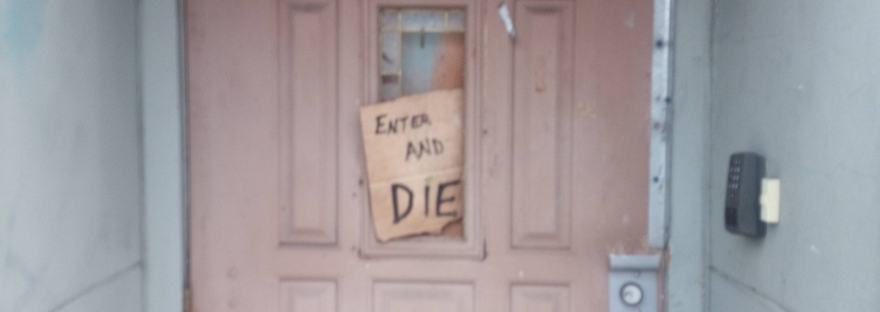
The cliche is true: “Everyone’s a critic.” But critics don’t need to be trolls. And yet some are downright nasty. The late Harold Bloom was a well respected literary critic, but the way he went to town on Stephen King after King’s inclusion in a secret writer society of some fancy stripe was flat out vicious. I used to never think much about critics, because I’ve never been the object of such in print. But nowadays, I realize the awful power of being in a place (however humble) where my word counts for something, as a yay or nay regarding the works of others. I’ve also discovered that the only thing worse than getting a rejection is sending one. I feel like I enter a room, uninvited, where someone is whistling and smiling, while I tick off the seconds before the person sees me and I say something that ends all innocent happiness.
Then again it might either concern you or confirm a suspicion to know that this so-called evaluator of other writers’ work just lit the wrong end of her cigarette and is struggling to drink coffee due to the recent installation of a device in her mouth designed to ease TMJ. Oh, no, with me submissions are not evaluated in a paneled study like those you see in movies–in this case think of a dimly lit room where the cats take turns yarking on the carpet. Still, I am certain that things are classier at both my colleagues’ work spaces.
A Brief Epiphany of the Soul
Wow! That feels better! Confession, however insincere, is good for the soul! Now I can get on with rejecting folks with the spotless heart of a sociopath! Thank you for listening!
Now For the Object of the Post
Yet it remains better to salute hard won success than it is to dwell on our own little personality issues, or say shitty stuff about the work of other people in public; so let us get on with this week’s recap of top notch tales.
This week’s authorship has a combined total of five site appearances. Yes, all the writers this week made his/her LS debut.
Victor Kreuiter opened the week with Family and Friends. This is as fine a story set on Death Row as I’ve ever read. The focus of the piece is brilliant; it proves there is much of the unexpected to still be expressed in the time honored tale of a condemned soul.
Natasha Dalley made her site debut with Suffocating Half Truths. We see a lot of pieces that attempt what Natasha accomplished beautifully. Stories that present a possibly imagined person that intrudes on a “real” person’s mind; a shadow personality who is real enough for the one who experiences, in this case, her.
Tripp Watson’s ironically titled The Devil in Detail is most definitely a case of OCD gone awry–to put it gently. What happens in the basement stays in the basement until the coast is clear. Evil fun.
Thursday saw the first appearance of Grace Larson on the site. Three Headed Monster is something that anyone who has a soul can relate to. It is the right way to present the affection we have for those much loved creatures in our lives who have horribly short life spans. Grace is young and talented, and a much better writer at her age than I was. I should hate her a little for that–instead I am grateful that the future of storytelling is in good hands.
Dead Socks Do Count by Salini Vineeth closed the classy week. This is a knowing look into the minds of children. Not all writers are able to carry the actual perceptions of childhood into adulthood. Most usually relate the current feelings they have toward an old situation–yet Salini nailed the way kids really are. Quirky and funny, I hope that everyone reading has had a peek under the lid–so to speak.
There we are, our five new authors. Let’s give each one the praise that is well earned. For maybe that will encourage each one to come back as well and often.
I close on yet another musical note, inspired by Hugh’s latest wrap, courtesy of my Unsteady Jukebox. My grandmother was a big fan of girl groups of the sixties. The recent passings of Ronnie Spector and Rosa Lee Hawkins of the Dixie Cups has put me in a nostalgic mood for those melodic ladies of yore. In closing I present my top nine girl group songs of a time that managed to get along without me. Naturally, a tenth spot is left open for suggestions.
- Soldier Boy Shirelles
- Walking in the Rain Ronettes
- People Say Dixie Cups
- My Boyfriend’s Back Angels
- The Happening Supremes
- He’s So Fine Chiffons
- Heat Wave Martha and the Vandellas
- Foolish Little Girl Shirelles
- Be My Baby Ronettes
Leila