Editor Picks, General Fiction, Short Fiction

Week 571: Andy Fought the Law, and, Well, Andy Won

Andy

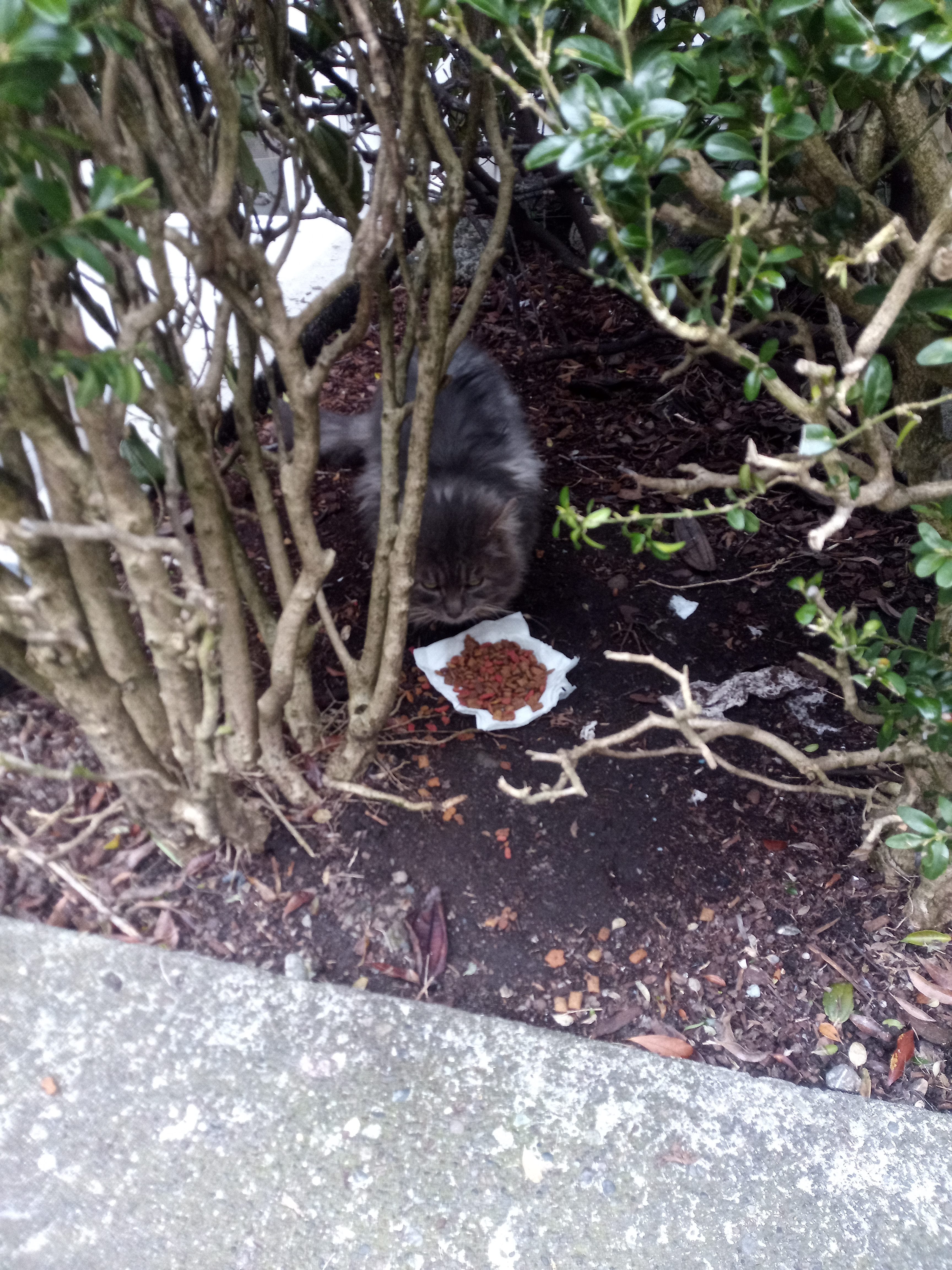
Since late 2017 I have been feeding a Feral Cat named Andy Hisster (his image above, circa 2019). Simple math tells me that Andy, full-sized upon my meeting him, must be close to ten years old, which is a good age for a housecat and flat out Methuselah for a wild boy. And make no mistake, Andy is a wild wild wild one.

Continue reading “Week 571: Andy Fought the Law, and, Well, Andy Won”
General Fiction, Short Fiction

A Telephone Call by Stephen Silvester

In a tall narrow house by the sea lived three women of mature years, comfortably or uncomfortably settled in their maturity. The house belonged to Agatha, who had lived in it for the greater part of her life, which she never failed to mention whenever the topic came up in conversation. ‘And I shall die in it,’ she would add with grim satisfaction. ‘Don’t be so morbid,’ Marjorie responded every time. Marjorie was a widow, not so much merry, as relentlessly cheerful. After the deaths of Agatha’s parents, within a few months of each other – whether from loyalty or cluelessness their daughter could never make up her mind – she felt the house to be an echo chamber of her thoughts and memories, and so placed an advertisement for potential cohabitees in a magazine for ladies, and ended up with Marjorie and Dorothy, a retired teacher of geography. Marjorie occupied the front room on the first floor, but she was rarely in it, except to sleep and read a little before doing so, preferring to spend the greater part of the daylight hours walking briskly, every day and in all weathers. Dorothy, on the other hand, rarely left her room on the second floor, where she sat scanning the horizon with her telescope. Agatha, who for some reason couldn’t stand the sight of the sea, was happy to stay in her room at the back on the first floor. The three women got on well enough. They shared a living room on the ground floor, at the front of the house, where Agatha sat with her back to the window, pointedly so.  

One morning, when it was Marjorie’s turn to make the morning coffee, Agatha stomped into the kitchen and said ‘You’re wanted on the telephone.’ It was an accusation. The telephone. They shared the rental; it was a good thing, they had agreed, to have one in case of emergency. None of them used it, ever. There was no one to call.

When Marjorie returned to the living room, the other two threw covert glances in her direction, not wishing to display any curiosity, but the synchronous return of coffee cups to saucers gave them away.

‘Yours is over there,’ said Agatha, nodding towards the occasional table next to Marjorie’s chair. ‘It’ll be cold by now.’

Marjorie sat down, reached for her coffee and downed it in one. ‘It’s fine,’ she said. ‘Thank you.’ Agatha interpreted this in her own special way.

‘Well, well, well,’ said Marjorie a matter of seconds later, to no one in particular, though she wasn’t in the habit of talking to herself. ‘He’s taken his time.’

‘Who’s taken his time?’ Agatha pounced irritably. ‘To do what?’

‘Raymond. It must be …’ – Marjorie made a none-too-quick calculation and concluded incredulously – ‘… more than forty-one years since I last saw him.’ She remembered Agatha’s supplementary question. ‘To get in touch.’

‘You’re right. That certainly is quite a while,’ Agatha responded drily. Dorothy, who was following the exchange as unobtrusively as possible, had not previously suspected Agatha of having a sense of humour. ‘And who might’ – Agatha contrived a tiny stagey hesitation as if the name were already fading – ‘Raymond be?’

‘My sweetheart.’ Dorothy could not contain a quiet drawn-out ‘Aah!’ ‘Well, not exactly. I was very fond of him, and he was crazy about me. Perhaps he was just crazy, in fact,’ she added with a nostalgic chuckle. ‘Wanted to marry me, but …’

‘But what?’ Agatha and Dorothy asked simultaneously, with different tones and intentions.

‘My parents didn’t approve. Raymond sang and played the ukulele and the accordion and worked at Butlins. They thought him unsuitable for their daughter.’ A pause for reflection. ‘He always made me laugh. He was a charmer. But unsuitable. So I married Kenneth. In 1950. He was in insurance and in the City, which my parents thought had a more respectable image. I suppose it did. It was a respectable marriage. It was all right.’

‘Were there …’ Dorothy began, then tried again. ‘Did you have children?’

‘No, it didn’t turn out that way. It wasn’t that he had anything against them. In fact he was always very active with the scouts. It was just the practical business of making them. He wasn’t very keen on that sort of thing. Preferred a book at bedtime. “Tales of derring-do,” he called them. But anyway, for better or for worse, we rubbed along together, until two years ago.’

‘That’s when …?’ prompted Dorothy.

‘Yes. After thirty-eight years of marriage. I was wondering what the anniversary between silver and golden was called, but by then it was too late, and in any case Kenneth never remembered any of them until after we received cards, and they stopped after my mother died and my father lost his memory and there was no one left to …’

‘How did he …? I’m sorry, I mean what was the …?’

‘A strangulated hernia. From lifting a lawnmower, a motor mower with a nearly full tank. Don’t ask why. I never did. To prove something, perhaps.’

‘Men,’ said Agatha. ‘Typical.’

‘We never know,’ Dorothy remonstrated, ‘why anybody does anything.’

Marjorie understood her imperfectly, not knowing whether Dorothy was talking about the choice of husband, the endurance of the marriage, or the banality of Kenneth’s death, but felt a general sympathy in her. She had sensed this for the first time when, coming out of the bathroom on the second floor, she had seen Dorothy through her open door, engaged in her survey of the horizon, and had dared go in and interrupt. She walked quietly, but not silently, to Dorothy’s side. Dorothy looked up and smiled.

‘You must find it very peaceful.’

‘Yes. Though it would be nice to see a few little puffs of smoke now and then, as in the old days. Now monsters – juggernauts, more appropriately – move inexorably from left to right – or from right to left – as a statement, a stately and indifferent statement, of their existence. But there we are. One lives in hope. A little puff, a sign of life on a human scale, would make one’s day.’

‘How far can you see? Can you see the Atlantic?’

‘In my imagination. I would have to move past the English Channel and the Celtic Sea first. Even with something more powerful than this’ – she patted the telescope affectionately – ‘the horizon would still be only ten miles away. Can’t see over the curve, you see. And I’m not sure I’d want to. This is enough. Better than the view from my little flat in Highbury. In fact, infinitely better, except that one can’t see the infinite from here either.’

‘So you just watch the world go by?’

‘Yes. A little bit of it. The rest, as I suggested, will have to exist in my imagination.’

‘But you taught geography … Why not really travel, to see the world for yourself?’

‘Travelling involves other people. I have always felt uncomfortable when I am in close proximity to them. I don’t understand why, but that’s the way it is. I suppose that’s one of the reasons I have always lived alone. The idea of somebody else in my space, touching my things, disturbs me. It’s different here, we keep ourselves to ourselves. Most of the time.’

‘But you must have had some sort of social life, I mean colleagues, friends …’ Marjorie was innately, unshakably, disposed to the bright side.

‘Hardly interchangeable,’ said Dorothy. ‘I attended gatherings at work only when my absence would have caused a problem, then left as soon as might be considered acceptable.’

‘Friends, then,’ Marjorie pursued, unable to stop herself, and at once wished she hadn’t, sensing she was pushing too far,

Dorothy considered this, looking into Marjorie’s anxious eyes and then beyond them towards something infinitely distant. ‘I had a friend once. I thought we were … close, but of course we couldn’t be. Life sometimes rushes impetuously down a cul-de-sac, then backs up and goes on. Everything must come to an end.’

Marjorie was silent for a moment, then, as if to check that she had understood what she had heard, said in a small voice, as if to herself, ‘So you can never travel except through your telescope and your imagination?’

Dorothy smiled. ‘You will probably think that cruel, but I’m strangely satisfied with my life. No, not strangely at all. Quietly.’

‘So what did this … Raymond want?’ Agatha was still irked by the presumptuousness of the telephone call. ‘To reminisce over old times that were hardly any time at all? And, more importantly, how did he find you after forty-one years?’

‘Through Mrs Bubb. She was my next door neighbour. I wrote to her as soon as I arrived here, to let her know my address. Just in case. In case of what, I don’t know. I only ever received bills and statements and I’d tidied all that stuff up before I left. And when we had the telephone put in, I wrote again to let her know the number. To be complete. She sent me a lovely little note saying she hoped I’d settled in and was enjoying the sea air. Beautiful handwriting she has. I never knew. Well, there was no occasion to see it before.’

‘And what brought Raymond to Mrs …?’

‘Bubb. He saw the funeral notice in the paper. I don’t know how. Said he didn’t want to intrude on my grief so soon after, so he waited. Delicate, I thought. Sensitive. Never used to hesitate over anything. Jump in with both boots, would Raymond. Maybe this time he was scared. Anyway, he waited too long. He found my old address somehow and went there, to find that I was gone. I can’t imagine how he felt. Or rather, I can. Mrs Bubb saw him there, standing on the front path, staring at the empty house. She took pity on him, believed his story at once, and trusted him with my new address. She didn’t know about the telephone then. He said he’s thought about writing, but he’d never been much of a one for letters. In fact, I don’t think I ever knew him to write anything. What he meant by thinking about writing I don’t know. He was put out of his misery when Mrs Bubb passed on the telephone number. He’d given her his, just in case. Just in case again.’

‘And the end result of all this fascinating toing and froing?’

‘He wants to see me. He’s thinking of coming down here, but he needs to know that he’ll be welcome. I said I’d think about it.’

‘That’s good. It’ll give you something to occupy you. You’re restless. You can’t stand still. Always on the go. I’ve often thought that if you stopped for a moment you would seize up. Or think.’           

Marjorie was determined not to rise to the bait, and diverted the exchange in a direction she knew would annoy. ‘It’s being so busy as what keeps me cheerful. Do you remember Mona Lott?’      

‘Oh yes,’ volunteered Dorothy. ‘On the wireless. ITMA. It’s That Man Again. Very … jolly. Enlivening. Though I must confess I didn’t always understand it. Topical references, I suppose. But I seem to remember it was being cheerful rather than busy that did the trick.’

‘I listened to it once,’ said Agatha. ‘That was more than enough. Pandered to the lowest senses of humour.’

‘Well, it made me chuckle,’ said Marjorie.

There was quiet for a moment as the three women mulled over their preoccupations, but Agatha was not one to let things settle.

‘So an ancient sweetheart appears from nowhere and suddenly you are all a-flutter.’ It wasn’t quite clear whether this was an assessment or a question. Marjorie didn’t react immediately. Instead she considered Agatha’s life; it seemed to involve nothing much more than concerning herself with the maintenance of the house and the provision of day-to-day necessities, always turning inwards, towards the town centre (‘I never see you on the front. It can be so refreshing, bracing,’ Marjorie had remarked to her once and received only a cold stare and silence in reply), retiring after the evening meal to her first floor room at the back. What she did there was unknown.

‘Have you never had a sweetheart?’ Marjorie asked calmly. Agatha’s face reacted as if to a slap.             

‘No.’ A staccato, definitive reply. ‘Never felt the need for one. Didn’t see the point. Oh, Cyril introduced me to his friends, and once or twice we went dancing, but they were silly boys. Not a patch on Cyril.

‘Cyril?’

‘My older brother. Born in 1925 and dead in 1944. His ship went down in Lyme Bay. All those exotic spots in the world where men can blow one another up, and he has to die so near to home.’     

‘I’m sorry,’ said Marjorie.

‘No point in being sorry. That’s what wars do. Kill people. But that wasn’t enough for the sea. Oh no, it had to take my little brother, too. In the first year of peace. A sunny day at the seaside. Bognor, it was. He had one of his asthma attacks. There was nothing I could do, I wasn’t a very good swimmer. I saw him go down three times. He wasn’t quite fifteen. I’ve never been in the sea since. It’s full of dead people. Well, not quite full. They found Michael miles down the coast. I hate the sea. Can’t stand the sight of it. The sea is death.’ She paused for a moment. ‘The irony is that when my father took early retirement – he was something or other in the Civil Service and had commuted between Merstham and London every day of his working life – he decided that we should move to the coast. Here.’

Nothing more was said that day beyond the customary civilities at the table and other necessary or accidental occasions of contact. The following morning Marjorie served the coffee, even though it wasn’t her turn, confident that there would be no interruption; she had told Raymond not to contact her again before she had made a decision.

‘I intend to speak to Raymond today,’ she announced. ‘I’m inclined to say yes.’

Agatha shook her head slowly. It would disturb things, upset the fragile balance that still held.

Dorothy beamed. ‘Good for you. I think it’s a lovely idea.

Agatha said ‘It would be silly at your age. You don’t know anything about him.’

‘Yes I do,’ Marjorie retorted. ‘He’s eighteen and he loves me and he’s heartbroken, though he laughs it off with a song and a dance.’                                                                                                

‘Take your chance for happiness,’ said Dorothy.

They are both right in their different ways, thought Marjorie. Perhaps it would be for the best not to resuscitate the past. But on the other hand I’ll never know unless I see him.

Stephen Silvester

Image by Alexa from Pixabay An old rotary dial telephone in grey with gold trim.

All Stories, Crime/Mystery/Thriller, Short Fiction, Writing

Stuart by Hugh Cron – Adult Content.

Stuart died in prison.

That is wrong,

Stuart was killed in prison. He was stabbed with a blade between his ribs.

None of these sharpened toothbrushes or pieces of wood or shards of glass, an actual knife. The investigation is ongoing. Some poor dweeb will probably lose their pension over that.

Did Stuart deserve to be murdered? Opinions vary. Some would say he was a bad guy, others would say he did what he did to survive. I suppose it depends on their involvement with him.

Continue reading “Stuart by Hugh Cron – Adult Content.”
All Stories, General Fiction, Humour

Market Place by Hugh Cron – Adult Content

“Hey there pretty lady, lookin’ good!”

“Hi Chris, didn’t expect to see you here. Alone and on a school night!!”

“What the fuck, I needed a drink! And I really don’t give a shit about the job, so, so what if I go in half-mangled…What about you? Waiting for someone?”

Continue reading “Market Place by Hugh Cron – Adult Content”
Editor Picks, Short Fiction, Tom Sheehan Week

A Tribute to Tom Sheehan

An image of Tom Sheehan, author, on his tribute page. A gentleman in  a green T shirt sitting in a cosy-looking home in front of a laptop computer.

Today we present a small tribute to our late friend Tom Sheehan (1928-2025). Tom was a friend of our site since the early days and published an astonishing total of 228 stories with us, by far the highest sum in our eleven year existence. Below you will find links to five of his stories, which will shine a light on the man, who is someone who earned the right to be remembered long and well.

Continue reading “A Tribute to Tom Sheehan”
Editor Picks, General Fiction, Latest News, Short Fiction

Week 557: Magick and Fare Thee Well Sybil Fawlty

As I get deeper into my cronehood, this time of existence in which people either do not see me or pretend they have business elsewhere when the cowl slips, November has become my friend. The mocking young forms who strode about oh so hot to trot last summer are now buried under layers of linen and lycra and are having a hell of a hard time using their phones in the rain.

Continue reading “Week 557: Magick and Fare Thee Well Sybil Fawlty”
All Stories, Editor Picks, Latest News, Short Fiction

Week 553: Sunshine Squirrel v. Pulsar

Perstephanie

The young lady in the second image is “Peerless Perstephanie the Sunshine Squirrel of Twirl.” Her friends call her Percy. She holds the record for being the “spinniest” living creature known to Rodent-kind, and she is currently in training to break the record of fastest spinning object. (This is why she appears to be “shimmering”; or, perhaps, a shaky hand holding the phone contributed to the effect.)

Continue reading “Week 553: Sunshine Squirrel v. Pulsar”
All Stories, General Fiction

It’s a Little Bit Funny by Paul Kimm

That’s how my mum still says it. Her phrase for anything that’s either actually funny, just unusual, quite mundane, or even a slight bit different from how something might be otherwise. Every time I go back home to see her, and then my dad, I can pretty much guarantee she’ll say ‘it’s a little bit funny’ in regard to something or other, as she has done for years.

Continue reading “It’s a Little Bit Funny by Paul Kimm”
All Stories, Editor Picks, General Fiction, Short Fiction, Writing

Week 545: Writing the Boredom Blues

Boredom kills. Not just in stories but in life as well. When I was young I spoke of a distant future that would be enriched by callow memories of youth. For some reason it always involved sipping Jack while sitting in a rocking chair. Even then I knew that was bullshit. You can kill, maybe, an hour a week doing such, but you are still alive and require much more than forty year old stories to continue the experience. The young tend to shelve the old, even when the young are the old.

I am prone to boredom. We all are, but some much more than others, and I am too easily bored. Throughout life I have gone from one new obsession to another and, to date, I am the only one left standing. I am bedazzled with a subject for months then one day it is over. Rock collecting, astronomy and many other fiery enjoyments fell off my imagination, as did pressing wild flowers and, yes, the three week interest I had in the accordion.

That, however, is the way of children. When we become adults it is assumed that we will develop sticktoitiveness. Music has been in and out of my life for years, which makes it the Methuselah of my interests. I was keen for it from fifteen to forty then stopped listening, save for the jukebox in bars, for about ten years. It has come back only because I have given up on new music and I do not care what others think about that.

Writing has a strange place with me. It is immune to boredom but it has never been an obsession except when doing it. That is the difference, mainly the other stuff was heightened by my imagination of it, while writing has never had to pass the test. It is just there, something I can do (good and bad). But I didn’t take it seriously for a long time. John Boy Walton is to blame for that. On The Waltons it was clearly made that you must go to college to be a writer the same way you go to dental school to be a rapist, I mean dentist. It wasn’t until later that I finally learned that most people attend college to get drunk and have sex. John Boy lied.

Dorothy Parker stopped her schooling at age fourteen, probably the same for Shakespeare, and Capote didn’t finish high school. In fact the more I read the more I understood that writers are often smarter about life than are college students. You do not need to pay tuition to get drunk and have sex.

This was an eye opener.

To combat boredom I read at least three books at the same time (no, wiseass, not literally). I also have all kinds of stories and articles and even books of my own going at once. I counted and there’s over forty of them, but I only work on three at a time. I would have to not open anything new and write well into my hundreds to finish the stuff I have going now. That does not bother me. I still open new stuff. Changing constantly is useful against boredom. And so is humour, not the silly TV stuff, but actual almost organic humour that is found in the crash and thud of being.

Drugs and alcohol are never boring but it’s a shame they turn on you, how they wear out their welcome, but they are not wholly bad. I have always said “forget moderation.” That’s the same as telling your spouse that you are willing to love her/him to a responsible degree but no further. If I loved someone I would want it to be reckless and mad. Nilla wafer love affairs, I imagine, are boring. Yet they lead to fewer restraining orders.

Winning the battle against boredom is why writers tend to live long lives, nowadays, at any rate. Also, effective treatment against tuberculosis and syphilis has raised the mean death age for writers as well. Moreover, writers seldom drink themselves to death today, the way O. Henry did (who was found as good as dead in a hotel room with nine empty jugs of whisky under the bed). Oh, we drink just as much as ever, but evolution has toughened up our livers. Call me a bigot, but I do not think that a person can truly write about the darkness in the human race (Ann Frank the exception) without having had some experience in alcohol, ongoing or in the past. There’s a special feeling that comes from waking in bed with someone whose name you do not remember. That sort of thing opens a lot of mental doors.

Suicide, though spoke of often is not as rife among writers. It has been a long time since Plath, Woolf, Hemingway and John Kennedy Toole voluntarily checked out. Musicians, so it seems, have taken over that department. Mental illness and boredom make a lethal mixture. You cannot do much about the first but the second can be alleviated if you are willing to use whatever mental illness and/or addiction you have as a positive resource to learn from; do not hide it as a dark shame that you have let people tell you how to think about. But this comes with a risk, people have their own problems, yours had better be interesting.

I think that there is an extra allegory to be found in Hawthorne’s nearly two hundred year old story Young Goodman Brown. For those of you who have forgotten it, Goodman went into the forest surrounding Salem around the time of the witch trials and discovered that every last Puritan in the village, himself included, was at best a basic hypocrite while most were evil hypocrites. The allegory extends to writing; you go into the woods full of writers thinking some to be superhuman geniuses and come out with the hideous realization that they, like you, were/are insane slobs with dark secrets. The job is to realize we are all insane slobs and accept it. I, for one, am rather comforted when I read about the “shortcomings” of famous writers. Twain (another non-college goer) had a terrible temper, Capote, when drunk, was a vicious little bastard, Dickens had family troubles and I would not be surprised if it were discovered that Shakespeare was not a fella to trust alone with your wife (nor the wife with Will). It is just fine by me that all are human, it gives our temporary moments of godliness increased esteem in my eyes.

Hmmm, again this part appears that it will end like smashing into a tree with Ethan Fromme at the wheel. Even a fancy literary comment fails to make the sudden segue from the opening topic to the wonderful Week That Was smoother. Alas, we carry our crosses uphill and the best you can hope for is an ending similar to the one the repentant thief got from Jesus. Barabbas? Or maybe that was just a movie. Hmmm, even a biblical anecdote fails to decrease the jolt. Oh well. So brushing this mishmash of pseudo philosophical musings aside, it is now time to re-visit the six wonderful performers of this Week That Was. They are far from dull.

Dale Barrigar Williams appeared on the second Sunday of the month, as is his habit. He knows about drugs and booze (enough to quit them) and is extremely well educated, but he hasn’t let any of that get in the way of his humanity. This month in his Eliot Behind the Mask, Dale once again merges his humanity with his PhD and presents TS Eliot as a real person and not a mummified great of the past. This is a perfect example of going out into the woods with great writers and seeing one toss a smoke bomb!

Monday delivered Man With a Shopping Cart by Tom Bentley-Fisher. Poor William has an obsession with shopping carts. But soon enough they fill with hard, even brutal memories. The metaphor should be obvious but Tom enriches the tale with images both wonderful and frightening. You can’t fit this one into a box.

Tuesday brought a second story that fled expectations that built within it. The First Thing She Notice Disappear Was a Kangaroo by Michael Degnan leaves a great many questions for the reader to consider. Michael also presents a well written, believable POV for the seven-year-old MC.

Wednesday’s Tilda the Ice Maiden and her life in the tundra 1785 bce by Linclon Hayes, opens with a rare, once in a lifetime sentence; the sort of sentence all writers crave to create. And the lives up to its opening; it hooks you into a world of surprises, as you might deduce from looking at the title.

There is a fantastic moment in A Eulogy For Us by Darleine Abellard, that catches you off guard and lifts this much higher than other funeral tales. The entire work is top rate, but the summation of grief towards the end raises this one to a new level of excellence.

We closed the week with Everybody Prefers Iceberg Lettuce by Genevieve Goggin. You know an author has done well when she reminds you, in spirit, of another writer. Here I got Anita Loos in mind, who created hectic and entertaining Lorelei Lee (played by Marilyn Monroe in a film that had to water down some of the wilder stuff in Loos’ prose). A century lies between the two writers but this one has the same special elan.

Congratulations to the Ladies and Gentlemen of the week. They kept our minds active and carried us pleasantly into the future.

Yes, I Close With Yet Another List

Sometimes I wonder how it all began. When did I figure that list making was for me? I think the David Letterman Show reinforced my list making in the 80’s, but I was already doing such before I first saw his nightly Top Ten. I do not recall making lists as a child, but ever since I was around twenty I’ve been writing them. Could be I was abducted by aliens way back when and instilled with a desire to make lists for reasons as unexplainable as the “Sacred Mysteries” of the Christian church. Who’s to say?

Regardless of the inspiration, today’s list is dedicated to short story writers of yore who often produced works well worth remembering. This list has been up before, but it contained other items. Some are still famous, some are unfairly buried by time. As always, please add your own suggestion.

  • A Pair of Silk Stockings-Kate Chopin
  • The Tell Tale Heart-Edgar Allen Poe
  • Victoria-Ogden Nash
  • The Egg-Sherwood Anderson
  • Harrison Burgeron-Kurt Vonnegut Jr.
  • Jefty Turns Five-Harlan Ellison
  • A White Heron-Sarah Orne Jewett
  • The Killers-Ernest Hemingway
  • An Occurrence at Owl Creek Bridge-Ambrose Bierce
  • Leaving the Yellow House-Saul Bellow

Leila

This week a bluesy song from (incredibly) forty year ago

All Stories, Editor Picks, Latest News, Short Fiction

WEEK 543: The Struggle; the Week That Was; 2025 Playlist

The Struggle

I normally begin writing a weekly wrap with nothing in mind. I start hitting keys and wait for something to pop into my head, which usually happens by the end of the second sentence. As a general method it might be lacking, but for me it works out. But, alas, tonight, I am as empty as a campaign promise. I should have been at “go” two sentences back, yet I’m still a flatliner; but that’s all right, I thrive on pressure.

Continue reading “WEEK 543: The Struggle; the Week That Was; 2025 Playlist”