By and large, old age doesn’t suit poets. I’m not saying that, once they pick up their pensions, all of them start to regret that they didn’t crash and burn in their twenties, like Keats, Shelley & Co. Or that they start experimenting with monkey gland injections, like poor old Yeats. Nor that there aren’t quite a number of poets, like Seamas Heaney, who could keep the pot stirring through all the transitions of age (indeed, I know a couple of pensioner poets myself).
Continue reading “The Ex-Poet by Michael Bloor”Tag: writing
Sunday Whatever – Mushroom Searching by Zary Fekete
This is another example of the sort of submission that we receive that don’t actually fit with the site but the writing is too special for us to reject it. This is a bite sized piece from a new writer and we were all enchanted by it.
***
Mushroom Searching by Zary Fekete
These days there are many books, many pages, all promising, but the right way to begin is to ask grandmother. Which grandmother? Choose one. They are all correct and never lie. Nagyi or Nagyika or Mamikam. From Pest or Dunantul or the Alfold, they each have their secrets. They were all young once. Their routes led them from little country hamlets and acres of chipped Communist blocs, down through the decades, past wall after wall, papered with propaganda, each sign promising something just beyond reach, not quite true. But the mushroom recipe doesn’t lie. It just requires the right one.
Choose favorable weather. Just after a rain followed by a humid sun, hidden away in the shadows of the forest. Not a stir of breeze among the wet trunks. The only sound the drip drip of soaked leaves and the tiny scurrying of beetles and ants among the underbrush. Bring along a basket lined with embroidered cloth for collection and grandfather’s sharp knife for exploring beneath rotting logs, make sure you aren’t bitten by something waiting in the soaking darkness. Wear the right clothes. Tuck your tights into stockings and tie petticoats around knees, purposefully designating legs, so nothing can be caught in the grasping, greedy branches. Walk carefully. Hold hands. Pick a partner. Step where she stepped.
Watch the ground carefully. Remember the legend of the boy who wouldn’t share his bread while he walked with his friends through the woods. He had a full mouth every time they looked back at him, so he spit out each guilty mouthful. The bread-droppings left a trail. They transformed into mushrooms, and that’s why when you find one there are always more nearby.
Once your basket is full bring it to the village examiner. Some mushrooms are safe, but some carry poisonous secrets. Some promise succor but silently wound. Some sing sweet songs but echo with a hollow gong. All taste sweet and feathery on first bite, but some have dark pools in their past. Bring home the good ones, but throw the rest into the stream and watch them float away.
Finally, prepare your soup. Mix the mushrooms with the right broth. Thin-sliced for clear soup. Thick-chunked for heavy stew. The mushrooms will take on the flavor of their companions. In this way they make good neighbors. They don’t betray secrets. They keep what is given to them. They protect what is beneath them. The preserve the family lineage deep below the earth.
Sunday Whoever.
This week’s whoever has been a wonderfully quirky and enthusiastic supporter of the site for a long time now. We first published Doug Hawley in 2016 and he has been with us submitting, reading, commenting, and generally getting in the way since then. Have a look at his back catalogue.
Continue reading “Sunday Whoever.”
Week 438: Raised by Cartoons
The art form that had the biggest impact on my mind during childhood was TV cartoons. Yes, art form. And I will also say that cartoons were responsible for the stimulation of however much creativity I was endowed with.
Continue reading “Week 438: Raised by Cartoons”WEEK 435: Crows; Brilliance and a Fourth of July Salute to the UK
And the Brain Dead Shall Lead Them
If it weren’t for slogans and bumper-sticker philosophies, management would have very little to say at work meetings. Just the other day, at a meeting, I heard the slogan “Write What You Know” “shared” by a member of the “team” (as anyone who has worked at least one day in life, the preponderance of facetious quotation marks soon becomes obvious). I work in a government warehouse that delivers supplies procured from the “civilian sector” to various locations on base. Cases of toilet paper and flats of bottled water, that sort of stuff. There ain’t a whole lot of writing what I know in that field, yet it got said because it has taken its place among managerial verbal dingleberries such as “Wow, let me look into that and get back to you”–which, translated from management-speak, means “I do not care, and hell will grow petunias before I get back to you.”
Continue reading “WEEK 435: Crows; Brilliance and a Fourth of July Salute to the UK”Sunday Whoever.
We consider ourselves extremely fortunate at LS Towers to interact with so many interesting writers. One such who has been with us since 2018 when we published the first of her unusual and fascinating stories. If you haven’t had a look at her back catalogue do yourself a favour and visit L’Erin Ogle forthwith – but read the interview first!
Continue reading “Sunday Whoever.”WEEK 433: Feral Advice; It’s A Big World Afterall; A to Z of the Kitchen
Feral Advice
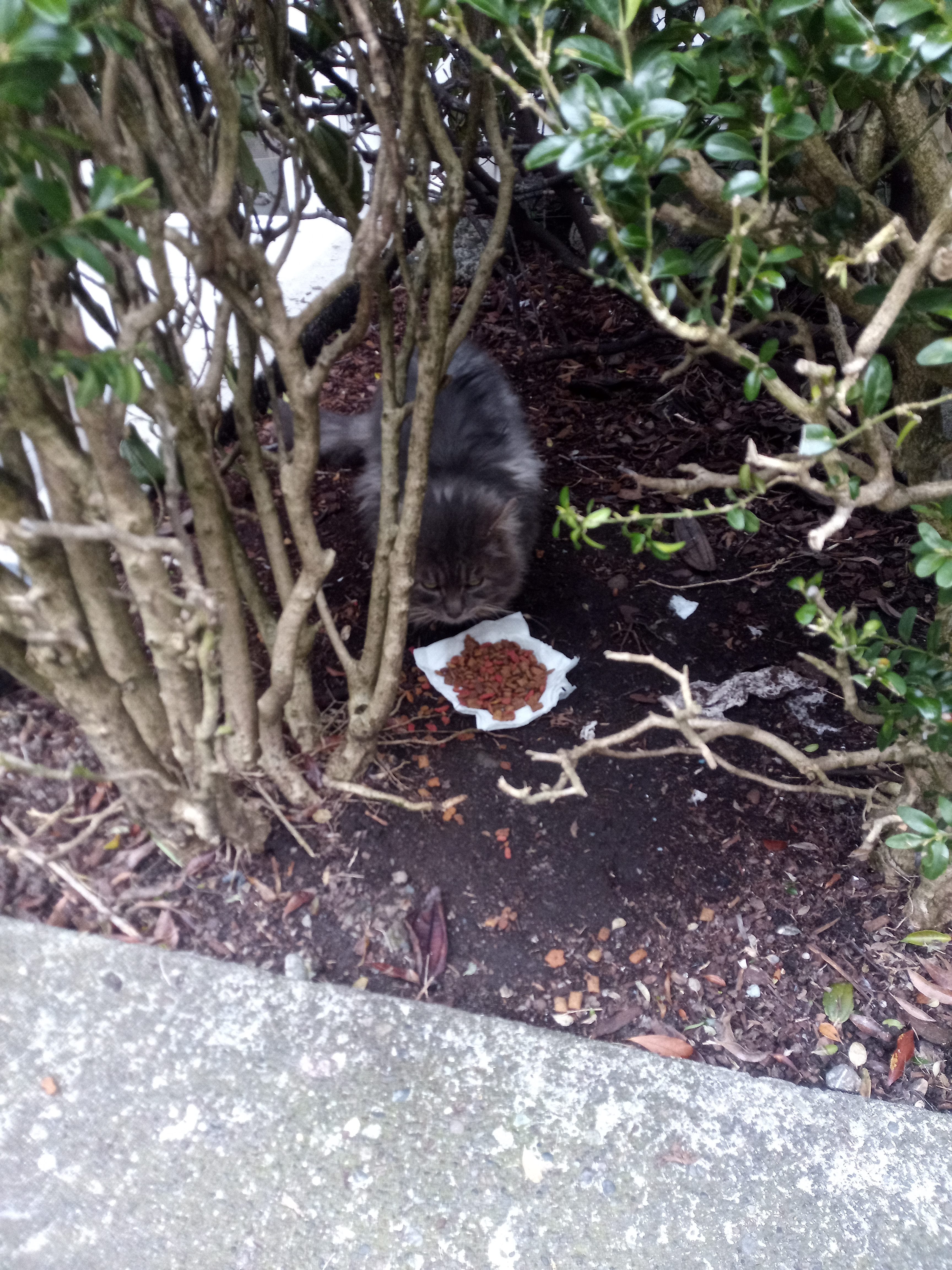
Come spring, Feral Tomcats, nature’s charming blighters, seek the bliss of temporary domesticity. Such is happening in my courtyard; or at least the attempt is being made. Both my Feral Tomcat friends, Andy and Alfie are doing well. But Alfie has been smacked with lovesickness.
Continue reading “WEEK 433: Feral Advice; It’s A Big World Afterall; A to Z of the Kitchen”Week 429: More Awful Truth; Five Human Works and Beware of the Tippleganger
More Awful Truth
When I was young and inexperienced in the fine art of self destruction, I believed that getting a book in print made you both famous and rich. Boiled down to its elemental flaw, this belief was based on the notion that writing a book good enough to land in the small library in Port Orchard, Washington (as unlikely a candidate to supplant The Great Library of Alexandria imaginable) must mean you are famous–ergo rich–for I assumed you could not be one without the other.
Continue reading “Week 429: More Awful Truth; Five Human Works and Beware of the Tippleganger”Auld Author – Fahrenheit 451 brought to us by Thurman Hart.
Though this is not a particularly Auld or unknown piece it is obvious that Thurman Hart feels passionate about this and it has had a profound effect and that surely qualifies for a place in this occasional feature.
Much of what Bradbury saw has come true–social media and disaffected youth. Yet let us hope that words will still be precious to some in the worlds to come.
***
The work that I’m afraid will be forgotten is Fahrenheit 451 by Ray Bradbury. This is, of course, a flight of insanity on my part. The book is a true classic and will always (it seems) find its way into various literature-based curricula. However, the true masterpiece of the work is overlooked, at least in my experience.
Fahrenheit is a dystopian work, set an undefined length into the future where fireman are employed to burn books, the implication being that they control dangerous ideas that books contain. The general population has been dumbed down, too interested in the parlor wall families – i.e., characters portrayed on wall-sized televisions – to even notice that they are being controlled. In fact, Mildred, the wife of the main character, Montag, attempts suicide when he tries to force her and her friends to feel and think by reading them poetry. Even people who understand what is happening are too afraid to fight back, as evidenced by Montag’s very literate supervisor, Beatty, who goads Montag into killing him because he can no longer live as a tool for this governmental control. There’s even an aspect of invasive technology via the mechanical dog that tracks Montag, and what is now called “fake news” where Montag listens to the report that he has been tracked down and killed.
This is the obvious masterpiece of Bradbury’s work: that he can look at his contemporary and near-historical events such as the red scares of the 1950s and the Nazi book burnings of the 1930s and 1940s and make them seem like they are about to happen all over again. Like the portrait by a master painter will have eyes that seem to follow the viewer as they move, Bradbury’s predictions of society seem as near-future today as they did when I first read them in the mid-1980s. In this, Bradbury is a champion of free thought and artistic expression, and it is a good and proper thing that he is studied for that reason.
But Fahrenheit is not merely this. Tucked away in the third section, entitled “Burning Bright” is a passage that deserves a canonical place next to Shakespear’s “What a piece of work is a man.” Montag has escaped from the city and made contact with a small group of rebels who exist outside of society in order to keep alive the memory of written works. The masterpiece is delivered by Granger, when he tells Montag:
“Everyone must leave something behind when he dies, my grandfather said. A child or a book or a painting or a house or a wall built or a pair of shoes made. Or a garden planted. Something your hand touched some way so your soul has somewhere to go when you die, and when people look at that tree or that flower you planted, you’re there. It doesn’t matter what you do, he said, so long as you change something from the way it was before you touched it into something that’s like you after you take your hands away. The difference between the man who just cuts lawns and a real gardener is in the touching, he said. The lawn-cutter might just as well not have been there at all; the gardener will be there a lifetime.”
When I first read those words, I was dumbfounded. It was if a veil had been lifted and someone had shown me a timeless truth of existence. I sat on the edge of my bed, amid the dryland cottonfields of West Texas, and tried to fit the entire sum of my fourteen years into those words. Then, as now, the full measure of those words eludes me. They are a moving goal that I can only aspire to hit. It is why I turn my hand towards excellence in all that I do. It is why I write. It is why I sing. It is why, every year, I plant a new garden so I can watch the sky and worry and wonder. I know one day I will be gone, but I know my soul will live on in the things I have touched and passed along to my family and my friends.
It is this passage, above all others, that moves Ray Bradbury from someone who writes stories into the realm of an author. Here, he doesn’t just string together words, sentences, and phrases. He builds an idea. He presents a philosophy. He gives us his ability to reach through the written page and touch us. Not just for a lifetime, but, I hope, for many lifetimes to come.
Thurman Hart
Image: Pixabay.com – an old metal goblet on a dark background with a quill pen and a book
Week 428: Spring Cleaning; the Week That Is; Ten Names For the Inhabitants in the Box Behind the Stairs
In Just Spring
The American Pacific Northwest is similar in climate to the UK. Both are just about as north as the other and both are close to an ocean. My home in the Puget Sound region is typical of the kind of weather found in such latitudes. We get twenty, sometimes thirty spring days spread over the course of four months. Seldom more than two in a row.
When it does come, everything gets all warm and cheery. People appear ready to spontaneously break out in song, smiles are unforced, and birds often garnish people with necklaces made from wildflowers, just like Snow White.
Continue reading “Week 428: Spring Cleaning; the Week That Is; Ten Names For the Inhabitants in the Box Behind the Stairs”