
 Pahuac rested his head on the sacrificial stone. He would have to go through this if he wanted to find his way back home. Why couldn’t he remember?

Pahuac rested his head on the sacrificial stone. He would have to go through this if he wanted to find his way back home. Why couldn’t he remember?

“Ahhh.” The palm reader sighed heavily. Such was his power that we all exhaled lightly with him, and then leaned forward to hear what would come next.
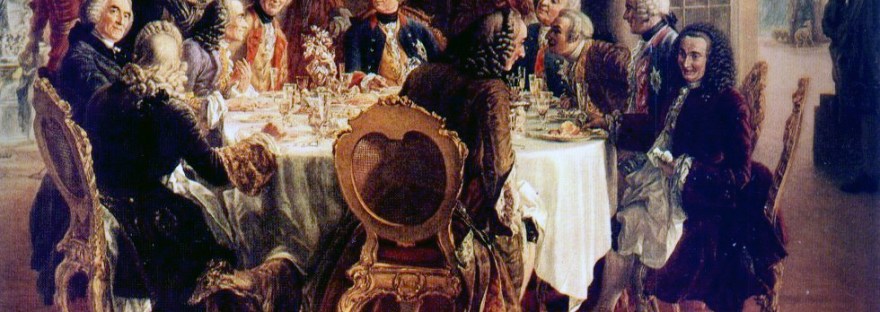
In May 1726 Voltaire sailed up the Thames, London-bound. He was thirty-two at the time, a scrawny Frenchman with a big mouth. Everyone was after his ass. Back in France he’d had a run-in with someone called the Chevalier de Rohan-Chabot, got himself arrested, and was graciously allowed to leave the country in lieu of becoming a full-time resident of the Bastille. It was a fine day and it made him fall in love with England. The King was out on his barge, a thousand little boats were in his wake, and some music was being played. Was it Handel’s “Water Music”? Let’s say it was so that you can understand what Voltaire felt that day. Later he saw some fat merchants in town and thought he was in paradise.

Watching every move about the campfire, studying each face lit up by the flickering flames, the fiddler Sam Plumbeck idly held onto his instrument, waiting for the proper moment. Time, he could feel, was pressing down on him; it had different parts that moved in different ways. The stars all the way to the horizon dip were many and miraculous, the horses silent for the most part even though a coyote cry filtered in now and then, and the darkness beyond wrapped them like a giant robe spread under those stars. He had ridden in, apparently aimlessly to all the trail hands, and joined up with them on their way back to their ranch, the promise of music being hailed by all the hands who had delivered the herd, were through with the drive. He alone, out of all these trail hands who had hit the jackpot, knew what was coming down on them. Nothing is supposed to be perfect or fair; at least this side of heaven, or the mass of a blue sky, or the dash of sunlight on a rainy day. And he, just a picker of strings, with not a coin of the gold in the lot having his name on it, could only wait it all out, hoping for the best and only seeing the worst coming up.

“My father, Franz Josef Schennach, was a gendarme, Hauptmann, in Tirol. After the Nazi took over, he had to prove that he was Arian. He could not prove this,” Anna Stenson said. She looked across the room from her chair.
“Brown eyes go to Africa… They taunted me. At school. Only the blue eyes would stay in Europe, if Hitler won. I was hoping he would not,” she said adjusting the hem of her skirt.
Continue reading “Swords Hanging on the Walls by Richard Mark Glover”
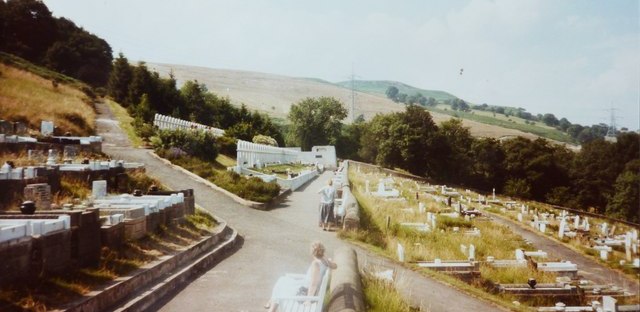

“All things bright and beautiful
All creatures great and small
All things wise and wonderful
The Lord God…”
*
“I was told I should report here. What do you need me to do?”
“Shovels are over there, buckets are behind you. Dig or help carry it away.”
*
“Each little flower that opens
Each little bird that sings…”
*
“I’m sorry Mrs Jones but you’ll have to move back. They’re going as fast as they can.”
“I just need to know if Tommy is OK. He is OK isn’t he? He said he was feeling sick this morning but you know what they are like on last day of school…”

San Luis Obispo, California – August, 1939
Inside a private screening room, MGM chief Louis B. Mayer and his right-hand man, producer Mervyn LeRoy, have just finished watching a test print of The Wizard of Oz. Mayer is not satisfied with the cut and has instructed the projectionist to run it again, this time with the sound turned off.
Continue reading “RuPaul Saves the Universe by Michael Patrick Marino”
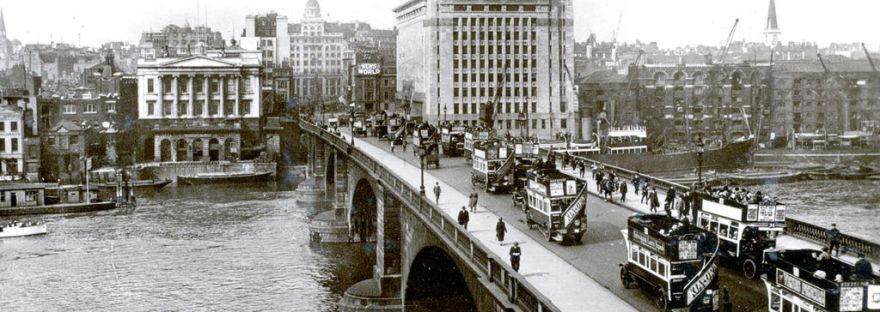
London 1929, a society sticking to the rigid values of the past, but only on the surface.
Such charm he had, Leonard. Such charm, elegance too. Poise, like a woman. He’d observe out of the corner of his eyes; feline, almost feminine. Everyone liked Leonard, even when the opinions expressed could be cutting. Acute observation.
People believed him blessed, and sought out his company at parties. He was rarely alone. Despite advances from both men and women, Adele was the only woman Leonard took home, but they weren’t lovers.

Tommy let his head rest back against the sand. It was hard, cold and wet. He knew that in the dunes further up it was softer but he couldn’t be bothered with the climb for the moment. The others seemed to have gone on without him, never mind, he could catch them later. He’d take a couple of minutes to rest here, nobody would mind surely and then he’d get back on the job.
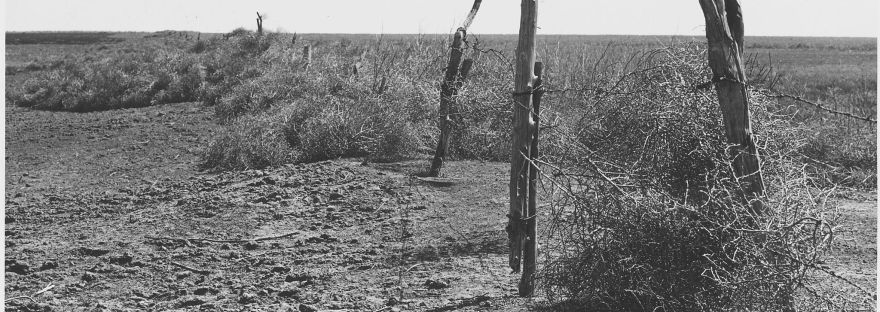
He come in like dat. A black man on a black mare, seventeen hands, with three white socks. No saddle, no blanket, no shoes, bald head, no hat. Dat mare dancing and turning, kicking up the dust in the bright sun light.
I saw dat. Dat is what I saw.
Shadrach A. Williams
Recorded March 3, 1868
##

