It’s summer, early morning. Carl is jogging. He’s on the river trail, a snaking band of black asphalt that rises and falls alongside the river and its lush greenery. It’s a popular trail, but it’s the middle of the week, so Carl has it all to himself—at least, he thought he did.
After cresting a rise, he spots a shopping cart up ahead. It’s blocking his path. Looks like it’s packed with everything but groceries. Next to it, on the pavement, in a tiny patch of shade, sits its owner.
Carl tenses as he approaches. He doesn’t want any trouble, but he’ll have to get in close to squeeze by the cart, and who knows how territorial this particular individual might be. He holds his breath as he maneuvers around the obstacle, careful to avoid making eye contact with the sitting figure. Once he’s through, he breathes a sigh of relief and jogs a little faster.
He’s a short distance away when he remembers that triple-digit heat is forecast for later in the day. Normally Carl doesn’t engage with the homeless—they’re just too unpredictable—but his conscience tugs at him, so he stops, sighs in resignation, and slow jogs back.
“Here,” he says, extending his bottle of Gatorade.
The stranger is unresponsive, simply staring out at the river. Carl follows his gaze. At first, he doesn’t see anything of particular interest, but then he spots it: the magic of the low morning light. It’s creating vibrant and electric flashes of color, jewels of blue topaz that skip along the rippling surface of the water which gurgles as it flows through the tall, reed-like cattails with their brown sausage-shaped seed heads—corn dogs on a stick—and continues flowing through the switchgrass with its long roots that dig impossibly deep into the soil to anchor themselves against the current, the narrow leaves an impressive blue-green. The sights and sound are hypnotic, calming.
Carl turns back to the statue-like figure. The man is about his age, fiftyish. He has a coarse and weather-beaten face, like wooden siding on an abandoned farm house. His size? It’s hard to tell. Everything below his neck is covered. He has fashioned a shawl out of a white, plastic tarp and cocooned himself within it. He could weigh 100 pounds. He could weigh 300 pounds.
“It’s gonna get hot,” Carl says, raising his voice a bit. “Take it.” He wiggles the bottle.
A brutal-looking hand—scarred and calloused—emerges from hiding and takes the offering. You’d have to bust a lot of jaws to develop a hand like that, thinks Carl. He takes a cautious step back—just in case—and waits. He’s hoping for a “thanks,” but all he gets is silence. He shrugs and turns to leave.
“I like fruit punch,” says the statue.
Carl turns back, sees the man examining the orange-flavored Gatorade. “I’ll remember that for next time,” Carl says with an amused smile.
Without making eye contact, the man gives Carl a crisp, two-fingered salute.
Throughout the summer, whenever Carl goes for a run on the river trail, he carries two bottles of Gatorade with him: one for himself and one for Punch—it seems like an appropriate nickname. “Here you go, Punch.” “Take care, Punch.” “How’s it going, Punch?” “See you later, Punch.” Punch never reacts to the name, so Carl doesn’t know if he gets his little joke.
It’s now fall.
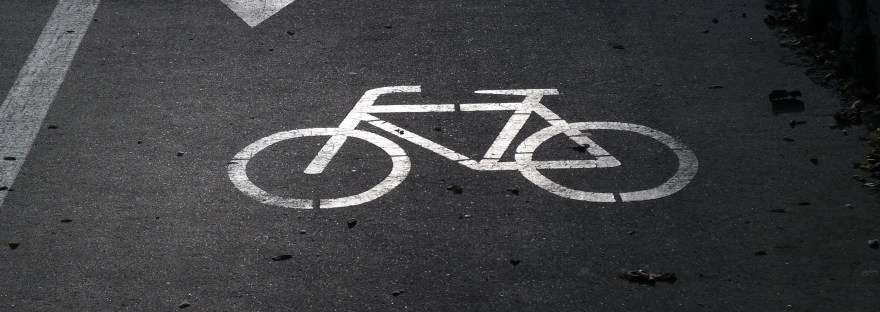
Carl is again jogging on the river trail. But this time, it’s late at night. He rarely runs at night, but he’s preparing for another one of his marathons, and he needs to put in the miles. He’s running along the left side of the trail, like he usually does, but it’s hard to see obstacles against the black asphalt pavement. There are no lamp posts out here. Fortunately, there’s enough light coming off the waning crescent moon to reflect off the broad white stripe that separates the pedestrian lane from the bike lane, so that’s where Carl takes care to place his feet as he runs.
He’s focused on that white stripe when, suddenly and without warning, a powerful blow to his midsection knocks the wind out of him, and he finds himself tumbling in the darkness. Instinctively, he throws out his arms. His exposed knees hit first, then his palms. He’s on all fours, riding the rough surface of the pavement. There’s a stinging pain as soft flesh is ground away.
After coming to a stop, a disoriented Carl looks up and is stunned to see Punch standing over him, his body crouched and tense, like a predatory animal ready to pounce on its helpless prey. That vacant expression Carl is so used to seeing is gone, and in its place is one that surprises him with its primal savagery.
“Hey, hey, hey! Punch, it’s me.” Carl throws his hands up, bloody palms exposed to show that he holds no weapons. “The guy who gives you Gatorade. Remember?”
As if a switch is thrown, Punch relaxes, and the vacant expression returns. With no hint of malice or anger, he says, “You’re on the wrong side.” And then he ambles off. Just like that.
Carl is left speechless. What is there to say? The man is right. And the violent act-the blow to his gut? Well, Carl can’t blame him. Punch had simply defended himself against a figure charging toward him.
Carl has to admit that there’s a certain humor to it all: Punch had punched him. Ha! Serves me right. But when Carl tries to stand, the dull pain in his gut turns sharp, and he realizes Punch had done more than just punch him. He had stabbed him.
***
Minutes have slipped by—or maybe hours. Carl isn’t sure. He remembers trying to shout for help, but the horrible pain had strangled his voice. He had tried walking, but pain had crippled his legs. Now he just lies still on his back, staring at the crescent of light high above, watching it sway in and out of focus.
He begins to shiver. His teeth follow suit, clacking a crazy morse code. He’s going into shock.
He tries not to think about how much blood he’s lost—and continues to lose. Instead, he thinks about the dozens of Gatorade bottles he gave Punch over the summer. And each time, Punch would give him that crisp, two-fingered salute. Wasn’t that proof of a connection between them—a tiny bridge of friendship between one human being and another?
At this moment, Carl is certain that Punch is feeling remorse for having stabbed him. Carl believes that with all his heart . . . wants to believe it. It’s just a matter of time, he tells himself, before Punch comes back.
“Just a matter of time,” he murmurs, his lips as blue as glacier ice.
Image by Hans from Pixabay – black and white image of the separatin glines between a jogging track and a bike lane white on black tarmac.


