All Stories, Crime/Mystery/Thriller

Absolutely, Positively, Have to Be There Overnight by Todd Mercer

Commotion from a rumble strip woke me up when the car I was in drifted from the road. The Kid Who Thinks He’s Grown was driving. We both snapped to alertness, there outside Carbondale. It was after 4 a.m., and we had a dawn appointment in Branson, Missouri.

I tried to steal another hour’s sleep, since the Kid always tells me he’s got things under control. But after working all day and now driving through the night, he must’ve needed to talk to stay with it. He asked, “Why are we even out here handling this?” He truly didn’t know, but he never needed a special reason to do his job well. He always seemed glad to be included.

Continue reading “Absolutely, Positively, Have to Be There Overnight by Todd Mercer” →
All Stories, Crime/Mystery/Thriller

The Remarkable Sweetness of an Unintended Life Lived Relatively Badly by Tobias Ásgautr

The United States is no more a place than obesity sits solely on your hips. Your weight yo-yos until you recognise in your life the scolding echo of your grandmother clearing her plate.

This particular American kid is young and contains his country’s history—whose story is he living, he wonders, if not his own?

Everyone agrees Henry is a good kid. Polite, considerate, tall and smart. He does the dishes and listens to the women who want him to earnestly love them. His empathy is genuine as his advice. He’s the first to come over in an emergency. He pursues the satisfaction of his lovers with alacrity.

Underground he’s somewhat different, behind his smile his father grins.

*

Build to the edges as your geography permits.

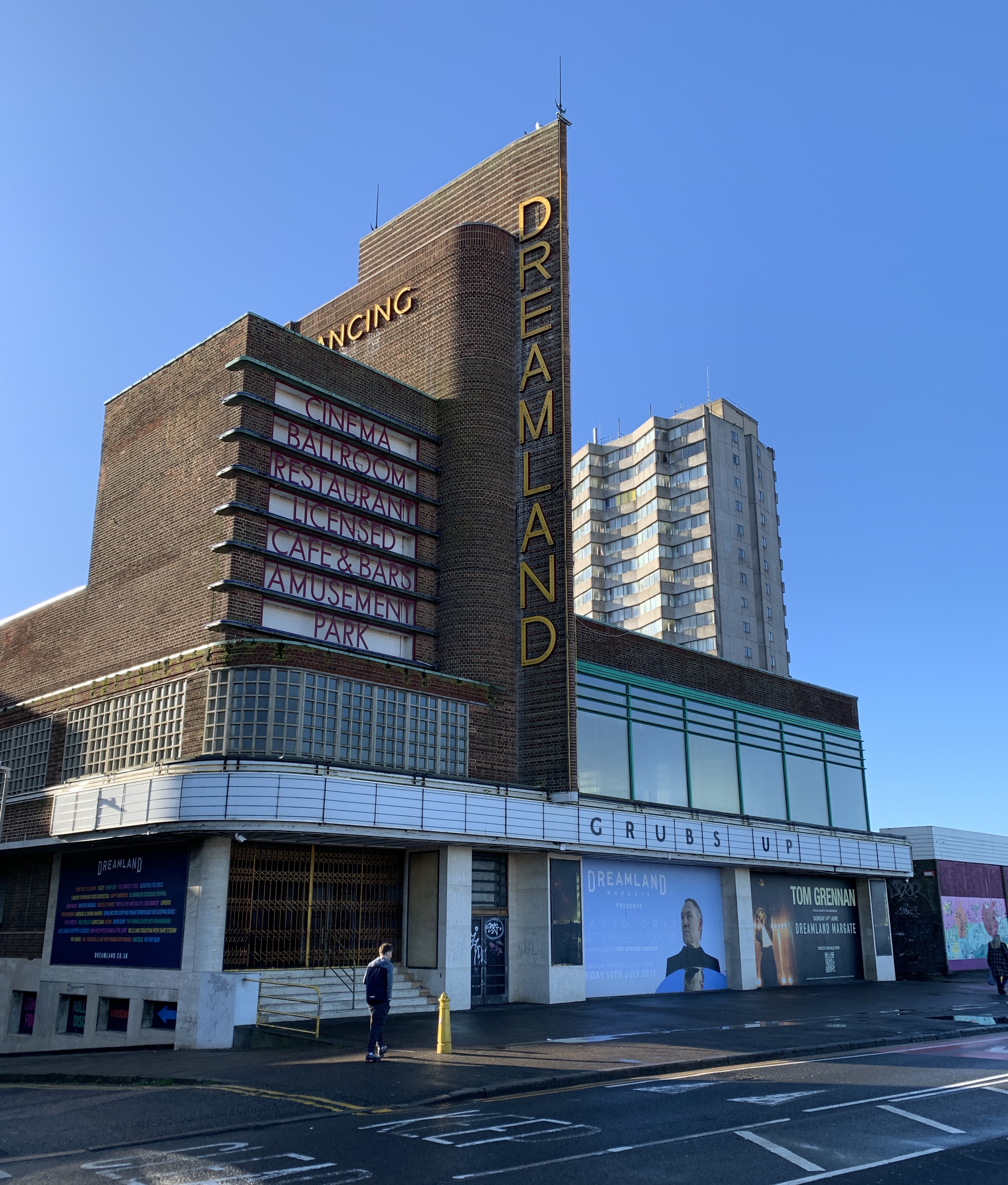
The tarmac of Marine Drive heads east from the high ground of Cliftonville and at the Margate clocktower becomes Marine Terrace, marked by arcades, ice cream parlours and rental apartments. It is a broad street. And poor. It peters out at the seemingly abandoned art deco façade of the Dreamland Amusement Park. Few inside are laughing though there’s screaming aplenty. Margate has seen better days and is myopic regarding its future.

Which is why the competing criminal tribes of Margate use tunnels to operate out of sight. Beneath pavements and sand is a whole other world.

*

Though The American Kid feels at home in the town, at no time had he imagined dying there.

It becomes perfectly and beautifully clear to Henry that he had been in the country only a little while before things went drastically wrong. It ain’t Henry’s fault—none of it is The Kid’s fault—especially the passionless martyrisations. Nothing is personal to Henry. If folk take offence being clipped or sliced that’s their chopped liver not his.

He maybe should have turned around and got back on the plane when he had the chance. What can you do? Life is sweet even when it’s bitter. You unwittingly build momentum without appreciating the need for brakes. No doubt the Greeks have a term for this as they do for everything. He can’t, at the moment, remember his Ancient Greek, being more a Latin swot.

It turns out, much to his horror, that he is actually no different, rhetorically and physically, than anyone. Everyone is exceptional or nobody is? A bullshit bummer, being no different than anyone. So much for his unquestioned exceptionalism. What a time to be alive.

Not that he thought of death much—not his; he was too busy living and having a good time. But he’d assumed, when he pictured himself broad of paunch and narrow of mind and white-haired like his Paps, he’d retire in the chosen land.

For the last five minutes he’s had enough thinking to last a life time. ‘No different than anyone’ was more an accusation of moral failure, a kind of Nuremberg defence. Once the torture stopped—the women were amateurishly gleeful, without class—Henry began to appreciate that this was less the admissible defence he might have imagined. If no different than anyone, why did he treat folk with such indifference? What can you do? There’s only one of you and millions of them. When you’re raised in an abattoir—even if it has curtains and is replete with euphemisms—who notices the blood? Extremism becomes mundane—you make assumptions this is how life is—and habitual exposure to violence dulls the senses. He supposes the thing about blind corners is you rarely see them coming.

Well, he’s run out of road this evening.

No way can he hit the brakes now.

*

He wishes he was not the only one alive in the cold ballroom. Hadn’t he warned Agatha to keep her hang-out underground? Don’t buy the art deco wreck, he’d said. She argued—it was what she did—the place was a fortress, would be a criminal lighthouse—she’d see enemies coming. They wait underground too, he’d warned.

But Agatha wanted to go legit. To come out of the sewers.

*

His ears itch but he has no fingers with which to scratch. He coughs out blood, as crimson and bright as the blood streaming from the stumps of his thighs. He should really do something about the legs. But what can you do?

The police will come to gawp and gag and photograph his body along with every other bum no different than Henry.

He could really do with a blow job.

*

You’re born with no say in the matter and no votive candle in red glass will protect you from being infected by a culture—freewill being as fallacious as claiming The Land of the Free has a zip code.

He’s never before understood the irony Daniel Dennett pointed out. Ha ho oh.

Another thing that bugs him while he’s at it: Henry will die being known as a kid—The American Kid. No say. This was never due to his youth but the relative age of every other broken constituent in the crime business.

Nobody back home went by their real name—folk invented their names along with their personalities as they raced toward a mythical Oz-like tomorrow. He’d seen musicals—he knew how the world worked. Folk rewrote themselves before buying in the services of an editor to redraft their story. Then the time came when they failed to recognise themselves in a mirror. Just featureless scribbles and eraser smudges stared back.

At least back home—America is home—folk expected others to respect their wilful lack of privacy, their right to the opportunity of reinvention. Whereas here a body gave itself no such licence; folk spent their whole lives as the same insipid person, lugging their syllables behind.

Why is his thinking roaming so inelegantly? Was this some end of life thing? Blood loss?

Lack of blow jobs?

He’s not old and not as young as he was—who is? To be forever known as The American Kid riles his sense of justice—maybe justice is bullshit too—but what can you do beyond pretend it ain’t so? Like everyone else. Maybe this is why the ancients felt the need to invent God and had Him make a heaven where all your dreams come true. Like a movie in which everyone’s a star. What a curse those dumb ancestors bequeathed.

*

Where did he lose his footing? He has so many stolen trousers yet to wear—some genuine designer.

He could really go for giving a blow job.

He’s surrounded by the wrong class of stiffs.

*

What does it matter that for some life comes up roses? What smug gardeners fail to mention is the blood and bone nutrients they expect you to donate. That’s capitalism, he supposes. Call it fate or providence—God knows Henry had called his own bad luck by worse names in his time.

Winter is coming again—snow is falling, brightening the evening sky knocking at the window. Henry is weary from the great deal that has happened this year just as the last. And the previous twelve months too. Now he comes to think, now there’s finally time, he feels like a child with vertigo suffering a cheerful and intolerable merry-go-round paid for by his parents.

Look at his smiling little face—it’s almost like a scream.

*

Henry is unusual—like everyone—and permits himself two minutes once a fortnight to reflect. This includes shaving. He generally doesn’t hold with looking back but back is pushing forward, waving its gory hands in his face.

He doesn’t hold with anything getting in his face, not normally, but he is strangely powerless. He lacks empathy even for himself.

He whispers, ‘Amor fati.’ For Henry it is only a brief jump from home-tutored Latin to reading Nietzsche’s Why I Am So Clever at Dartmouth College in Hanover, to grasping, in the dusty badlands of the moral majority, the mendacity of eternal recurrence—the idea suffering or happiness reoccurs over and over. When escaping the Arcadian States he shouted at the airport Nietzsche could fuck himself, he’d prove that German with the intimating moustaches wrong. He was manhandled by Homeland Security who suspected Nietzsche of fundamentalism. What price a college education?

Henry stares at the colourful bodies and the ragdoll limbs piled carefully in the corner, and he smiles at the pretty neon turning his blood into a homage of a Monet.

*

.Though the War on Terror had been declared over, nobody had informed the revolutionaries.

The military industrial complex was congratulating itself on finding this month’s existential enemy—Greenland. Henry suspected he’d not afford the peaceful prosperity given the high inflation.

What was life really about? Shouldn’t be feel content rather than empty?         Something was missing.

Henry suspected it was himself.

What is it called when you’re neither unhappy or happy? Henry did not know the word. He wanted to find it in Europe.

Henry suspected the faces chanting ‘Build the Wall’ (when it had been built twice over) and ‘Lock Her Up!’ (when she had for too long suffered the imprisonment of her marriage) might in truth be prophesying an ultimate isolationism—closing the border; what if he couldn’t leave?

He was a good kid and didn’t want to hurt anyone unless he was provoked, but boy the place was poking him hard.

Convinced of his ability to abandon the violence of home, he read widely, went off curriculum if not grid, found hints of other countries, of a better life away from what Gore Vidal found so upsetting. He wanted to escape to the place where wings take dreams.

Henry applied to study a master’s degree. He was accepted by the University of Saint Andrews at Fife in Scotland, despite that lauded institution appearing to Henry’s way of thinking to be suspiciously lax regarding apostrophes—how many saints could one university lay claim to?

He packed a bag and sold Pap’s car while the old man was visiting an especially lucrative ‘aunt’ in New York City. Paps drilled ‘aunts’ like oil men dug wells. Whenever the kid asked the whereabouts of the Mom he’d never known, his Paps—who had a great many ‘aunts’ in several cities and who often travelled by Greyhound (the bus not the dog) to ration his potassium—would grow silent and talk of Vietnam, for he’d been in construction and made a fortune before losing it on the market.

Arriving in Scotland the kid never took a class. Nobody noticed. His grades were pretty good despite not submitting one assignment. Sometimes life incompetently conspires to make a prince out of a pauper, a valedictorian out of an idiot—what can you do? Just be grateful you share the same name as a genius taking the same modules. A case of mistaken identity was simply par for the golf course.

In Scotland Henry watched what passed for television. The Kid realised he had somehow fetched America with him. He suspected there was no cure for Showbiz Imperialism. It looked terminal. He stole a car in Fife and drove south on the wrong side of the road until he paused where the land meets the sea at England’s end. He bought chips and took a knife from a drunk, commenced a lucrative life with an air of existential resignation.

‘Making sense makes no sense,’ Henry said, wiping the stolen blade on the drunk’s  trousers. Such badass chill and style got Henry noticed. The landlord scrubbing the blood from the floor put the word out under the streets there was a new kid in town. A lovely boy, sharp, polite, tidy hair, with a clear pathological intolerance of drunks getting in his face.

Employment followed.

The English and the Scotts are people who boil their cabbage even though they know they oughtn’t; when a brash kid comes—bright as a newly minted fifty-pence piece—they were dazzled by Henry’s Hollywood smile.

What can you do? You keep moving forward is what. There are things in life that simply happen—they come out of nowhere. All you can do is step out of their way if you see that nowhere coming. Which you can’t. What can you do?

*

Henry’s predisposition to violence had been imbibed with the tinned formula sucked from a plastic-leeching teat, swallowed along with his first solids like a radioactive isotope, until, in expectation of imminent violence—as seen on TV—his preference for preemptive action—as seen in movies—left him conditioned to simply react. He learned to turn the other cheek so as to better stab both sides of an enemy’s face.

There were seldom reasons, he reasoned. The non-existent God made him do it. If his actions were judged illegal he’d say the Devil lead him astray. The Kid was more a drinker of pulp-fiction platitudes than a deep thinker.

Henry loved money. Radix malorum est cupiditas, right? Folks about him were only income-stream patsies. It’s nothing personal.

Sure, he had a backstory—who doesn’t? But life is not television, the producers of which love a moving backstory to make viewers grateful for their colourless lives. The Kid’s backstory was practically non-existent—if there were flashbacks he never suffered he did not say. His life before England made the geological history of Iowa seem fraught.

The Kid had no opinion: a job was a job. He was paid handsomely and promptly. By the age of twenty-three he had six children under two, five current lovers, six confused boyfriends, and eight murders under his belt. Henry imagined a more symmetric life but couldn’t for the life of him figure out how to make the numbers add-up.

Were these achievements? Or tragic consequences of his character? But what formed his character?

There had been moments during his monthly two minutes of introspection when Henry wondered whether his life were a movie. If it so, it was not one he’d sit through. He should walk out and demand a refund. But no cinema gives your money back for a shit film—once you’d bought the ticket you’re out of pocket.

*

A headstone.

His name was Henry and he was about your height before he was cut down to size.

*

His father made a lot of dough from pumping his adoring ‘aunts’—enough to plant his kid in the Ivy League.

Paps gave no thought to fish and birds, how a fish might fly no better than a bird might breathe under water; he left it to Henry to choose his species—feathers or scales. Henry chose both—he wasn’t fussy, only hungry for the prestige he imagined money bought. Culture, like family genes, gets you in the end.

He’d didn’t need a horoscope only brighter parents.

You’re a goldfish in a capitalist bowl and you swim through the effluent of millions—even your own. You’re just another dumb dump.

Don’t strain it, drain it.

*

When the assault came—up from the sewer the camouflaged women flooded—Henry recognised a squirrel-eyed enforcer videoing the horror. He knew immediately why the slaughter had been ordered.

The chief executives of the long-warring ice cream families of southern England had set aside their differences to pool funds to hire Henry to kill a researcher investigating referred pain and cold-stimulus headaches—brain freeze, The researcher was about to prove that, just like the tobacco industry, the industry had suppressed evidence of frozen dessert addiction. It was unfortunate timing: The Kid had been reflecting.

Henry had taken the money and not iced the ice cream researcher—Henry took him for a drink given he looked kinda hot.

So it was the dairy mafia settled the score, raiding Agatha’s, where Henry was hiding. This massacre was Henry’s fault.

No more anything for Henry, no more blow jobs—life is give and take, he supposes.

*

He is admiring his legs in the corner—they look the best of the bunch.

He is bleeding out. Had he ever approved of belts he might have lived a little longer with the help of a tourniquet. But he is dying, which is taking a good deal longer than two minutes. This makes Henry mad, aggrieved at his own unproductive death—what a burden on Government budgets his corpse will prove.

He will never know the full and bloody extent of the forever gangland war his actions cause. It’s not his fault, though it is.

He’ll never again see his children or lovers or partners any more than use his legs. He’ll never count the blessings of his pennies.

But what can you do? Life has been sweet—he’s eaten his body weight in candy—even while screaming from vertigo two minutes once a month.

*

With each spurt of blood Henry hears the beat of John Cougar Mellencamp’s Hurts So Good. The American Kid is going to die pulsing out his life’s blood in time with the worst adult-orientated rock radio hit of his childhood. What a way to go.

He glances about him. Everything is beautifully unreachable. Henry stares at the art deco ballroom, headquarters of the least successful of Margate’s underground criminal rainforest tribes—uncontacted by philosophy or the moral imperatives of evangelists. There, piled neatly, a variety of limbs wait for collection. His legs are by far the most tanned and prominent—his are American legs. Those sneakers cost someone a small fortune.

He’s barely worn them.

*

What a time to be alive. What a perfect time to die.

Henry purls himself with longing. The world is so broke. Wherever you go folk poison their newborns, raise them for violent extinction. Henry’s no different. This is actually a mercy killing—The Kid won’t inflict his self on his kids.

His definition is stolen by the snow beating the window.

The ballroom is too small for the grandeur of its name.

A final world from Henry—hush—fleeting, barely audible—a syllable of sorrow—hush—do you hear The Kid bleeding out?

Tobias Ásgautr

Image: Dreamland Nightclub in Margate, front doors covered with metal grills. A brick building with advertising images on the side, large windows,and a couple of pedestrians walking past under a blue sky. provided by the author.

Crime/Mystery/Thriller, Short Fiction

A Courier with Morals by D. S. Stewart

Rasmus Dreyer eyes the edge of the macadam, screening the underbrush, the rows of apple trees, the delectable fruit that deer like to forage. It’s from the roadsides where the deer come, darting from the shadows in a shattering second, frozen by fear, leaping through the windshield onto the lap of the driver. The high beam shovels away the darkness, the road spanning over rolling hills, upstate, its post-carded portraits of redwood farmhouses, and white picket fences. Only Pleiades and Saturn provide company and those colliding black holes scientists are constantly clamoring about, making him feel small, insignificant.

Continue reading “A Courier with Morals by D. S. Stewart” →
All Stories, Crime/Mystery/Thriller

The Fourteenth Victim by Mark Grace

Twelve bodies in the last month with the same MO. Each victim had blunt force trauma to the back of the head, indicating a surprise attack. Once stunned, the brutal attack continued. The autopsies showed multiple broken bones, ruptured organs, and, in one case, a heart attack. The bruising on the skin indicated that the same weapon used to hit the head was also used to beat the victims to death. The murder weapon was still unknown after twelve murders. Hoofprints were all over each crime scene, which indicates the killer knows how to handle a horse. In a farming community like this one, that offers almost no help.

Continue reading “The Fourteenth Victim by Mark Grace” →
All Stories, Crime/Mystery/Thriller

Taking the Plunge by M.A.B. Lee

It wasn’t on my mind to kill him, just shut his mouth for a bit. A body needs peace and quiet sometimes. The plunger was right there handy and I picked it up and stuck it over his mouth. It stuck real good, too, I didn’t expect that. Carlton turned red as a beet and before he could pull it off, he keeled over dead. If people knew how dangerous these things were they wouldn’t sell them just anywhere.

Continue reading “Taking the Plunge by M.A.B. Lee” →
All Stories, Crime/Mystery/Thriller

Crusader by Diane M. Dickson

The air in the alleyway was damp and cold, smelling of urine, rot and decay. Old bricks were wet as his hands brushed against them and the cement under his trainers was slick with vile gunk. Frankie drew away from the wall with a shudder. Pulling his zipper closer under his chin, he crept slowly towards the doorway hidden in the gloom. His dark knitted hat sparkled slightly with moisture under the dim overhead lighting, making him appear to have been sprinkled with Christmas glitter. The thought would not have amused him. He had no patience for such stuff, tinsel and trimming, laughter, joy. What place did it have in a world with all this work to do, all this clearing out and cleaning up?

Continue reading “Crusader by Diane M. Dickson” →
All Stories, Crime/Mystery/Thriller, Short Fiction

Cup of Flour by Tim Boiteau

Woke up to frosted window panes and frozen pipes. Marta and I made do with the gas stove, lighting it old school with matches against the hissing invisible stream. Water supply was low, but would last us a few days. The driveway had vanished beneath the white, with only the stitch of barbed wire fence to mark road from field. While I was attaching the snowplow blade to the truck, Marta called out from the house that Pam, our neighbor, wasn’t answering her phone.

Continue reading “Cup of Flour by Tim Boiteau” →
All Stories, Crime/Mystery/Thriller

My Little Dump by Christopher Ananias (Adult Content)

I am slipping again. All of my thoughts are filthy and negative, and the dishes are stacking up. The TV is a blurb of sounds and flashing light in the cramped clutter of my living room. An occasional face draws me into the moment, reminding me of the past.

Continue reading “My Little Dump by Christopher Ananias (Adult Content)” →
Crime/Mystery/Thriller, General Fiction, Short Fiction

Investigative Report Dossier   by Matias Travieso-Diaz

You can get a subjective and highly factual dossier

on most anyone in the public realm almost instantly.

Douglas Coupland

 LAS VEGAS JOURNAL – INVESTIGATIVE REPORT DOSSIER

CURRENT AS OF: February 4, 2000

1: Identity of the subject: Trent Allison Blackwood, dob: April 23, 1947

2: Subject’s address(es): Local (most recent): Royal Flush Hotel, 4472 Paradise Rd., Las Vegas, NV 88119

Home (if different): (Last known): 743 North Beverly Drive, Beverly Hills, CA 90210

3: Family members, friends, victims, and enemies: See item 5.

4: Published references to subject: References to Mr. Blackwood have been made in the Los Angeles press, and in other newspapers and magazines (Attachment 1). An example:

          LA TIMES:
          MORNING REPORT – NEWS FROM DEC. 31, 1999

Trial Date Set in Blackwood Securities Fraud Case

The clerk of the LA Superior Court issued a notice over the weekend advising that the trial in the criminal case against Trent Blackwood on fraud charges over the Mirage Industries collapse will begin on January 8, and is expected to last for several weeks. Jury selection is set to be completed in the first few days of the trial.

Attempts to contact Mr. Blackwood about this notice have been unsuccessful. 

5: Public records information: A search of public records involving Mr. Blackwood in California is ongoing. No relevant records from Las Vegas have been located. A preliminary internet search revealed that Mr. Blackwood married Rebecca T. Burgess in June 1970 and divorced her in September 1986; married Tanya Estevez in April 1991 and divorced her in January 1993. He has three children: Lucas Blackwood, born in March 1972, Eileen Blackwood, born in January 1974, and Elias Blackwood, born in February 1975. Records of  business permits, licenses, building permits, recorded deeds, trust deeds, conveyances, notices of sale, powers of attorney, liens, local, state, and federal taxes, bonds, property tax records, unsecured property tax records, business filings, political donations, consumer affairs licenses, and driving records remain to be secured.

6: California Court Proceedings: As per the reports in the press (Attachment 1) Mr. Blackwood is involved in several civil suits by and against him by his former partners in Mirage Industries; he is a defendant in two tort actions for damages by purchasers of Mirage cosmetics; he is undergoing proceedings in the U.S. Bankruptcy Court; and he is going to trial in the above-mentioned securities fraud criminal case. He is charged with having a majority ownership of a thinly capitalized cosmetics business, endangering the safety of the public by selling products containing toxic substances, and defrauding investors by issuing worthless shares in his company.

7: Federal Investigation of Potential Criminal Activity: On January 1, 2000, Mr. Blackwood was arrested by FBI agents in his Paradise hotel room. As detailed in the FBI rap sheet (Attachment 2), Mr. Blackwood is being charged with conducting a multi-state large-scale fraudulent gambling operation in complicity with one Gregory Tomlison of Santa Monica, California. The alleged facts, as summarized in the rap sheet, are as follows: 

a. In complicity with other unnamed persons, Blackwood and Tomlison partnered in the rigging of a December 22, 1999 football game between TCU and East Carolina University. Tomlison placed large bets in favor of TCU at each of nine casinos throughout the United States. He won a total of $900,000. He had collected on eight of the nine bets and went to the Mandalay Bay Resort, intending to meet with Blackwood, collect on the ninth, and share the proceedings of the criminal enterprise with his accomplice.

b. While at the Mandalay Bay, Tomlison suffered a heart attack. Blackwood summoned help, but Tomlison died while help was on its way. Blackwood went to the cashier’s cage, presented a ticket for the Mobile Alabama Bowl bet, and collected $200,000 in cash.

c. After exiting the Mandalay Bay, Blackwood proceeded to the Treasure Island Hotel, where he spent several hours playing twenty-one. Apparently, he lost all the money in his possession, including the amount collected at the Mandalay Bay.

d. .Blackwood returned to his hotel room close to midnight, filled a tub with hot water, disrobed, laid on the tub, and cut his wrists with a razor, intending to commit suicide. His attempt was thwarted by the arrival of FBI agents seeking to arrest him for his above-mentioned criminal activity, which had been under investigation for some time.

e. Blackwood is currently undergoing treatment at the Sunrise Hospitalin Paradise. Upon discharge, he will be released into the custody of the FBI and extradited to California for his scheduled trial, and later will face another trial in Federal court on the above-described charges.

8: Other Matters: Blackwood has issued a statement concerning his legal troubles and attempted suicide. It reads as follows: 

Statement of Trent Allison Blackwood

    1. I was indicted and am scheduled to stand trial in Los Angeles v. Blackwood, a security fraud case brought against me by the City of Los Angeles in my capacity as President of the defunct Mirage Industries, Inc. I have pleaded not guilty to the charges brought against me and intend to defend myself vigorously and prove my innocence.
    2. The purpose of this statement is not to address the issues that will be litigated in the Los Angeles trial, but to set the record straight on certain matters that transpired on December 31, 1999 and January 1, 2000 during my stay in the city of Las Vegas, Nevada.
    3. On December 31, 1999, having received notice from counsel that my trial in the Los Angeles case would commence in a few days, I decided to take a short vacation in Las Vegas to relax and prepare myself mentally for the upcoming trial.
    4. Upon arrival in Vegas, I started searching for a place to stay. After hours of searching, I was able to book the last available single room at a motel in Paradise, a long walk from the Strip.
    5. Since it was the eve of a new millennium, I resolved to stay up past midnight and while away the remaining hours of the day by gambling. I went to the Bally’s hotel, bought nickels, and began playing one of the five cent slots. I hit the jackpot and found himself in possession of an avalanche of nickels amounting to one hundred and eighty-five dollars.
    6. I had a leisurely dinner and drank a lot of wine. By six thirty I began to walk through the Strip to clear my head. I ended up at the Race and Sportsbook lounge at the Mandalay Bay casino. I sat on one of the lounge’s couches and ordered a beer.
    7. A few minutes later I was joined at the couch by a stranger, a heavy-set middle-aged man holding a large glass of whiskey. He sat and focused intently on one of the lounge’s TV screens, which was showing the Sun Bowl game between Oregon and Minnesota. I asked my companion, whose name I never learned: “Do you have money on this game?”  The answer surprised me: “No, I don’t, but I like watching games to practice my skill in predicting the final score. It looks like Oregon is going to win this one.” I replied: “Are you really able to predict in the third quarter how a close football game is going to end?”  The man turned towards me, slurring his words: “Not only that, but I can figure out even the point spread. Oregon by three or four points.”
    8. When I suggested he could be making money using his talent, he retorted: “Yes. In the last ten days I’ve made a killing. On December 22 there was the Mobile Alabama Bowl game between TCU and East Carolina. I figured out that TCU would win by two touchdowns and the point spread was Carolina plus 10, meaning that TCU was favored to win by ten points or less. I picked TCU and placed bets at each of nine casinos. I won a total of $900,000.”
    9. I was somewhat skeptical and asked: “Then, what are you doing here?” He replied instantly: “Casinos keep track of large bets placed on a single game and alert each other to prevent fraud. So, I did not cash the winnings on my bets all at once, but one every day. This is my last collection, here at the Mandalay. I leave Vegas tonight to return to LA.”
    10. A few minutes later, I heard loud grunts coming from my couch companion. Turning to him, I noticed that the man had turned very pale, was sweating, and appeared to be experiencing shortness of breath. When I asked, “Are you okay?”  “No” was the response. “I’m having pains in my chest and the arms… Maybe a heart attack… Listen, get me help. In my jacket there’s a ticket from this casino for the TCU game. It’s worth $200,000. Cash it, bring the money to me, and we’ll split it.”
    11. I took the ticket, ran to the counter to summon help, and then returned to the couch where the man lay, drifting in and out of consciousness.  I sat by him until two paramedics arrived pushing a stretcher. One of them bent over the man and took his pulse. He turned to the other and said: “I think he is dead.”  I watched as they tried to resuscitate him, without success.
    12. I walked away from the death scene and went to the cashier’s cage, where I presented the ticket with the Mobile Alabama Bowl game bet. The cashier looked at her screen, then at the ticket and frowned. “How do you want the money?”  “Hundred-dollar bills, please,” I replied.  “I’ll get a satchel” she replied. A long while later she returned with a briefcase containing the cash. I thanked her, walked out of the Mandalay, and headed towards my motel.
    13. As I walked, I found myself next to the Treasure Island casino. Remembering my early streak of good luck playing the slot machines, I decided to try to make a little more money playing cards. Entering the hotel, I proceeded to the High Limit Lounge, a small room containing blackjack tables, baccarat tables, and a large roulette.
    14. Over the next three and a half hours I played blackjack, and ultimately lost all the money I had. I went out to the street and trudged back to my motel.
    15. In my room, I took off my clothes and drew a hot bath. I climbed into the tub, intending to get some rest. My thoughts then turned into a review of my life and my mood became increasingly somber. On impulse, I decided to end it all. I opened a package of single blade razors I had purchased along the way, took a razor out, and slashed my wrists. I dozed off. My next recollection was waking up in the emergency room of the Sunrise Hospital.
    16. I never had met the man who gave me his betting ticket at Mandalay Bay Resort, and never engaged in a fraudulent gambling activity with him or anyone else. 


            /ss/ 

Trent Allison Blackwood

January 15, 2000 


9: Follow-Up Actions: (a) Investigate possible compulsive gambling angle; (b) Research connections between Blackwood and Tomlison in California prior to December 31, 1999 and track other potential fraudulent gambling ventures; (c) Interview staff at Mandalay Bay re suspicious circumstances Tomlison’s death; (f) follow up on Blackwood’s suicide attempt in Las Vegas.

FILE CLOSING: Trial in Trent Blackwood’s LA Superior Court securities fraud case was rescheduled on account of his attempted suicide while in Las Vegas. Because of the planned Federal charges involving the alleged fraudulent gambling operation, he was held awaiting trial at the California State Prison, Los Angeles County in Lancaster, California. While at that facility, on February 3, 2000 Blackwood was assaulted by another inmate and stabbed to death with a shank. On account of Blackwood’s death, the investigation described herein could not be completed and the question whether he was guilty of all or any of the crimes with which he was charged remains unresolved.

[Attachment 1] [Filed separately]

[Attachment 2] [Filed separately]


Matias Travieso-Diaz 

Image –  A gavel on a stand 


All Stories, Crime/Mystery/Thriller

Mehico by Richard Hulse

Emerson drove all through that warm afternoon. The three of them were quiet most of the way, but at one point Bobby looked over to Charlene in the back seat.

‘So, where’s you and your folks from?’

He felt a little awkward. He was just trying to make conversation. But she said nothing and perhaps she hadn’t even heard the question. She was frowningly immersed in Modern Screen. On the cover of the magazine was a picture of Bette Davis, blonde and alluring.

Continue reading “Mehico by Richard Hulse” →