All Stories, General Fiction

A Sign of the Times by Hugh Cron

She walked her dog, the same places, the same time at night and also first thing in the morning.

Those who knew her spoke, but the youngsters all had their heads down reading whatever pish was on their phones.

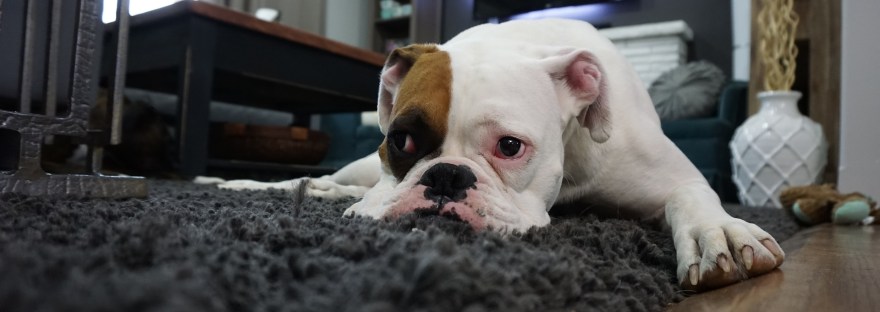
Garibaldi was a boxer and he wasn’t the brightest, but he made her laugh.

“Hi Ella, how’s it going?”

Continue reading “A Sign of the Times by Hugh Cron”
All Stories, General Fiction

The Year of 13 by Lisa Shimotakahara

When I was twelve I was cute. When I was thirteen I was ugly.

Acne whacked me. The cute me. The twelve me. It happened overnight. It happened so fast that inside I was still twelve. Still wide-eyed and twelve. Still wide-eyed and twelve and oh-so-underprepared.

My friends (friends!) called me Silly Putty. Me, with my shiny, bulbous, pink-colored face. Grinning like jackals, they called me Silly Putty.

How did this happen? Overnight! How did the canyon open? The open canyon. From twelve to thirteen. From cute at twelve to thirteen, bulbous.

Continue reading “The Year of 13 by Lisa Shimotakahara”
All Stories, auld author

Auld Author – Fahrenheit 451 brought to us by Thurman Hart.

Though this is not a particularly Auld or unknown piece it is obvious that Thurman Hart feels passionate about this and it has had a profound effect and that surely qualifies for a place in this occasional feature.

Much of what Bradbury saw has come true–social media and disaffected youth. Yet let us hope that words will still be precious to some in the worlds to come.

***

The work that I’m afraid will be forgotten is Fahrenheit 451 by Ray Bradbury. This is, of course, a flight of insanity on my part. The book is a true classic and will always (it seems) find its way into various literature-based curricula. However, the true masterpiece of the work is overlooked, at least in my experience.

Fahrenheit is a dystopian work, set an undefined length into the future where fireman are employed to burn books, the implication being that they control dangerous ideas that books contain. The general population has been dumbed down, too interested in the parlor wall families – i.e., characters portrayed on wall-sized televisions – to even notice that they are being controlled. In fact, Mildred, the wife of the main character, Montag, attempts suicide when he tries to force her and her friends to feel and think by reading them poetry. Even people who understand what is happening are too afraid to fight back, as evidenced by Montag’s very literate supervisor, Beatty, who goads Montag into killing him because he can no longer live as a tool for this governmental control. There’s even an aspect of invasive technology via the mechanical dog that tracks Montag, and what is now called “fake news” where Montag listens to the report that he has been tracked down and killed.

This is the obvious masterpiece of Bradbury’s work: that he can look at his contemporary and near-historical events such as the red scares of the 1950s and the Nazi book burnings of the 1930s and 1940s and make them seem like they are about to happen all over again. Like the portrait by a master painter will have eyes that seem to follow the viewer as they move, Bradbury’s predictions of society seem as near-future today as they did when I first read them in the mid-1980s. In this, Bradbury is a champion of free thought and artistic expression, and it is a good and proper thing that he is studied for that reason.

But Fahrenheit is not merely this. Tucked away in the third section, entitled “Burning Bright” is a passage that deserves a canonical place next to Shakespear’s “What a piece of work is a man.” Montag has escaped from the city and made contact with a small group of rebels who exist outside of society in order to keep alive the memory of written works. The masterpiece is delivered by Granger, when he tells Montag:

“Everyone must leave something behind when he dies, my grandfather said. A child or a book or a painting or a house or a wall built or a pair of shoes made. Or a garden planted. Something your hand touched some way so your soul has somewhere to go when you die, and when people look at that tree or that flower you planted, you’re there. It doesn’t matter what you do, he said, so long as you change something from the way it was before you touched it into something that’s like you after you take your hands away. The difference between the man who just cuts lawns and a real gardener is in the touching, he said. The lawn-cutter might just as well not have been there at all; the gardener will be there a lifetime.”

When I first read those words, I was dumbfounded. It was if a veil had been lifted and someone had shown me a timeless truth of existence. I sat on the edge of my bed, amid the dryland cottonfields of West Texas, and tried to fit the entire sum of my fourteen years into those words. Then, as now, the full measure of those words eludes me. They are a moving goal that I can only aspire to hit. It is why I turn my hand towards excellence in all that I do. It is why I write. It is why I sing. It is why, every year, I plant a new garden so I can watch the sky and worry and wonder. I know one day I will be gone, but I know my soul will live on in the things I have touched and passed along to my family and my friends.

It is this passage, above all others, that moves Ray Bradbury from someone who writes stories into the realm of an author. Here, he doesn’t just string together words, sentences, and phrases. He builds an idea. He presents a philosophy. He gives us his ability to reach through the written page and touch us. Not just for a lifetime, but, I hope, for many lifetimes to come.

Thurman Hart

Image: Pixabay.com – an old metal goblet on a dark background with a quill pen and a book

All Stories, Editor Picks, General Fiction, Latest News, Short Fiction, Writing

Week 428: Spring Cleaning; the Week That Is; Ten Names For the Inhabitants in the Box Behind the Stairs

In Just Spring

The American Pacific Northwest is similar in climate to the UK. Both are just about as north as the other and both are close to an ocean. My home in the Puget Sound region is typical of the kind of weather found in such latitudes. We get twenty, sometimes thirty spring days spread over the course of four months. Seldom more than two in a row.

When it does come, everything gets all warm and cheery. People appear ready to spontaneously break out in song, smiles are unforced, and birds often garnish people with necklaces made from wildflowers, just like Snow White.

Continue reading “Week 428: Spring Cleaning; the Week That Is; Ten Names For the Inhabitants in the Box Behind the Stairs”
All Stories, General Fiction

The Chicken by James Hannan

‘What’s he doing out there?’ Jill says, as the tall figure of their father passes by the window.

‘Who cares?’

‘No, seriously Brendan, can you come have a look? He’s being weird again.’

‘He’s always being weird. Just ignore him.’ Brendan’s playing Fortnite. His eyes don’t leave the screen.

Jill gets up and goes to the window, sticking her face near to the frame so she can get a better angle. ‘See, see, he keeps walking around the house, looking under it from time to time.’

Continue reading “The Chicken by James Hannan”
All Stories, Fantasy

Suburban by Teresa Berkowitz

Our houses had always been haunted. We were always running from one old New England house to another. Finally, my parents found a ranch house in a small subdivision. It was painted a soft buttercup yellow. Everything was mostly new, less than five years old. “Only one owner,” the realtor reassured my parents. I immediately loved it. No scary attic. All of us on one floor. Even the basement was finished with wood paneling.

Continue reading “Suburban by Teresa Berkowitz”
All Stories, Horror

Miss by Keith LaFountaine

And so she stands under the lamp post with her camera strapped around her neck and a candy cigarette tucked between her lips. That’s just for kids, isn’t it? But this woman certainly isn’t a kid. She has the look of a doting aunt. It’s in the eyes: the eerie combination of leering adoration and simmering jealousy.

Continue reading “Miss by Keith LaFountaine”
General Fiction, Short Fiction

Fifteenth Year by Jessica Cull

I had been bleeding one year. Was told that made me a woman, but didn’t feel like one. Felt still small, my baby hair still soft. Light wisps on ice cream skin. Like the fluff of a wolf pup before it turns wiry in the winter, shedding its youth as its softness falls away. Maybe that was my bleeding. Maybe my softness was leaving me, replaced by black-red oozing and inside bruising.

Continue reading “Fifteenth Year by Jessica Cull”
All Stories, Crime/Mystery/Thriller, Fantasy

On Alternate Realities and Blocked Noses By Daniel Ashmore

There is a truth about loneliness that is known fervently to all those suffering from it, and yet is forgotten the very moment we find ourselves free from its oppressive yoke. That is to say that being alone is not unlike having a blocked nose.

Continue reading “On Alternate Realities and Blocked Noses By Daniel Ashmore”
All Stories, sunday whatever

Sunday Whatever: I Kissed Her Goodbye by Jacob Greb

Welcome to this week’s Sunday Feature. Today we proudly present a breathless little “kiss” of a work by Jacob Greb. Although it is brief and lies somewhere between a prose poem and a story, we found this too wonderful to pass by. We hope you agree.

***

I Kissed Her Goodbye

I stare at the headlights with distress. The restless night made me a zombie. “Brains?” I beg a bystander. He kindly smiles.

“You fool,” memories of Julia’s last words like waves return to the shore. If only I knew how to swim. I keep on chasing the wrong fields. The meadow has turned brown. The autumn has come and Julia’s feet got cold. She likes to wear orange and green striped wool socks. My mesh of a head however can’t catch any fish. I am lonesome for her touch but Julia repeats that she loves me more. We sweep each other into our arms and lay wrapped in the blanket.

“Your heart beats radicle,” Julia says between her hums. She does so to sway me to sleep, but my fingers tingle readily to paint a thousand moons. The notes stain another night as the pianist plays the wrong lullaby. My mother’s curse carries on. White stripes and surgical tables. That’s where my mind wonders at the late hour. The wanderer I become. Julia falls asleep and I lay listening to her light snores. Nothing can cure my disease. I lift my feet and leave the bed, stumbling on the crate reused as storage for books and doctor’s notes. Hope has left the day. The streets at two finally breathe with relief. A bicycle leans against a steel pole for thieves to gaze at and take.

“Don’t leave your valuable unattended.” The reminder notice I keep in my pocket. I stole it from the psych ward.

I enter the middle lane and take my chances. The strange air is left behind by the last exhaust pipe and I inhale the pollution and cough. Fly by with a honk, but I continue to walk to the top of the block and close the loop. Takin’ on the sideways, finding a nickel, before I stop and stare at the headlights approaching, thinking of poor Julia. The curve of her smile as she whispered, “I love you. Good night. Be in peace. You fool.”

I kissed her goodbye.

Jacob Greb