All Stories, sunday whatever

Sunday Whatever by Dale Williams Barrigar

The very titles of his poetry, short story, and essay collections are modern sayings, proverbs, and philosophies, ways of being, ways of dealing with it. IT meaning the endless problems and complications of life, the nonstop challenges and endless changes, the approaching finality of death for each and every one of us, the sense of isolation we all feel deep in our core if we’re ever brave enough to stop and think about it. If his work as a writer is about anything, it’s about being alone here, and why that’s OK, and even preferred. It’s about the individual versus the herd and the mob, which he called the continual condition. In a mostly urban world of nearly eight billion people and climbing, there couldn’t be a more relevant concern.

Marcus Aurelius wrote, “One bitten by the true doctrines needs only a very short and commonplace reminder to lose all pain and fear—for instance: The wind scatters one year’s leaves on the ground…so it is with the generations of men.”

While it’s highly beneficial to do so, you don’t need to read farther than the titles of many of Buk’s works to find these reminders, phrased in such a way that they can inscribe themselves on your memory with ease so as to be in reach whenever needed.

The title of his first book, from 1960, “Flower, Fist and Bestial Wail,” parts of which first appeared in the short-lived but widely influential avant-garde literary magazine “Nomad,” tells the reader everything that happens on Planet Earth, has always happened, and will always happen here.

In five words, Buk manages to compress and express the growth and beauty, conflict and struggle, and the mortal reaction of life itself to all of the above. Like a little stoic poem, this title consoles as it explains. These five words alone are an amazing beginning to a literary career that was already going strong although largely unseen and was about to explode, even though Buk, already 40, would write hard for another decade before being able to leave his fulltime job at the USPO as a lowly clerk.

Buk’s second book, from 1963, borrowed a line from Whitmanesque California poet Robinson Jeffers, a writer who celebrated beauty with grace and also never shied away from the horrible truth. “It Catches My Heart In Its Hands” expands on the bestial wail as a commentary on all of life and how we feel while we’re here, if we allow ourselves to feel.

“Crucifix in a Deathhand” and “At Terror Street and Agony Way” are other early book titles that expand Buk’s sense of a world willing to terrify and crucify all of us. Like Jeffers, Buk knew that you can’t get over the pain until you look it straight in the face for a very long time until it flinches. You look into the void until it looks back, as Nietzsche explained.

Other early Buk titles are equally simple, profound and easy to remember.

“Poems Written Before Jumping Out of an 8-Story Window” sounds bad at first, until you consider that we’re all going to die and this poet is writing for his life before leaping.

“Confessions of a Man Insane Enough to Live with Beasts” throws us back into the ancient world of John the Baptist, the voice of one crying in the wilderness.

“Play the Piano Drunk Like a Percussion Instrument Until the Fingers Begin to Bleed a Bit” expands on images of the poet writing and gives us a picture of the half-mad Buk at the typewriter he considered a piano as in his favorite musician Beethoven, who he was so familiar and intimate with that he called him “The B” and imitated many of his most salient behaviors, like staying up all night drinking and writing and wandering the streets encased in his own private madness which was his art. 

Another favorite artist of Bukowski was Li Po, the famous Chinese Taoist sage, poet, drunk, drinker, and thinker who, it’s said, drowned when he, wildly intoxicated, fell out of a boat while trying to embrace the reflection of the beautiful moon in the water. Buk’s early book title “The Days Run Away Like Wild Horses Over the Hills” captures the gorgeous evanescence of life in ten words, reminding us again of the beautiful shortness of all life: not just beautiful, not just short, but both together, inseparable in that yin and yang way life has. When you go through your days ignoring the deepest truths, Buk seems to be saying, you are laboring under a life-denying delusion that will make your time in this world a lot more shallow and meaningless for yourself and others, but mostly yourself. Always start with yourself.

Many of his titles have their obvious double meanings for you to chew on and digest, like “War all the Time,” “Burning in Water, Drowning in Flame,” “Maybe Tomorrow,” “Notes of a Dirty Old Man,” “The Most Beautiful Woman in Town” and “Love Is a Dog from Hell.”

The titles culled from his work for his posthumous collections include these gems: “Betting on the Muse,” “What Matters Most Is How Well You Walk Through the Fire,” “Slouching Toward Nirvana,” “The Pleasures of the Damned,” and “On Cats.”

Probably his most representative line/title is: “You Get So Alone At Times That It Just Makes Sense” from 1986, in the middle of the Reagan years, when Buk was 66. About modern depression and isolation and frustration, this saying also means that solitude, introspection, self-searching, self-expression (NOT self-promotion) lead to, and create, inner, individual vision, a seeing like the third eye of the wise Hindu mystics.

He died almost exactly thirty years ago at the age of 73. He accepted his death like a Buddhist. Looked down upon to this day by the academic elites and so-called mainstream literary culture, who often shamelessly label him a “bad” writer, he may be the most universal writer of our time. Walt Whitman and Emily Dickinson were also looked down upon until well into the twentieth century, decades after their deaths.

Leonard Cohen said of Bukowski, “He brought everyone down to earth, even the angels.” This quote also means more than one thing. One thing it means is that the angels are already here, if we allow ourselves to see them.

Bukowski saw these angels, in the old drunk at the end of the bar, in the old drunk prostitute on his arm, in the stray cat searching for his latest meal in the alleyway dumpster outside the bar. He said he liked Jesus and Socrates because they had style. He took the profoundest truths this world has to offer and boiled them down into poetic phrases that can help you make it through your own dark night of the soul no matter how often it comes back for you. Just like Marcus Aurelius said.

Dale Williams Barrigar

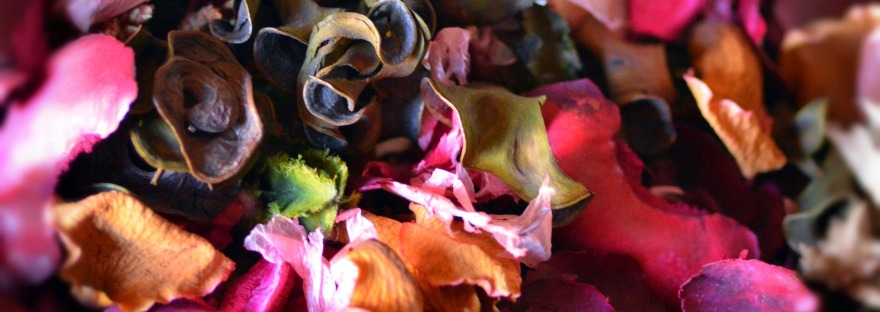
Image: A mixture of different coloured leaves petals and seeds in orange, pink and red from Pixabay.com

All Stories, sunday whatever

Sunday Whatever – The Deserted Painting by Michael Bloor

This is an account of a beguiling little puzzle, beguiling to me at any rate.. All the facts known to myself are set out below. A possible explanation is then offered. I would very much welcome any alternative solutions that suggest themselves to LS readers.

Continue reading “Sunday Whatever – The Deserted Painting by Michael Bloor”
All Stories, sunday whatever

Sunday Whatever: Not Quite the National Treasure by Geraint Jonathan


Well this is a bit of a different piece – but that’s what the Whatever post is all about. Ladles and Jellypoons we give you an essay by Geraint Jonathan.

Continue reading “Sunday Whatever: Not Quite the National Treasure by Geraint Jonathan”
All Stories, sunday whatever

Sunday Whatever – Adam Kluger

Adam is one of our more unusual writers. Since very early in the history of LS, November 2015 he has sent us quirky pieces often accompanied by his very individual art. He is a delight to interact with and is obviously a shoo in for an author interview and that treat is to come. However, one of the questions has also spawned this memoir, which was too good to turn down. And so please enjoy a bonus, Adam Kluger.

Continue reading “Sunday Whatever – Adam Kluger”
Literally Reruns, Short Fiction, sunday whatever

Literally Reruns – A Boy Once Known by Tom Sheehan 

Foreword

In honor of Remembrance Day (Veteran’s Day in America), and to honor those who served, currently serve and to those who gave all, we present a reworking of a story by Tom Sheehan first published in November 2017. Tom served in Korea and knows as much about the suffering of war, and its after-effects, as much as anyone.

Since it is an altered version, we will forgo the usual link and present the work right here and now.

All the best to the veterans and those who appreciate their sacrifices.

Diane, Hugh, Leila–Eds. Literally Stories

******

Continue reading “Literally Reruns – A Boy Once Known by Tom Sheehan “
All Stories, sunday whatever

Sunday Whatever – Visiting Bill Burroughs by Dale Williams Barrigar

This week’s Whatever is a fascinating work that was originally submitted as fiction (in truth Dale told us that it was a non-fiction piece that he had ‘tweaked’) but when we read it we knew immediately where it belonged. An enthralling story about abortive attempts at a pilgrimage. A super read. We give you:-

Continue reading “Sunday Whatever – Visiting Bill Burroughs by Dale Williams Barrigar”
All Stories, Short Fiction, sunday whatever

Sunday Whatever: The Last Man on the Island by Mick Bloor

Another Sunday treat in the form of an essay from the keyboard of Mick Bloor. Mick is so knowledgeable and this comes through in his stories which flow beautifully and record the passing of time in an easy to read and lyrical form.

Continue reading “Sunday Whatever: The Last Man on the Island by Mick Bloor”
All Stories, sunday whatever

Sunday Whatever – Movie on a Sunday Afternoon by Tom Sheehan

Anyone who has been around the site for any time at all will be more than aware of the genius that is Tom Sheehan. His work is always beautifully written and even when we have rejected stories it has mostly been because there is so much of his work and he could truly have a site dedicated to him alone. Sometimes a piece of his writing comes along and it is just so lovely to read that we need to share it. This is such a piece, we think.

Continue reading “Sunday Whatever – Movie on a Sunday Afternoon by Tom Sheehan”
All Stories, sunday whatever

Sunday Whatever by Mick Bloor

Poetry is one of those things that seems to divide readers into quite different camps. I am a poet and a poetry lover but fully understand how other people just don’t ‘get it’. This piece, though it’s about a poet is not altogether about poetry. Mick Bloor shows yet again what a knowledgeable and well read writer he is. Excellent stuff.

Continue reading “Sunday Whatever by Mick Bloor”
All Stories, sunday whatever

Sunday Whatever – In a Word by Karen Uttien

Today’s treat is from an author who has already been published by us so do check out her back catalogue. We thought this piece would speak to many of us. That niggle that you know is unreasonable but by gum you can’t let it go. Amusing but very well observed. We give you In a Word – enjoy

***

This morning, I watched a woman walk towards me.  By the time she reached me, I had assessed her in one word.  Privileged.

Gold Gucci sandals complimented the little black dress, swaying elegantly just above her knee.  Large fashionable sunglasses accentuated glossy red lips.  Long dark hair rolled playfully down her back.  Golden sun-bronzed skin – a recent trip on a private yacht no doubt.

As she walked past, Chanel No. 5 overwhelmed me.  Consuming me all the way home.  So much so, by the time I got there, I had reassessed the woman entirely. 

Her hair, although beautiful, was rather too long.  Tired.  Her skin was over-baked.  Withering.  Her pouty lips, somewhat sulky.  And the sunglasses – I suspected were masking a congregation.

Yes.  This once highly desired woman, was hanging on for dear life.  In a word.  Madonna.

Now, you realise this assessment is probably not true.  No.  But it does tell a truth; no one knows how others see you.  Which brings me to this little story …

*

It was my friend’s 40th birthday.  A best friend.  Let’s call her Jenny.

There was me and Jenny.  Her other three best friends, and our partners.  So, 10 of us.

Jenny’s a bit flash.  And very generous.  A superb combination.

She hired a room on the top floor in a very fancy restaurant. 

We were greeted by Don Perignon and sculptured canapes.  Then glided to our seats.  Chairs pulled out.  Napkins draped.  Swarovski filled with sparkling from the Nile itself.

There were somewhere between six and way-too-many delectable courses, each paired with our precious chef’s personally selected wines.

The sheer privilege, my new dress, the altitude, and Don – all attributed equally to my giddy happiness.  The entire room now reflecting nothing less than a woozy beehive overflowing with honey.

Then, just as I thought I might explode with glee, came the speech.

‘… I have thought of one word to describe each of you,’ Jenny said, pointing.  ‘You.  And you.  And you!  What each of you are to me.  My.  Dear.  Dear.  Friends.’

She began on her right.

Inspiring.  Loyal.  Thoughtful.  Fun.  Adventurous …

Now – as I said earlier – I know one can’t see how others see you but, when Jenny and I exchange our fond twenty-five-year friendship smile, I was not expecting –

‘Dependable!’  I yelped.

The night went on and my volatile happiness wafted into a small headache. 

We said our good-byes and clambered into a taxi. 

As we drove along the highway, a giant billboard illuminated the skyline shouting … DEPENDABLE DRYCLEANERS!!   I nodded sadly, and fell asleep.

*

That was nearly ten years ago.  I still bring it up.  Still throw it out to new audiences for discussion.  Most agree it is an excellent trait … on a resume.  And everyone most certainly would use a dependable drycleaner.

I have brought it up with Jenny.  Several times.  She stands by it.  I should let it go, but …

The last time I felt so aggrieved – I was six.  We were to perform Hans Christian Anderson’s “The Swineherd” for our end-of-year panto and, without doubt, I would be the princess.

‘But princesses don’t wear pink jumpsuits and curly tails,’ I explained to stupid Mrs Elliot.

Karen Uttien