
A prophecy.
The rain has cleared and though grey clouds shadow the warm limestone of Catholic St. Helen’s, the more distant neighbourhoods of Birkirkana glow under a tentative robin-egg sky. The square is returning to life. White-haired heads smoke from open windows and in doorways amazed hands point out puddles. Outside this city such a sudden rain would leave dry fields covered with unexpected crotchets of white and red flowers, but here there’s damp heat only.
*
When I returned to Malta I was surprised how quickly much of what I had forgotten became ordinary. Not the language’s musicality—that wonder never fades. The indifference of drivers, I mean, spiced food, or, to take another example, the way people feel compelled to speak of the weather. This is more fascinating than gossiping about Priests. As a child I thought Priests wearing black cassocks looked like maids from long ago but then I thought the weather dull. In a country of little rain and many Priests such obsessions struck me, on my return, as quaint—thrilling—for only a moment, before becoming invisible. It is surprising what you get used to not noticing.
The rain gone, the wind quickens; the city groans like Lazarus. I don’t know what that makes me. I’m staring down on endless dudgeon instants. Stifling petrichor rises from the street to settle on the roof terrace. I step back from the balustrade to light a cigarette. Male blue rock thrushes with flame underbellies rest on humming air-conditioners—the birds sing their long song and are good company. I laugh. The birds fly toward St. Helen’s—they nest in the bell towers. Nine, ten, a big fat hen.
*
I prefer to live mindfully. This involves arranging with deliberation and thought your life so that you might be considerate of tomorrow. You mind yourself and, hopefully, others.
Let me give you an example. If you’re trying to be mindful, you won’t use the last of the cat food without replacing it in the cupboard from the store. You won’t put in the fridge a glass jar so crammed with olives or stuffed peppers you can’t close the lid—doing so ruins the oily food and the bamboo jar lid and the fridge shelf. If nevertheless you do such insignificant yet consequential things because you’re rushing, the next person at fridge is obliged to deal with the mess—they have to put off what they’re doing to go fetch cat food from the store too.
Living mindfully is graceful if you’re lucky and might bring a sense of peace until someone who doesn’t live that way moves in.
People who don’t live mindfully constitute a majority. I don’t want to single out anyone. I don’t believe this is unique to the English though it was there during my studies I first noticed thoughtlessness, and later, working in a university, also when I married. When we moved to New York it was the same—though they didn’t pretend politeness.
Being mindful sets you apart, leper-like.
*
It cannot have escaped your notice how with graceless ease most people assume they are extraordinary, entitled to call mindful people finicky or pedantic or, as in the case of my ex-wife, an arsehole.
She said to me, ‘Tobias,’ which is what she’d call me when mad (she called me much worse when livid), ‘Toby’ (trying to ingratiate herself), ‘everyone is born with an arsehole but that does not obligate them to be one.’
‘Do you mean “oblige them”? Can I get you more wine? It’s a fascinating and familiar creed. What’s the source?’
‘Facebook.’
Self-abnegation is a modern tragedy.
*
Maybe it was my abusive childhood that taught me the benefits of living mindfully. The itching in danger’s presence becomes intuitive. That’s some open wound that stays with you. Like a nursery rhyme—one, two, buckle my shoe: once learned its hard to shift.
Mindfulness is the gift that keeps giving. There are times I wish I was ordinary, able to turn down the perspective coming with alertness, but I’d rather remain aware of just how easily an ordinary life binds. Rather be cautious than embrace a heedlessness permitting such poison to worm deeper.
I figured being mindful was a way to not give in—don’t give your abusers any semblance of mastery. To be mindful then was to escape the bedroom unharmed.
Three, four, knock on the door. Don’t let them catch you at home.
*
When you live mindfully—adopt a calm thoughtfulness—you consider the implications of your thoughts as well as actions, such as when encountering a wonderfully sour and insipid example of Stupid (with a capital S) on Facebook.
I once had an account but I recovered after a few hours. It is the kind of space in which old people gather to vent their diseased spleens or grey matter or what have you without the burden of thinking—given it is mindful to critically consider what’s being presented, Facebook wasn’t for me. We didn’t get along.
We hardly dated if I’m honest.
*
I used to say to my ex that it never hurts to ask what it is the writer wishes to evoke.
You should ask—will my hips truly reduce four sizes with that snake oil? Are collagen capsules good for the habitats of orang-utan? Does this make my skin appear twenty-years younger? Will steroids get me laid? Are cat videos better than Malcolm X? Of course if you’re mindful the answer is no—incidentally, the moon is not hollow—but if you’re too busy rushing to the next endorphin fix to cross examine such statements then you’re bordering on being mindless. Be assured. You are amongst the majority.
Try saying this stuff out loud and see what happens.
*
Birkirkana is unreachably distant. Below a Priest talks to a woman in a wheelchair. She’s putting him straight. Two guys are sitting on damp seats outside a closed bar. A café has opened and the smell of grilled chicken adjourns wonder. Thrushes return to sing a lullaby.
The sky is primrose beautiful, heavy with evening’s promise. Street lights ignite. The purr that is people. Sweat flows down my back. Bare toes on rough balustrade. The priest looks up. He stumbles onto the woman in the wheelchair. I wonder which of them is disabled. Eleven, twelve, dig and delve.
*
It will strike you—as I have been repeatedly struck—that being an outsider to the madness of mainstream society fetches risks—denigration, divorce, five, six, pick up sticks—but also rewards such as a commensurate social quiet. Good for introverts.
You get hobbies done, like writing or baking or being kind to those who probably don’t deserve it but need it. You might continue to battle depression by declaring small day-light saving victories. Let real men get on with shooting things or riding their road bicycles on pavements while their trad wives burn books by Gloria Steinem. I always believed Jonathan Franzen to be a novelist but of late have come to admire this documentarian.
*
I met my future wife at university though she wasn’t the marrying kind. She later said she wished we hadn’t met. I wouldn’t disagree. We moved in together and immediately didn’t get along so we had kids. I tried mindlessness you see.
*
The Priest’s pointing. He looks small but believes himself significant, drunk of eucharist. No-one points like a Catholic.
He’s joined by a Curate. Together they shout unheard sermons.
Thirteen, fourteen, maids a-courting.
*
It’s reasonable to wonder whether unthinking people serve a purpose. If unthinking is so widely dispersed—like Stupid—surely evolution selected it. Evolution is mindless. It abhors experts as readily as vacuums. Peer-review is not a seaside structure for the kiddies to enjoy. This is joke Stupid doesn’t get. Maybe unthinking people are easier to get into bed. They reproduce more than mindful people because the former pay no heed to what the latter fret about.
In England I walked university corridors smelling of incontinence and students decrying the books they had not read. I graduated, fell into an academic job.
The right to express yourself outweighs the need to know what you are talking about.
*
University manners were so ridiculously contrived I couldn’t not weep or laugh. Beyond gown in town people behaved equally odd. The street we lived was full of smiling liars and families scattering litter on our lawn. I got into trouble for laughing or crying at faculty meetings or in supermarkets—everyone seemed to be in a musical and I couldn’t fathom the choreography.
Getting married early and having kids might have lessened my emotional incontinence and aided my career by providing security had I only turned off my head. Conventional life, conventional behaviour, all that. The more unmindful I grew the more I was struck with the artificiality of society and if you stand back far enough from events the view from Golgotha is a hoot—the world appears all circus. I tried to behave like the normal people. Tried and tried. I didn’t find myself convincing.
*
I haven’t got to the point of my story but the end is inevitable—I have written this out beforehand. Maybe this is the gift of prophecy inherited from my grandmother.
*
When I first visited England I fell off Hellvellyn—it’s a little hill in the Lake District—and felt I’d never landed. Getting married and having kids was the equivalent of an airbag. I had a pension, why not the rest?
We socialised with other couples with kids. A lot of screaming. It seemed we suffered from the shared belief our children were as fascinating to others as they were to ourselves. I told people, boasted maybe, of first steps, crayon pictures, zoo trips. The complicity of friends—weren’t we all lying? I could not understand why they hung out with me. I didn’t get any pleasure hanging out with them. Yet we hung. When I asked, ‘Have you noticed—?’ they’d stare as if I were diseased. So I’d cry or laugh or talk about miles per gallon and sex positions and calm normality was restored.
It’s tasted beige.
*
I scrutinised my colleagues and friends, then my wife. I’d try to explain my sense of apartness. They began to extricate themselves, chose phones over faces. When we ate together people began to speak another language. Once, I mindfully observed myself making love with my wife and laughed at her bored expression—she messaged a colleague over my shoulder, smiling at some private joke.
People apologise without contrition and feign interest in conversations they are clearly bored by—have you noticed? People cut across other speakers to insert themselves in all manner of topics about which they have no experience—men opine about menstruation and child-rearing. Is it me or have you seen this? The music on the radio is all the same. People speak incessantly about streaming services not stars or planets. Food though brightly presented tastes grey so I eat more and more to find less and less goodness. Eggs shrink, cars grow. We breathe poison and complain we can’t swim the ocean. Blah blah blah sing the airwaves buy this mouthwash.
*
I got a job with the United Nations and we rented in New York and found we might have moved anywhere, to the middle of nowhere even; my ex loved the apparent glamour and the kids enjoyed real sirens.
When some comb-over prime minister was speaking at the UN I discovered I had no ability to lower the volume of my laughter until escorted by two security women from the translator’s box to a cool rest room. Two written warnings in a week was apparently unusual.
A fit of giggles isn’t tolerable and neither is crying expected from a translator. The UN takes itself pretty seriously—there are no variety shows at the UN despite appearances. I heard several people laugh as I shouted, ‘Let me tell you about his offshore accounts!’ when rendering into English from Spanish a speech concerning human rights. Seven, eight, lay them straight.
I told my wife, ‘No dictator is over six foot, have you noticed?’
‘Look at this cat video!’
I found a job in computer engineering at a university in Prague and though I didn’t speak the language I could read people.
We never made it.
*
A moment of inflection. Due to the cat food and the food storage and my wife’s irascibility at being removed from New York, on the flight out I said I believed without rancour that it was best we separated and she said—I predicted her words, wrote them down in a Nostradamus memorandum—that maybe we should work it out.
‘“Should” is an interesting choice and I wonder what precisely “it” is.’
She wasn’t able to say. And though this counted, I suppose, as a serious situation, and despite my intention to live and think mindfully, I giggled.
You see from all this I’d had one hell of time remaining mindful in a mindless world and I can only imagine that at the age of thirty-eight my body was attempting to give up its ghost.
‘There’s a brain condition,’ my wife said over coffee, ‘called PBA’—to health professionals like her there’s always a biological cause—‘rendering people’—not dolphins: there’s no evidence higher lifeforms are affected—‘unable to stop crying or laughing at inappropriate times.’
‘Appropriate is a social construct without merit outside the heads of Stupid people—why should church be sacrosanct?’
Let me tell you, laughing during a marriage-ending conversation over the Atlantic is not recommended.
She confessed my tendency to laugh at moments of high drama or sob post-orgasm had seemed merely a mood disorder that she hoped a good wife might cure.
‘I see now you don’t think I’m good enough.’
Apparently one is supposed to deny this rather than laugh.
The more serious she became the funnier it seemed and the louder I laughed and the more medical her language became. She said I was autistic and mentally ill and a psychopath—with each giggle she upped the ante of clinical accusations.
PBA is colloquially known as emotional incontinence. This is nothing to laugh about when you’re trying to talk about your marriage. Maybe people even without PBA—known as pseudobulbar—would have found amusement.
I told my wife we should definitely separate and she said, ‘Thank God,’ before fixing her hair and taking a selfie with the kids. It’s difficult to say who was more upset but I guess it might have been the cabin crew.
*
A small crowd looks up in fascinated horror—like a scene from a Biblical painting. Thrushes sing like a choir. People take pictures. In the distance a siren skips closer. People wave. The puddles have dried.
Priests are eager to insist they best know how to navigate a life they do not live. They’re always wanting to save you even if you don’t deserve to be saved. Fifteen, sixteen, maids in the kitchen.
From the street the balustrade looks ornate but up close its rough work, unfinished.
The Curate waves—maybe he’s summoning angels.
Seventeen, eighteen, maids in waiting.
*
I lasted as long at the UN as I did on social media. One thing led to a glass jar and cat biscuits and after we separated I went home to Malta and the empty family house.
In the attic behind a void I found all manner of belongings abandoned by my grandmother, including, made of dark wood, a cigar box containing a dozen letters to her dead husband: he died when she was forty-eight (he was thirteen years her senior).
My ex wants this house. She muddles the children’s names. Recommends medication.
The family house in Birkirkana is tall and mostly empty—it looks severe but is warm inside with wood beams and open fires. No wall without a book. Every room has family photographs of people I do not remember. I live alone, relying on my savings. I go for walks and watch people act in ways that make no sense. I enjoy the flowers in the fields and the way Priests pretend to be unafraid of love. I’m a fool, I’m told.
I read my grandmother’s letters—she was somehow undaunted by similar ridicule.
When I discovered my grandmother’s letters I laughed at her writing to a dead man.
In one she writes, ‘Grief is not a human disease to be cured. There is no healing in ignoring loss. Grief is a gift that deepens the soul—it is love’s watermark. Death as absolute extinction of the body’s mind cannot be disputed and yet he comes in dreams of coloured breath and we make love.’
I consider the thoughtless cruelties ordinary people inflict on outsiders and appreciate why my grandmother wished for another world. Pseudobulbar isn’t the disorder my ex says. It’s a way of managing a human world that makes no sense.
‘Face grief,’ my grandmother wrote. ‘Embrace its lessons.’
I will put my letter with my grandmother’s and hide them in the void. People expect a note.
From the roof I have laughed at the city and cried with thrushes. I have enjoyed rain and sun as evening stars announce themselves. I tried and I tried to understand. My grandmother’s letters are sadly beautiful and should be in a museum.
In her last letter she wrote, ‘When you live alone there is nobody to tell you when to stop eating or whether to sing.’
The density of priests on Malta defies expectation. There must be four of five stretching out their hands right now. Nineteen, twenty, my plate’s empty.
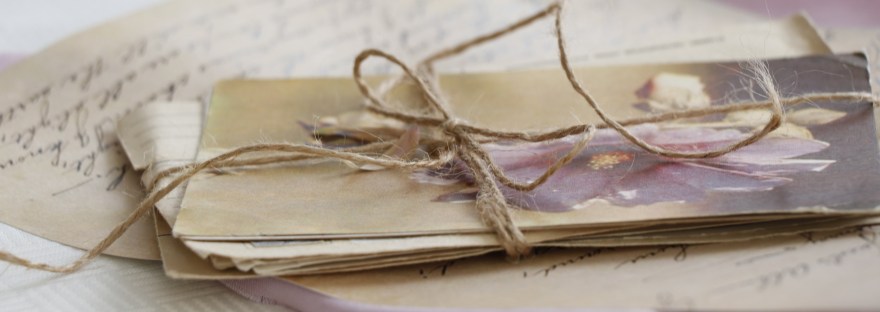
Banner Image: by Margarita Kochneva from Pixabay – a bundle of old letters tied up with old string in a bow.
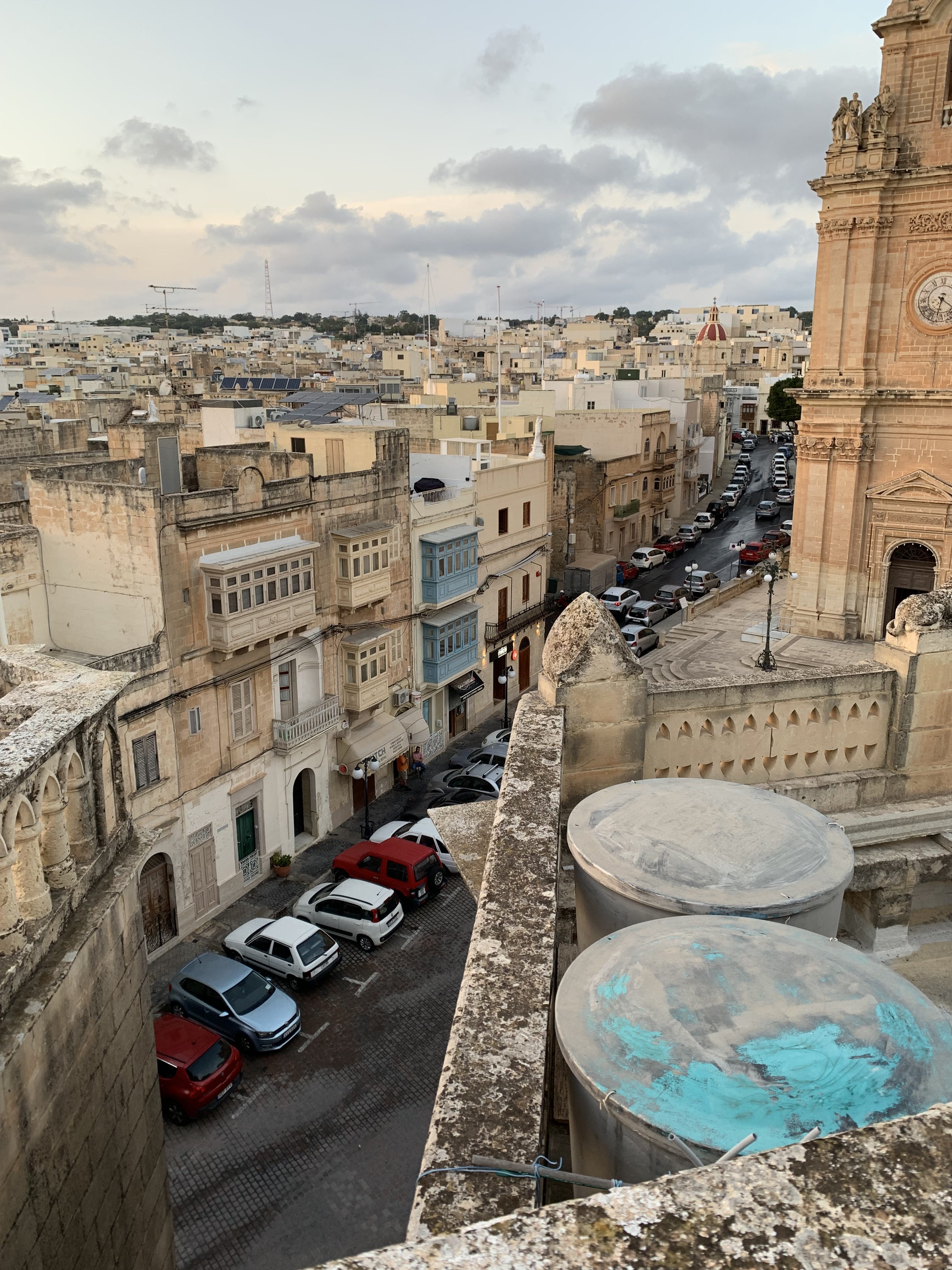
Page image: Birkirkana Rooftop provided by the author. A view of flat rooves and a road with cars parked, overhanging closed balconies and a church in the corner. There are cranes (the building type) in the background and tall aerials.


Hi Tobias,
This was one of those self-analysis types of things.
There were quite a few bits and pieces that were brilliantly observed.
Only my opinion, but Mindfulness is something that took over from Person Centred. And we now have all this woke shite. I don’t believe that we can live our lives to one set of ideas and opinions. The truth be told, we need to wing it and do the best we can to muddle through!!
This is superbly written. It’s easy to see what a good writer you are!!!!
Hugh
LikeLike