

“Hey babe, what tie should I wear with this shirt?” I asked, draping a solid pink tie and then a diagonal-striped black and blue one from the collar of my black dress shirt.

“Hey babe, what tie should I wear with this shirt?” I asked, draping a solid pink tie and then a diagonal-striped black and blue one from the collar of my black dress shirt.

Having spent the previous day stripping layers of old paint off the shop front the last thing she wanted to do today was begin on the interior. But needs must. Her body complained as she dragged it out of bed, Al still snoring contentedly beside her. He was a lazy bastard but to be fair to the boy he’d worked hard the previous day. He’d climbed ladders and brewed up and carried stuff and taken increasingly fraught instructions as she slowly reached the end of her tether. He moved an arm and an eye shot open then closed again, his head being buried further down into the pillow.

I’m sitting in my Manhattan psychiatrist’s office feeling so anxious and depressed that my limbs aren’t sure whether they should twitch spasmodically or rest heavy and stone-like inert. But the shrink, let’s call him Dr. Becks (in real life his surname is actually just a different brand of beer), has my fickle attention suddenly. Why? Because instead of talking about how to cure me of my various mental illnesses (the impossible dream) he’s talking about an idea he has to make my all but moribund fantasies of big-time Hollywood success come true. He thinks this screenplay idea that he thought up, based on some show he saw on the History Channel, would make a perfect project to attract the attention of one of his celebrity actor patients – let’s call her Kali Kass (in real life her first name is just that of a different Hindu goddess). And who better to write the initial spec screenplay treatment (i.e., unpaid long synopsis) than me, Evan Breach (pseudonym), the man who has written and directed micro-budget films that have been reviled around the world at tiny film festivals (and even the occasional big one, where at the coyote-like reviewers were waiting to rip him apart with mere words, their fangs dripping auteurial blood).
Continue reading “The Hell with Hollywood by Edward S Barkin”
“. . . ?”
How can you help? Hmm, how can you—
“. . . ?”
My mother? . . . Okay, we can start there. . . . My mother—my mother came from a large family, a very large Irish Catholic family. Do they make them any more? I think not. . . . At any rate, as a boy, a young boy, no more than eight or nine, I would employ the template of the Baltimore Catechism to sort them out and keep them straight—the Faheys I mean . . .The catechism’s set formula, y’see, helped me convey the essential and fundamental content of the Fahey family. Beginning—
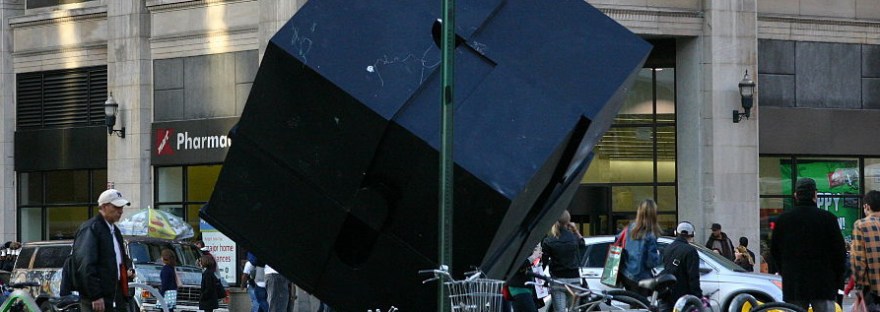
The New York Art Scene was dead.
Music too.
So Morgan Tripfalter did what he had been doing his whole life.
He watched television.
Born in New York City during the mid-sixties, come of age in the gritty seventies and introduced to the downtown scene in the 80’s, Morgan was no stranger to what Manhattan had to offer. The good the bad and the weird.

I pinned the latest of my twin brother’s postcards on the corkboard above the desk our father never used. This one showed the famous bridge that I’d seen in books and on TV. Finally made it. Wayne used the same blotchy pen to scribble Mom and Dad’s address. It was my address too, but I rarely got mail.
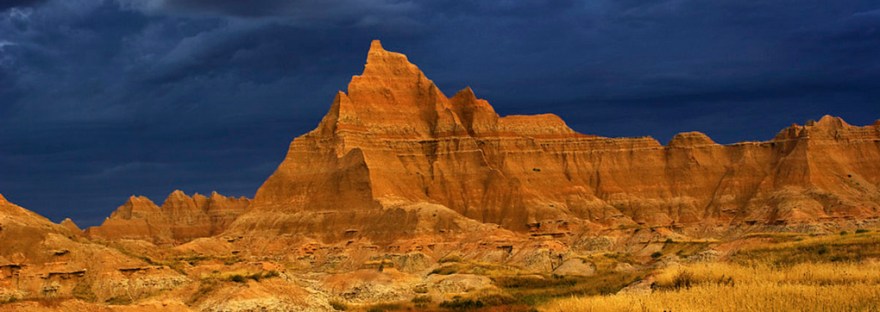
There near the edge of a cliff overlooking a broad open area of grassland outside the town of Wall, South Dakota stands Eleanor’s house. It is a huge wooden structure built in the 1940s and one of the few houses built along the ridge looking toward the Badlands and along the road leading from Wall to the Badlands National Park. It is a weather beaten house, with the remnants of the bright white paint that covered it peeling from the weather-worn wood, and a single slightly tilted chimney of red brick sticking up at mid-roof. There is a wrap around porch, the back of which I was told offers an amazing view of the pink, the beige and purple layers of the Badlands formations miles away, and the ability to see antelope, coyotes and even a few buffalo that roam freely through the tall prairie grass below in summer and a blanket of drifting snow in winter. In the front of the house, leading from the porch to the gravel path that leads from the driveway to the house is a ramp that was built to accommodate Eleanor’s husband who had, later in his years, become unable to navigate the stairs.

Tommy lay in the middle of the train tracks looking down between the railroad ties. It was fifty-feet to the shallow river that ran underneath the trestle. A low growl made the wood and metal shudder.

Eight years locked in bed by an accident, his wife’s life an obscene penalty, Peirce Keating was left with only imagination. And little hope, though today might prove different. He loved his wife May, the sea, and bright company. Old pal Gary Mitman was this day’s gift, this day where hope might gain one foothold. That and viewing mirrors he controlled by head movements.

“Fran,” Beth says, “do you know that tall people do not live as long as short people? It’s a scientific fact, and most likely why basketball has never caught on in Okinawa.”
 literally stories