
Everyone has a wretched story of their own, or at least everyone should. Mine began not in the street but at home. Nearly everyone’s story begins at home.
I never liked the script of this life I entered kicking at my mother’s belly. Still, I had no choice but to arrive. You cannot keep your distance from sorrow; sometimes you are born directly into it. But you cannot walk with sorrow either. The best you can do is hoist it onto your shoulder like some God-cursed angel and keep going.
“Oh God,” you say. Then you let the rest go and keep walking.
I have never cared much for people. Then again, I do not care for animals either. I have always been wary of living things moving around me. The dead appeal to me more. I can build an imaginary world in my head from the words of people who have died. I cannot question them, and they cannot question me. I do not think questions make life lighter. On the contrary, they do little more than confuse us.
When I closed my eyes, the fact that I could no longer see the things I feared gave me a sense of safety.
I opened my eyes in a crowded house. The first things I saw were misery and hunger. My child’s body became a young woman’s; then I grew up and began to grow old.
Little girls, little boys; a mentally ill woman looking after them and a passive man…
I remember my mother and father only dimly. They died as if they had been meant to die young. The one thing I remember about my mother is that her heart hurt.
What I remember about my father is his dead body lying in the middle of the room.
Women and men wailed and screamed around him. Something wrapped in a white shroud lay in the center of the room. His face was hidden. They drew the cloth back at his feet. The last thing I saw of my father was his big toe.
I put that cold toe in my mouth. It was like a cold twig. That was how I kissed my father for the last time. I do not know whether I had ever kissed him before.
The dead are cold.
I remember them carrying my father’s body on their shoulders down from the courtyard and me running after them. Two women caught me. They held me by squeezing my arms. It hurt. The tears of my seven-year-old self mingled with the pain in my small body.
My father was dead, but those women hurt me more.
What followed was the ruin of a house struck by death.
After my father, my mother dressed in black. She never smiled again. In truth, she had buried her aching heart with him. She was like an empty shell waiting for her body to be buried too.
In the years that followed, my mother was always ill. Her heart could no longer carry either her or us. Every day she gave us the feeling that she might die. I was afraid she would die, but I wanted her to die too. My own heart could no longer live each day with the fear that she might already be dead.
Sometimes I would stand outside with my ear against the wall, trying to work out whether my mother was dead or alive. If she had died, I thought, there would be no sound from the television. Because the first thing people did when someone died was turn off the television.
The sound of the television became the sound of my mother’s death.
My mother died in a cold January. I was not even beside her. Because we attended school in town, they had taken her back to the village. After she died, they came for me, my other orphaned sibling, and my cousin. We cut through the snowy roads to the village.
The first thing I saw was the tiny room where my older sister lived with her children. The smell of damp and mold seemed strange to me. They had washed my mother’s body there before taking her away.
I still remember the patch of snow in the courtyard from which they lifted her funeral bier. The footprints of the people and the marks left by the board they carried on their shoulders remained there in the snow.
What wounds a child most is being left without an identity. I was now alone and without one.
The people there are as cold to women as winter. There was earth in which my mother had been buried, but there was no grave. Somewhere in that vast cemetery, her grave had been lost. She was dead; she did not even have a grave.
Whenever we visited the cemetery, we went to my father’s grave and prayed. We never knew where my mother, the missing woman, lay.
I never went back to the cemetery. Whenever I did, I felt more anger toward the dead than toward the living.
I was an orphan, free as a bird.
A vast, crowded extended family, full of children…
Families are nests of curses and pus. How many children emerge from them with broken arms, broken legs, and broken hearts.
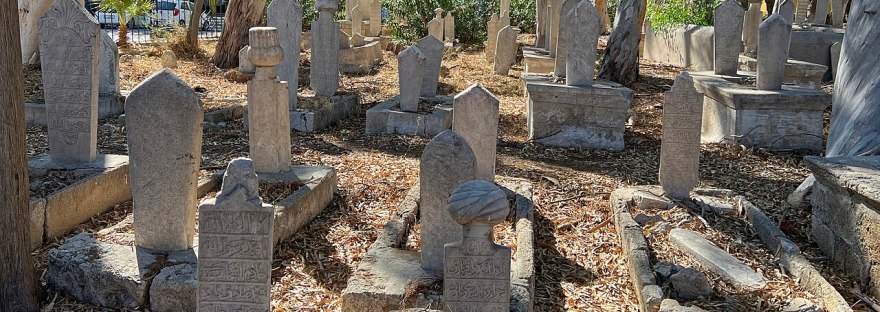
Image: Burkhard Mücke, CC BY-SA 4.0 https://creativecommons.org/licenses/by-sa/4.0, via Wikimedia Commons – A turkish Graveyard with graves crowded together surrounded by fallen leaves and twigs. Some graves are dilapidated with the surrounds broken all have tall headstones.


This story may not exactly brighten you day but it does make you think and feel and that is surely the point. the tone is perfect, and the reader can’t help but feel sympathy for this poor, sad, human. I thought this was a really striking piece – thank you – dd
LikeLike
Dear Diane, thank you so much for reading my story and sharing your thoughts. Your words about its tone, and knowing that it moved you, mean a great deal to me. Warm regards, Feride.
LikeLike
Feride
That line about the toe will stay with me for a long time. Mentally ill people often raise families. The results definitely vary, but the fact that they would try might give them a measure of holiness that others do not consider. Bleak beautiful work, like a lovely, yet deadly winter field.
Leila
LikeLike
Dear Leila, life is so cold, especially when you are a child. Though the story is cold, your comment warmed me. Knowing that the scene stayed with you means a great deal to me. Thank you from my heart for reading my story so attentively and sharing what it made you feel. Warm regards, Feride.
LikeLike
Hi Feride,
Well this was bleak and depressing!!
..It fair cheered me up!!
It’s quite brave to write this way as it can put readers off.
But there is probably a lot of truth in how the MC felt and that can’t be disputed.
The telling of the story was well done as you didn’t fall into the trap of ballsing up the voice of a kid as the MC looked at the story through adult eyes. That should be easy to do but we’ve so many writers who make an absolute shambles of that.
Excellent story telling and technically sound!!!
Hugh
LikeLike
Dear Hugh, your comment made me smile. I think one of the beautiful things about literature is its ability to make us both laugh and cry. Life can be very harsh sometimes. Your observations about the narrator’s voice mean a great deal to me. Thank you so much for your attentive reading and for sharing your thoughts. Warm regards, Feride.
LikeLike
Feride,
Yeah, kissing the cold toe stopped me in my tracks, too. But everything was in perfect context. A great job with a difficult subject. — Gerry
LikeLike
Dear Gerry, knowing that the scene stayed with you means a great deal to me. Thank you for reading my story so attentively and sharing your thoughtful comments.
LikeLike
A strong piece. The image of the child kissing her father’s cold big toe is one of the most powerful I’ve seen for awhile.
LikeLike
Dear David, I’m so glad that image resonated so strongly with you. Thank you for your kind words and for taking the time to read my story.
LikeLike
A grim piece that cuts to the bone! Strikes a dark and mournful tone and carries it through to the end. Very well constructed!
LikeLike
Thank you so much, Steven. It means a lot to me to hear that you felt the story’s sadness all the way to the end. I’m glad you took the time to read it and share your thoughts.
LikeLike
A lot of interesting metaphor and bold writing in this one. Bleak, but mystical, and at points suitably ambiguous and odd, such as ‘I never went back to the cemetery. Whenever I did, I felt more anger toward the dead than toward the living.’
LikeLike
Dear Paul, the narrator’s anger toward the dead comes from her love for them. I’m glad those lines stood out to you. Thank you for reading my story and sharing your thoughts.
LikeLike