
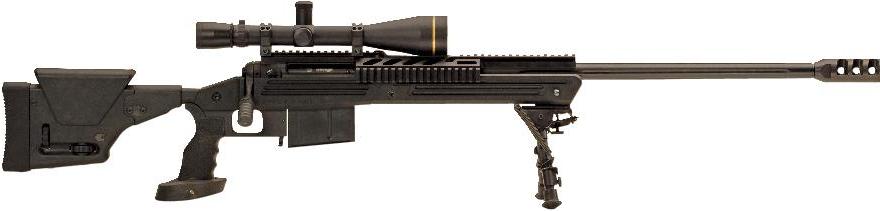
He finds it beneath the firewood, stashed amongst hickory and maple, wrapped in linen cloth and frayed pages of a Daily Express; by its side, ammunition.
It is long and unwieldy. Rowan has never held a rifle before. He examines its walnut stock, a Savage Model 110, rubs his palm along the shaft and looks around. As far as he knows, no-one has come to his grandfather’s farm in weeks but the item’s sheer menace beckons caution. Swallows swoop and warble, eyeing his catch, tending their precious nests in the rafters.
Does it work?
He turns it in his hands, holds it up, takes aim.
Is it loaded?
He has no idea how to use it. He googles Savage 110, allocates pieces and elements, slings the leather strap over his shoulder and walks to the far end of the barn. The swallows look on in silence. Rowan wonders what he looks like: stupid, no doubt. Yet he doesn’t feel stupid.
He cocks the rifle, aims at a cart by the door and pulls the trigger. It pushes back on his shoulder but his thick jacket cushions the recoil and Rowan thrills to the sensation. His two collies flinch, lying near the door, their eyes glued to the cart. Birds scatter and abandon the barn and the blast has smashed his ears: they hum.
Rowan sets off to the hills. The sheep need to change fields, the weather is good, dry, and the sky Constable blue with lamb clouds, the dogs willing, quick and skilled, rounding up stray members ‘til all fuse into a herd, filling the trail between the fields through scrub and thickets lining the path to a lush open meadow where the sheep hobble in all directions.
He rewards the panting dogs, their tongues hanging from happy snouts, then looks across the land. The rifle rests against his side, it is lighter than he thought, not cumbersome but trim. Before he uses it again, he’ll need earplugs. His ears still hurt. He wonders about its range. He feels different. By the woods he spots deer and lifts the weapon. It would be so easy.
***
‘I found a rifle,’ he says, ‘in the barn, must have been there quite some time. God knows how it got there.’
He sits with his mother at the kitchen table, the dogs on blankets by the door. It’s cold, it’s always cold in the kitchen: stone floor, motley tiled walls, the single-paned windows and only heat from an ancient stove. She shifts in her wheelchair and lifts a spoon of lentil soup.
‘Did you hear me?’
‘Too much vinegar,’ she says.
Rowan watches her eat. She dunks a chunky bread crust, soaks it, leans forward and snatches it to her mouth, soup dripping onto the table, trickling down the contours of her chins then onto her lap.
‘It still works.’
‘Oh yeah?’
‘I hit the cart with it.’
‘That so. Thought I heard something…’
‘It’s not as heavy as I thought. Shall I fetch it?’
Sharon Carter wipes spilt soup from her lips with a stained cloth serviette she’s used for weeks.
Conversation is limited to her own memories. Her time is limited, too. She can still walk, but prefers the comfort of wheeling and, since Dr. Hancock’s diagnosis, has turned away from the world, assuming a capricious demeanour, at times wicked, at times not this side of life, twisting her mood to suit her fate, she has discarded empathy, all interest in others and is permanently cantankerous. Her end, the implacable, uncontrolled march of malignant cells, has stripped her of self-confidence: a greater power is in play. For her, an unknown state of things. Rowan bears with her ill temper.
‘Will you be having any more?’
‘Is there bread still?’
‘Would you like butter with it?’
‘Is there cheese?’
‘I’ll get it…’
He opens the fridge and brings her a plate of sliced cheddar, the butter and two pieces of baguette from the day before.
‘D’you think I should turn it in?’
‘What?’
‘The rifle, Mum.’
‘Will you not be needing it?’
‘To shoot rabbits, I suppose…’
‘You’d miss.’
She packs some butter and cheese between the slices and stuffs a huge part of sandwich into her mouth. Rowan looks away.
‘Your table manners are slipping, Mum. You don’t eat, you scoff,’
‘Who cares…’
‘I do.’
She finishes her bread and moves her wheelchair from the table.
‘I’m watching TV…’
‘Anything good?’
But she does not reply and wheels into the living room.
‘Mind how you go with that thing. It’s no toy, Rowan.’
‘Any idea where it’s from? I mean, someone must have put it there…’
‘Does it matter? Bring me a stout, there’s a good fella.’
He pours her drink, moves his chair nearer the stove and scrolls through rifles.
***
Sharon sips her beer and, having switched to the sagging sofa, places her legs on the wheelchair seat.
She curses that fool, Jack Scully. Fancy plonking it in the barn.
She fiddles with the remote. Rowan has installed an oversized TV which took her eyes a while to get used to. She watches a man in trunks eating something vile. He winces and the camera moves to others near him, grimacing likewise. These are all famous people but Sharon hasn’t a clue who they are. The man vomits, then laughs, then a woman attempts to swim through a pool teeming with sturgeon and perch.
Sharon shakes her head. Is this what viewers want?
She zaps through the channels: golf, lions, Barnaby, war, cut-price necklaces. Then a commercial with meerkats discussing finance.
Her mind folds. Sharon is tired and bored: resigned. She will not be given a second chance. She knows this. Off. She sits in the dark room, crying. Is this how it always ends? Is this it? Her mind wanders through life, as so often since Hancock’s words. The images are sharp, perceptible: the crossroads, the triumphs, the calamities, the fury of family and work and friends and money and duties and temptations, of sins and loss, joy and pain, the regrets. Is it ever any different? Futility has long smothered purpose and meaning. Sharon is exhausted and a sense of complete desolation fills her being. She knows she ought to feel gratitude for so many things, but her strength has drained away leaving a baseness which, when she wakes at night, appals her and she vows to be kind again, but come the morning the emptiness returns. She drags her weak legs upstairs, pulling at the banister, and longs to sleep, praying she will never wake again. Her prayers, as ever, are in vain.
***
On his bed Rowan clutches and paws his find. He likes the name, Savage, he likes the feel, he likes its solidity, he likes the resistance of the trigger, he likes the wood, the cut checkering, it feels snug in his arms and in the morning it lies there awaiting attention.
He slings it over his shoulder and walks to the bathroom. It looks strange dangling on his striped blue pyjamas. He leaves it on the toilet seat while taking a shower, then poses with it naked in the wardrobe’s full-length mirror. He likes the look of the gun on his body, he looks stronger, he feels more potent, he’s not afraid to toss it in the air and catch it, point it where he wants, it enlarges his presence, lends him potential he has never known before.
Later, in the fields, he stands with the dogs and aims at a distant fox. The last thing Rowan needs on the hills is a rifle. And yet, with the gun slung over his green jacket he walks, not with swagger, but with a strange confidence of being prepared, perhaps invincible, and wonders how he ever felt at ease before. He finds it hard to recall how it was then.
The dogs are restless, their ears pricked, both look across the hill and bark, running towards the intruder. Rowan calls and whistles them to his side and watches the figure approach. Old Jack Scully from the local store plods along the beaten path, waving, shouting something he cannot hear. Soon he’s beside him. Rowan removes his earplugs.
‘Morning Jack, there. Bit out of your way, is it not? Good to see you again, though I’ll be down later anyway. We need plenty. How are you now and what brings you up here of all places?’
They shake hands.
‘Ah, I just called on your mother. See how she’s doin’. She’s in one hell of a mood, you poor lad. Gave Doc. Hancock a right rollocking, good job he never heard it. He won’t help her, she says. And your soup’s awful.’
He looks Rowan up and down as though discovering a new person, and points to the rifle.
‘Yeah, I found it in the barn. Hidden it was.’
‘So your Mum said. What’ll you be needing it for?’
‘We’ll see. Can’t do much harm as long as it’s with me.’
Rowan smiles awkwardly and Scully stoops to stroke the dogs.
‘No. I guess you’re right there. So, I’ll be seeing you then?’’
‘Right you are, Jack. Take care on the way down now.’
‘And you go careful with that Winchester.’
Scully turns and sets off down the track. When he’s barely 100 yards gone, Rowan aims his rifle and holds him in his sights. Scully walks unsteadily, the path is uneven, but the Savage follows his every step and turn like a natural eye. Rowan’s index finger pulls at the trigger … sure does give you a different feeling, he thinks, while the collies lie like statues on the rugged ground and he watches Scully disappear slowly into the valley, turning once to wave.
***
When Rowan returns from the store she’s not in the kitchen, she’s not in her bedroom and she’s not watching TV. Her wheelchair stands empty by the door. Her green Wellingtons are gone. Her slippers are perched neatly on the shoe rack.
He knows.
Standing in the yard, he marvels at the marmalade sunset with suspended orange lines and breathes in this moment of sublime obscurity.
She can’t be far.
Rowan finds her on the hills, face down in yellow gorse, the Savage gaping from her head, tucked beneath her corpse, blood-coated bracken peppered with brains and flesh. He slides out the rifle. It takes three men to carry Sharon to the sheep trail. Loading her onto a ramshackle cart, they pull and push across coarse heath dipping into the farmstead as sheep raise their chewing heads in interest, crows circling, their grating caws fill the air before they peck indiscriminately at the pieces.
Scully is at his shoulder.
‘Probably for the best, Rowan.’
‘Maybe Jack, maybe. But with a rifle?’
‘That’s what they’re made for, lad. That’s all they’re made for.’
Image: Savage 110 Rifle from FrankWilliams, Public domain, via Wikimedia Commons

 literally stories
A grimly striking piece laden with just the right amount of detail to pull the reader in. I liked the attention paid to the behaviour of the dogs – very nicely done!
LikeLike
An enthralling and gripping story with a chilling ending. there is a lot in this taking into account the relatively small word count. Really well done – thank you – dd
LikeLike
Hi Henry,
I enjoyed this!!
I do think certain possessions can sort of possess you and this was where this went.
There was a hint regarding the fellow who left it there. Only a hint mind and that added to the story.
The word for the lady as being cantankerous was well described.
All the very best.
Hugh
LikeLike
Henry
Truly a human tale. The paths of the son and mother intertwine and they give meaning to a tool. The inner descriptions are fantastic. In another hand this could have gone very badly.
Leila
LikeLike