
By Chancellorsville, his camera had grown heavier, the straps of its leather case cutting into his shoulders, the sway of its brass and wood bruising his ribs. Among the war dead he had photographed, he lacked one, his sister, Ana, who had died two years earlier in a field hospital outside Fredericksburg. Fever, they’d said. By the time he found her name in a ledger, no body was left to claim.
She’d carried the camera before him, photographing what she couldn’t heal, preserving what turned others away, one glass plate at a time.
She’d gone to mend the wounded. He marked where they fell.
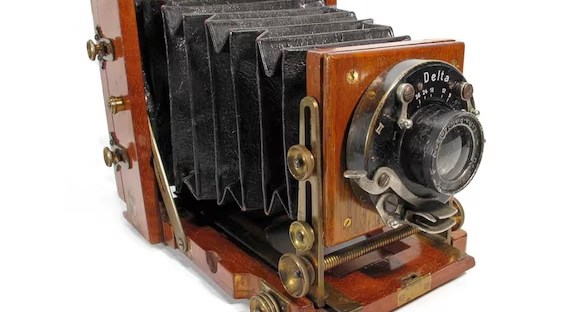
The camera was just a mahogany box, a brass lens, tripod legs bound in twine. His gear groaned as he walked, smelling of ether and silver, a sweet, acrid murk like the wounds Ana had dressed in the battlefields.
He arrived three days after the shooting stopped. The woods still smoked. Bodies lay bloating, their coats singed, skin blistering like overripe fruit. Through churned earth, he took his steps with care, camera tucked under his arm, the lens jutting forward into the horror.
Gray, or blue, he photographed the fallen soldiers where they lay, their blood dark, soaking into the soil, the air alive with flies as they feasted on wounds stiffened into grimaces. The smell of death clung, heavy in the lungs and slow to leave, living at the back of his throat where his prayers once dwelt.
Under the cloth, the world unfolded in reverse. Upside-down where left became right. The dead looked alive while he waited to uncap the lens, stalling reality’s advance.
He brought the scene into focus, coaxing light as it caught the slack frown frozen into a soldier’s face. He waited for the light to tell him to make the exposure, collodion still tacky on the plate.
The stink didn’t reach him in here. Nothing did. Not until …
“She’s ready.”
A girl’s voice. Quiet. Close.
He froze, invisible fingers within his mind, darting to plug the dike that held back the madness outside. Reason fought fear, and as it won, it drove to the front of his consciousness.
He had heard no footsteps nor rustle of skirts. But the voice, Ana’s voice.
Her tone, soft and certain.
He hadn’t been with her at death, but her voice had returned in dreams. “It’s done now,” she’d whisper, a forgiveness for his absence.
But her death was never done, not for him.
He pulled back the hood.
Two girls stood in the light, one barefoot and watchful, the other – smaller – limp in her arms, her coat trailing behind them.
“Is that a doll?” he asked.
The barefoot girl shook her head, the hem of her own wool coat dark with soil and blood. As they followed him to the field’s edge, its fabric snagged on bodies and roots.
“She’s ready,” the barefoot girl repeated and set the doll child down against the soft moss growing on a swamp maple. The family would have a picture, he discerned, to carry with them after her body was laid to rest.
He should’ve asked where their parents were. Why they were alone.
“There’s a fee,” he began, out of habit.
The girl met his gaze. No anger, despair, or resignation. She was just…still. He cleared his throat and said nothing more.
He arranged her sister’s fingers around the stem of a flower, her skin cool, not cold. A flicker rose beneath her eyelid; a whisper of breath lit the hollows of her cheeks.
“She’s alive,” he murmured, drawing back.
“But she won’t stay so,” the girl said. “This isn’t for now. This is for after.”
He’d seen the grieving photograph the dying, pulling the wounded from carts to capture a final image, death coming before the plate could even dry.
He worked at stilling his hands while he tilted the doll child’s head just so, smoothed her hair, arranged her dress across her knees.
The barefoot girl took her place behind her sister, resting a hand on her shoulder, fixing her eyes on the battlefield behind him.
He stepped back and pulled the hood over his head. He judged the light. Uncapped the lens. Counted to twelve.
Neither moved.
Not once.
###
He set his dark tent nearby, the canvas sides trembling with the wind. The sun had dipped low, a smear of copper through the trees. There was still enough light.
Inside, the air stung of ether, collodion, and silence. The developer hissed in the tray. Ghosts always rose slowly, shadows emerging from silver. He’d long since stopped looking for beauty as his images rose from their plates, but he watched this one closely.
First, the shape of the tree came alive under the liquid, its weathered trunk. The linen folds of the girls’ dresses. The curve of the doll child’s cheek.
Then her eyes.
Open. Wide and alert, looking straight into the lens. Into him.
His chest tightened.
Behind her, her sister stood as he remembered, but her face was…different. The lines sharper, her expression unfolding, like a bloom after winter.
Her face, blurred at the edges, but unmistakable.
Ana. Here, watching him from beneath the chemicals and light.
The tray slipped, cracking, as he trembled. Fluid spilled across his drying slats. He stumbled out into the clearing.
No girls. No coat. No indent in the moss. No footprints.
Only the tree, its branches swaying, as if nothing had ever happened.
He rushed into the tent and checked the plate.
The image remained.
Two girls. One alive, one nearly not, grasping to this life like smoke in a wind.
###
He told no one. But he began to change.
He still took his portraits, photographed the dying, studied the light with the same intensity. But he started asking names. He stopped hiding under the hood, in the stench of his chemicals. He started watching for Ana.
Some visitors came colder than others. And some never left. But each carried a story.
Image: an ancient wooden bellows camera with an oak coloured case, black concertina bellows and a black lens adjuster on the front. From Moroder, CC BY-SA 3.0 https://creativecommons.org/licenses/by-sa/3.0, via Wikimedia Commons


An enthralling and chilling piece of writing with a gentle, meaningful conclusion. This is a different sort of story and we applaud different. Thank you for a great read – dd
LikeLike
Very, very fine writing. Historical fiction surely at its very best. I was wondering whether Ana and her brother were real characters? I read somewhere that the American Civil War was the first war to be documented on camera; some optimists thought this innovation would put an end the futile slaughter. It didn’t of course, but we owe a debt to those first photographers. A debt well demonstrated here. thank you.
LikeLike
Hi R W,
There has always been a link with photography and spiritualism. When you add in chaos, whether you are sceptical or not it’s not easy to dismiss the heaviness of the site.
I wonder if it’s a positive evolution when photography moved on from death to falseness??
One thing is for sure, at one time the saying was ‘The camera never lies.’ In this day and age, that cannot be said.
The back story about his sister added another depth to this.
Brilliant pace and tone.
All the very best.
Hugh
LikeLike
Excellent depiction of the dystopian horrors of The Civil War. This line, among many, grabbed my attention, “The smell of death clung, heavy in the lungs and slow to leave, living at the back of his throat where his prayers once dwelt.”
LikeLike
This is not only a story about war photography. It is about a man hiding behind a camera to escape grief. The mysterious photograph forces him to stop seeing people as subjects of death and recognize their humanity. Through Ana’s memory, he learns that preserving lives matters more than documenting their endings.
LikeLike
RW
I’ll admit that when I first saw this I thought it was going to be another Matthew Brady twist sort of thing (oh, we see plenty of that, even in UK). But this is personal and highly original. A really winner.
Leila
LikeLike
A sad and spooky tale, very well executed. The detailed touches are what carries it and the ending lands perfectly. A very good one to end the week on.
LikeLike
Very moving. Strong historical grounding, sensory prose (the ether-and-collodion smell doubling for battlefield wounds is a particularly good image), and an effective emotional payoff. The MC’s shift from documentation to recognition (“he started asking names”) shows believable growth in his character.
LikeLike
A great story. I’m not often drawn to historical fiction but this stands out not only for the time and place, but for the character created. Thanks
MAB Lee
LikeLike