
Where to begin? ‘Where’ being the significant word.
Some places seem to have been created to be a home for the disconcerting and unknowable. Dartmoor was the natural petri dish for The Hound of the Baskervilles. It is so… elemental. The dirty, dark and narrow alleys of Victorian London’s East End spawned Brother Jack, whoever he was, or might still be. But other places are so mundane you can’t imagine anything beyond the norm happening there.
The unexceptional far north corner of Hertfordshire comes to mind, or mostly doesn’t. Sleepy, grey market towns, long past their best. Small villages no one has heard of. The drab, primitive grass-scape of the high heath and, other than Kingsley Amis’s ‘The Green Man’, nothing to write home about. Except… Except, there is so much history here, buried just below the surface of the area’s clay and ancient chalk and deep within the very DNA of the land. People should remember that while you can’t be scared by what you are not aware of, it can still destroy you. Oh, and that chalk is made from what was once living.
The other question is whether to begin at the beginning or at the end. Most people like the clear, clean chronology of an up-front start, but it is the ending that determines the shape of the story, or the story that is eventually told. Time is a small inconvenience in the passage of existence. It is the conclusion that people will remember, especially when the start of the tale is lost to history. Then again, some stories do not have tidy ends, or even beginnings. They simply evolve.
***
Silent steps that no one hears coming. A vivid splash of red spurting across the dry grass of the heath. Torn flesh, splintered bone and sad, sorry patches of ripped black fur.
***
One odd thing about North Hertfordshire, a lot of our wildlife is black, sometimes untraditionally so. North Hertfordshire is home to colonies of black squirrels, silver foxes of the black variety, flocks of crows, rooks and jackdaws and amongst the standard grey bunnies on the side of the arterial A505 you will also see jet black ones.
Just over the artificial border in South Cambridgeshire, there have been sightings of a beast-sized black cat, but, as it is usually seen by inebriated young men returning home late at night from a long session at the local pub, the sightings soon fade into oblivion. Plus, a very local, barely seen, contemporary beast pales into insignificance beside the long-embedded and high-profile East-Anglian legend of fear-inspiring Black Shuck. Still, the beast is black and only a brief pad away from North Hertfordshire’s deep-rooted soil.
There are a lot of counties clustered together in this part of the country: artificial man-made boundaries creating liminal areas and divisions that may have been equally uncertain long before humanity bureaucratised them.
***
The red comes round again, splattering the exposed white of fractured bone. Ripped flesh decorates the dusty green of the grass. This time there is no black fur. The flesh and bone are entirely human.
***
Humanity only really gives value to its own kind, and, unlike other animals, it has a nasty tendency to kill for fun, not purely to eat or survive. Wild animals die every day, but they learn. Even the land remembers and learns. Humanity thinks it teaches the way for others to follow, but does not learn itself.
A dismembered body, once human, now only a carcass, is found on Therfield Heath between the ancient barrows. There is outrage.
The authorities are summoned; the death looked into. Nothing is found. The lesson is not been learned.
***
A man, let us call him Thomas, is on the heath walking his dog. Far below, on the A505, traffic is starting to reduce, and those vehicles still being driven are beginning to display illuminated headlights. But modern headlights are a distraction. The heath is very old and ignores them. It does not ignore Thomas, who walks across its surface, ignorant of the history he walks over.
Thomas is out walking late. Certainly, too late for the dog, who has been desperate for this all too paltry moment of exercise for what, to a dog’s mind, seems like forever, his needs having been overlooked yet again because of human negligence and priorities. The dog’s anxiety seeps into the land and merges with the other times the heath has absorbed such unnecessary man-made stress. The land gently replaces it with a calm joy as he is briefly allowed to run and be a dog. All too briefly, as Thomas checks his mobile phone and imperiously demands the dog’s return, lashing out at him with the metal end of the lead when he is not quick enough. It is now becoming too late for Thomas.
Movement on the chalk path that Thomas does not hear, and the dog ignores. Only at the last moment does Thomas feel the hot, angry breath and hear the low snarl before teeth clamp shut with an all too audible snap, but by then it is way too late for Thomas, who is already a shriek of agony before he is nothing.
The dog is found days later, on the far side of the heath, untraumatized and apparently well cared for.
***
A man, let us not name him – his name has long been lost to the past (let it rot there) – is keeping lookout on the heath. He is accompanied by his loyal black hound. The hound is doing his duty. The man, not so much. The already ancient heath ignores them, or rather, ignores them as much as it ignores anything that walks over its surface.
It is late. Dusk is rising up the steep slope of the heath. The man does not notice. He is already dozing, lazily oblivious to his one task. The dog urgently begins to whimper and scratch, but the man ignores it until, without warning, he lashes out at the dog with a heavy cudgel. Dazed and bleeding, the dog is unable properly to defend his master, or even himself, from those about whom he was trying to warn, though he tries. Oh, how he tries.
A vivid splash of red spurting across the dry grass of the heath. Torn flesh, splintered bone and sad, sorry patches of ripped black fur. Death continues up the slope to the top of the steep incline where those of his kind the man was meant to be protecting are vulnerably gathered.
The few that survive eventually find the remains of the man and the not yet dead dog. For reasons known only to humankind, the dog is blamed for the calamity, for failing in his duty to guard. Humankind is good at injustice.
A shallow grave is dug for the man’s body. The dog, still alive, is thrown into the grave to die without pity. The blood from his wounds flows into the soil along with his last desperate breaths and the injustice men have unknowingly and uncaringly perpetrated.
The soil accumulates, burying its truths. Years later, a barrow to honour human dead is inadvertently raised above the unseen, unmarked burial. The chalk welcomes its own and the heath hungrily absorbs all that it is offered, including the energy the yet living spill into the land via their emotional outpourings and their constructed rituals for the dead. The rituals may be misguided, but the energy is genuine. It soaks into the soil and chalk to mix with the memories the Heath cradles. And over the years it grows and coalesces.
***
More blood, ripped sinew and broken bone. There is a pattern to be seen, but events are so far apart within the passage of human lives that no one sees the answers, let alone the questions they should be asking. The evidence, such as it is, is soon washed away, down into the soil and through the chalk, into the water table below, onwards and outwards through clear, local streams, to become part of the DNA of the area and all that is rooted and birthed in it.
Years continue to pass on by. Mankind swarms over the heath, hunting animals for sport, racing horses to the point of exhaustion, abusing creatures it makes serve it and treating all of nature as a limitless resource designed solely for human use and consumption.
Mankind’s constant drive for growth erodes the heath, builds on its land and its promise, but does not manage to erode the knowledge the land carries, or its deep-rooted memories. They just become more concentrated and focused.
***
Up on the lonelier parts of the heath, from time to time, people die or simply disappear. Accidents, footpads, highwaymen and wild beasts have all been blamed. Local legends briefly grow and fade. It is even suggested that ghouls rise from the barrows that mark parts of the surface of the upper heath, and maybe, in a way, they do. Who am I to judge, but personally, I would be more concerned by what lies unseen beneath the barrows, beneath history itself, silently absorbing the energy of time and the injustices humanity continues to perpetrate and callously discard as if inconsequential. Nature has a way of maintaining balance.
***
And by now I sense you questioning when all this will end, and how. In truth, though born and bred in the area from a local family-line long in the telling, I do not know. Some stories do not have tidy endings.
In this area there is no traditional tale to tell where things will out. We do not boast a notorious legend like the devil dog Black Shuck, but many wild creatures wear black round here. It is a beautiful colour worn with pride. I should know. My own black hair hangs down my back in a heavy plait. It is almost as if those long native to the land have absorbed the colour from it, along with other remembered things.
If you come to the area with the aim of developing the land to your advantage and nature’s loss, or simply choose to cross the heath later than you should, whether on foot, or even just driving through, rest easy. There is no need to fear the ghosts and ghouls that well-worn generic myths and folk tales warn you about, or that scared you sleepless as a child. I would bear in mind, however, the overlooked multitude of local creatures that proudly flaunt black pelts and feathers. There is only one of you, but there are many, many, many of us.
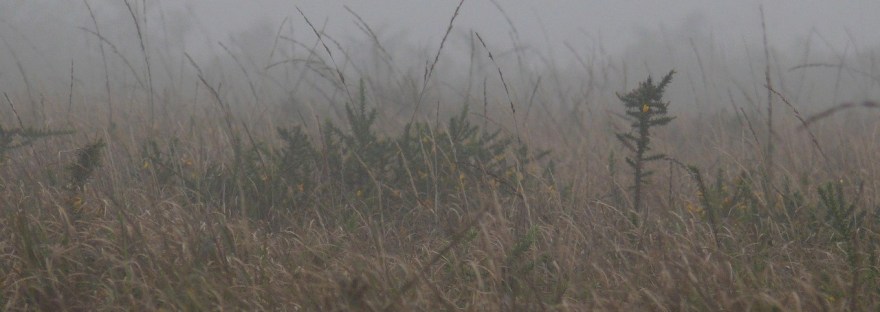
Image by Frédéric Mahé from Pixabay – moorland grass in swirling grey mist.

 literally stories
A beautifully written piece full of anger, threat, warning and mystery. I found this enthralling from start to finish. Am I going to the Heath in hertfordshire – No, No I am not. Great stuff. dd
LikeLiked by 1 person
I liked this a lot! Especially the narrative form of it, almost factual. And having lived there long long ago, it’s always good to see Hertfordshire getting a shout out in the context of ages old, grimly inescapable horror. A great piece for the middle of the week when humanity seems determined to make the worst possible choices.
LikeLiked by 1 person
J.S.
A sort of reap what you sow then are reaped by what you have sown outlook. An ultimate in what comes round goes round. Very well done. Will the people learn? Hell no. But it is nice to see a little payback.
Leila
LikeLike