Two in the morning. The air was luminous, chalky, bloated with humidity. The smoke detector was a broken stoplight, stuck on green all night. Exhausted, jet lagged, eyeing the light, I thought of my ninety-eight-year-old grandmother Ida.
The day before, when I left her, she was feverish and coughing on her bed in Boston. The cancer had hollowed her out. Her skin was the weak yellow of soured milk.
Outside, the Carabinieri sirens sliced the dark. Emergenza. Somewhere in Rome, someone had phoned in un emergenza. I wondered if the sirens in Rome could be heard in Boston. Because Ida was herself an emergency.
Almost daily, we phoned 911 when her body would riot with fever. Arriving in minutes, the EMTs would hold a cold gel pack to her forehead. Help her to sip water. Press two fingers on her wrist looking for a pulse.
After the Carabinieri sirens passed, I had no good escape from my insomnia. The detector light turned everything viperous green. The colors shifted over my head, too, like in a fish tank. I was one of its lidless fish.
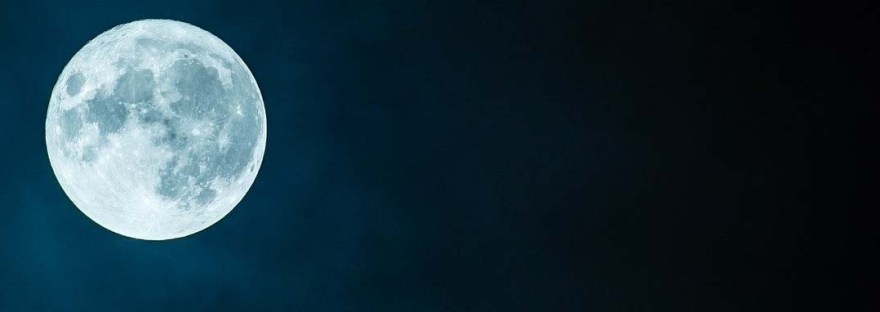
Walking in circles, I stopped and pulled the drawn shade back and looked through the window. A Super Moon. A gray globe covered in radioactive white fur. It shot a stunning whiteness into my face.
With her dry lips barely parted, Ida whispered her words. Her mouth was open only as wide as a flat shoestring. It’s somewhere on Via Ludovico di Monreale. The plaque. Frederico Cardozo. His name is on it.
Her eyes like dim headlights in a fog, Ida told me about the street. The gelato shop with its bright windows. Pausing, she squeezed my finger. My hand in his hand. La mia mano nella sua mano. We went there together.
From the window, I gazed on the street that Ida had named. After flying in the day before, I had walked up and down the street a dozen times. Looked at storefronts, building stoops, garage driveways, the sidewalk under my shoes.
I couldn’t find it. I knew its size: a metal plaque the size of a car’s side mirror. There were the raised letters of his name in weathered dark bronze. His death would be mentioned. In raised letters, too. It was all I had.
Three in the morning. I still stood at the window. A Vespa moped came tearing up the street, as though zippering it shut. Two tomcats fought. High pitched, untuned screeches, one yelling at the other.
A beeping garbage truck stopped before my building. It emptied the street bins. The garbage collectors cursed and the truck moved up the street. The bin kicked over by a drunk was left on its side.
Moonlight stayed with me at the window. Everything on the street was laid out in white. Mesmerized, I stood there feeling something working itself into me. Because the Super Moon was so close to me.
It lifted land, water, building tops, umbrellas and balloons and did it in a way that the earthbound were caught up in its tidal and light-filled trance. I saw better because of it. The acorn caps, crumpled cigarette butts, the narrowest skidmarks on the street.
I was handed a superpower vision and I could see better than I ever had. Almost as though I were seeing things for the first time. As happened once before, when the amniotic fluid had been wiped from my eyes.
But at the window in Rome, the light came from the Super Moon. It banged into me and I couldn’t say what it was. A concussive light unlike anything I knew. I had never before blinked into a light like it.
The Super Moon light would help me in my hunt for the plaque. I’d find it because of it. Nothing to finding it now. Almost half past three, I hurried from the room. The Super Moon would soon drift away.
I walked from my room and started down the warm marble stairs. I covered two steps at a time, my legs taking large Slinky steps. I slipped outside the building. The moonlight would make sure that I made no mistakes.
It was that kind of light, alive itself, and it said to me: Turn left at the door. Head to the right side of the street. Go uphill on the sidewalk, fifty yards, a thick-trunked linden tree.
I was there in a minute. The tree was before a gray concrete apartment building. Heavy with lines like ruled notebook paper for first graders. Panting, bracing my arm against the tree, I looked down and spotted the plaque.
The plaque rested on a knuckled tree root. Tilted up, it had almost overturned on itself. The raised words on it were: Qui abitava nella in questo edificio…Frederico Cardozo…uccisa ad Auschwitz…all’eta 48 anni…perche’ ebrea.
I turned and looked up at the building where Frederico had lived and was arrested. Where his daughter Ida had lived as a young girl. The shouts on the street, the clattering traffic noises, the moonlight, the hissing of cats, and the whistling of the wind in the trees. They had reached her in their apartment.
Before she, her mother, and two small brothers journeyed to Athens, Marseilles, Calais, London, and then Boston. Their three-month feverish dash to America. Hoping for the best, my great-grandfather Frederico stayed behind and was shipwrecked in Auschwitz. Then left dead.
I looked up at the tidy windows of the building. One of them reflected back the Super Moon. The white light fell on its shiny-black-beetle glass. It had to be hers.
I angled my phone over the plaque. The Super Moon edged behind a tall building, funneling its light high over the street. But there was more than enough light. I took my photo without a flash.
I rubbed my finger on the raised letters.
Pressed two fingers on them looking for a pulse. For Ida.
I then left and returned to my building.
Image: A full moon in a dark sky from Pixabay,com

 literally stories
Richly detailed and poignant. A thoughtful piece to kick off the week with.
LikeLike
This is quite mesmerising in the way that it is written and emotionally rewarding in the story itself. I hope Ida lived long enough to see the picture. Really lovely story – dd
LikeLike
Fine writing, but above all this is a wonderful subject: there is something about a search by moonlight that immediately calls to the reader. Great stuff.
LikeLike
David
This one shows brilliant editing and in the end it became a rich and complete work.
Great job!
Leila
LikeLike