
I stopped drinking after my younger brother Cody chose assisted death. He was paralyzed from the neck down and never able to get high again because of it. That gave him courage.
Suicide was always a fantasy for me, and I’ve always been a coward. I felt spent enough, but not as much as Cody. The want, to live or to love, disappears when little moves but time. I wasn’t getting anywhere, working farm labour below a monastery, and drinking towards brain damage. Cody made his death decision, and so I stopped the bottle.
I thought of my son Alex, living in a low rent Vancouver room, earning money delivering takeout food, working by bicycle after he lost his license due to drunk driving. What was his future as the next generation? Last time I visited Alex, I gave him my Gibson guitar, all polished up.
“Looks beautiful,” he told me, “I’ll take some lessons.”
I never got back to find out if he did.
I camped in my van at the divide where Skookum Creek goes south and Nakus Creek goes north, right outside Helmut’s Asparagus Farm where I worked lying face-down on a long wagon dragged by a tractor, plucking up asparagus shoots and dropping them in a bucket. The Benedictine Monastery draped itself along the hill above. I saw it every time I looked up, and I looked up so much I kinked my neck.
“Maybe that’s my place to be,” I thought, as the picker wagon moved along the field. I was already celibate and bald. I’d just need to take a vow of silence, and I never liked speaking anyway.
My brother Cody was always drugging and dissipating. On her deathbed Mom said “Promise me you’ll stop, son,” and Cody nodded, but that’s all he did. She told me to take care of him. He was 50 at the time, lived all his life with Mom. She paid the bills, she fed him, she tolerated his bad habits.
“I’ll try my best,” I told her.
I was drinking then, too, chewing snuff, smoking dope and living in my van in tree planting camps.
“I’m the King of Mom’s house now, Tucker,” Cody announced after the funeral. He said if I wanted to live in the trailer, I’d have to pay rent.
I stayed for a few days, before driving back up north. Cody turned the place into a drug den, junkies and other assorted losers splayed out on ripped purple yoga mats, high on down and crystal, Cody under the floorboards, rolling around on his back in the wee hours, spraying insecticide, and yelling “got to get rid of those f…ing bugs!”
I told him there wasn’t anything under there except maybe a few worms, and I wasn’t going to live in a house full of addicts.
“Then get out,” Cody said. “You’re the biggest bug around here.”
“Mom told me to take care of you,” I said, “But you’re right, there’s too much insecticide.”
What I didn’t say was “you are too much work, and it’s too late.”
I drove down to Wal Mart and lived in my van in the parking lot for a couple of nights, until some yahoos lit a huge bonfire, then smashed their bottles in the flames and got everyone kicked out. That’s the problem with people, sooner or later, they’ll always let you down.
Cody wasn’t always a jerk. He had the biggest smile, back in the young days. There’s a photo of him, narrow-faced, leaning on the hood of his old Ford Mustang with that wide grin, framed by his long hair, young Cody dressed in bell bottom jeans and a white T shirt, lifting a glass of wine, his big German Shepherd Tyler by his side.
Cody was a champion weightlifter then, and in the photo, you can view his muscles taut under the shirt, and his strong forearms. Maybe he took steroids, I don’t know. He wanted to be a radio announcer, he had the low range voice, but never auditioned, just pretended with his home microphone. Every fall we worked with Mom, picking corn for the farmers in the valley. Cody could finish half a field in a few hours in those days. He was strong, and fast.
Thirty years on, I continued to pick crops and work for someone else. My asparagus farmer boss, Helmut Reimer, was some kind of Mennonite. The other workers all talked Mennonite whenever they were around me. At night by Skookum Creek someone tossed pebbles at my vehicle, and I heard guttural voices, like a Sasquatch but it was probably low German, the Mennonite tongue. In the wee hours I knelt inside the van, peeing into my plastic jug. Headlights swerved off the road, gravel crunched under some wheels, and then a rap on metal and a cop with a giant flashlight poking at the window, asking me if I was alright.
“Yes, I’m alright,” I said, but I couldn’t find the top to the plastic jug, or my zipper.
“You can’t camp here,” the police guy said. “Why are you holding your pants like that?”
“I’ll move on in the morning,” I told him.
Goddamn police. The cop was probably a Mennonite, too. I couldn’t even sleep off my drunk without some Mennonite cop kicking me out.
“I never had a home with alcohol,” I figured. “Just eviction.”
I’d gone to see Cody that very morning, along with my oldest brother Jesse. Cody lay inert in the hospital bed.
He’d overdosed on heroin, then suffered a stroke that paralyzed him from the neck down. He hadn’t moved a muscle below that neck in six months.
“Smile looks good,” said Jesse, although Cody was missing most of his teeth.
“That’s about all I can do,” Cody whispered.
“You’re doing a lot,” Jesse said.
Jesse, always trying to act like an optimist, always with the homilies. Underneath, morose most of the time, but he put on a good front.
“I can’t even lift the f…… spoon,” said Cody.
Jesse sat there and fed our brother the brown pablum the nurse said was lunch. Cody opened his mouth and Jesse poked it in. Cody had always been a child, never away from his Mom, now he sucked up baby food. I didn’t know how Jesse could stand it. I stared out the window and thought about the monastery on the hill. People knew who and where they were up there, they did a little gardening, a little praying, sometimes I saw a few of them in their thick brown robes, picking grapes and trundling around wheelbarrows. There was sanctuary, a routine, a home.
I lived with my brother Jesse a few months before Cody died, stayed down in the hollow in one of his two side cottages.
“Good to have you here, brother,” Jesse said, “Better than sleeping in that van, eh?”
The cottage had electricity, a wood fireplace, but no running water. I used a lightweight portable travel potty which I had to dump in the creek every three days, the raw sewage biodegraded with the added chemicals, didn’t smell too bad. I stood on the rickety footbridge over the creek and threw the stuff over while trying not to fall.
I helped out with Jesse’s firewood business. Every morning we’d drive a half-hour into the bush, saw and buck up a couple of dead trees. Jesse breathed like an old bear, his huge gut over his pants, lurching out of the truck and yanking the chain saw. He sweated and cursed and shouted at me from time to time. “Why do you work so goddamn slow?” and I’d say back in my slow voice “I don’t know, I guess that’s how I am.”
We’d split the logs and throw them into the truck. I expected my brother to have a heart attack at any moment, but when we got the load filled, he always seemed to get a second wind, having enough breath to chastise me for my driving all the way back to the yard.
Why did I do it? Why did I stay there thirty miles from town all winter and waste my time, yelled at every day? Well, there wasn’t any economic alternative.
“I can still feed myself, at least,” I thought as I watched Jesse feeding Cody, there on that hospital bed, Cody opening his mouth like a fish, taking in the pablum.
I didn’t want to be dependent on anyone. As soon as I could, I vowed, I’d live on my own again.
I went to the hospital the day my younger brother pulled the plug, but I didn’t stick around to watch him die.
“You and Mom will be making tater tots again together,” Jesse told him, as he leaned over Cody’s skinny body with the tubes coming out of everywhere. “Tater tots in heaven.”
I felt sick. Cody would be dead, he’d be nothing, he wouldn’t be cooking any kind of cuisine.
The doctor arrived, skinny guy with a full head of fluffy grey hair, just like Einstein, ready to proceed with the “Medical Assistance in Dying.”
Cody smiled when he saw him.
I guess they’d introduce the death juice through one of the many tubes. It wouldn’t be that complicated. There was only me, Jesse, and the doctor to witness.
“See you on the other side,” was all I could think to say.
The walls seemed to be moving in, the ceiling shifting down, the floor lifting up. We’d all be crushed, sooner or later.
“Where are you going, Tucker?” Cody called.
“Running away again?” Jesse called.
I bolted through the door, and I didn’t look back. I’ve been alone my whole life, with people all around. This was a perfect example.
“You made it all about yourself,” Jesse told me later.
“I didn’t need to be there at the finish line,” I said.
I escaped from Jesse’s place that night as well, couldn’t stand it down in that mossy cabin anymore. Took off in the wee hours, my van headlights pushing light out of the hollow, my heaviness lifting as the van rolled out onto the main highway. I drove straight down towards Vernon, and the asparagus farm.
It was April, the picking season, and I knew I could find a job. Very few people wanted to spend all day face down grabbing asparagus and watching the dirt go by. What I liked was the piecework, paid by the bucket, I was in complete control of how hard I worked, and nobody could boss me around. But you can only tolerate lying on your stomach face-down for so long, every second lifting the trowel and the knife for another cut. I stretched at each break, but at night in the van cramps awakened me like a diver with the bends, no matter how much water I swallowed. I wasn’t even drinking alcohol now.
“Must be getting old,” I thought.
Every day, I stared at that monastery on the hill. Friday afternoon I quit work early and drove up there, “gates open between nine and five for visitors.”
“Guests like to see the view,” said Brother Agar, identified by his name tag in the office/gift shop, huge beams across the high ceiling above his head. Fluorescent lights shone on Agar’s bald spot.
“If I want to be a monk, what do I have to do?” I asked.
“First thing, you must change out of those shorts,” he said. “No-one can come in here with shorts on.”
“I guess God’s the dress code boss around here,” I said.
I went back out to the van and pulled on my track pants. When I went back in, I found out prospective novices had to fill out a lot of forms. “Online is the best method,” said Brother Agar, “Do you have a computer?”
It was a ten-page job application, all about work, family life, health, reasons for applying, references. I didn’t have a lot of good references.
“We accept probably one out of every fifty applicants,” Agar told me.
“What if I want to stay just a few days?” I asked.
“We’ve got an air b and b,” the monk said. “On our website.”
“I thought nobody was allowed to talk up here.”
“The office is okay,” Agar continued. “And we can pray out loud anywhere.”
I told him the application seemed like a lot of work. He nodded his head.
“Why do you want to be a monk?”
“My brother passed away,” I said. “He chose medically assisted death. He was paralyzed from the neck down and couldn’t get high anymore.”
“I’m sorry to hear that,” said Agar.
I thought of Cody in his youthful picture, holding the wine glass. His life, his meaning, was all about the stone, the rush, being wasted. He disrupted everyone else’s life. I wondered how many lives I’d screwed up myself.
“My son Alex is twenty-seven years old,” I told Agar. “He travels by skateboard.”
I looked at a long cow horn the monks had on display, the bone hollowed out and polished. I liked the way the horn ended in a glistening point.
“How much for that?” I asked.
“It’s kind of a special souvenir,” said the monk. “Pretty expensive.”
I didn’t care what Agar said. I bought it anyway.
The monks gave me a box with padding, to put the horn in.
“I don’t have to join these Benedictines,” I thought. “I’ll wear shorts when I want.”
I placed the horn box in the back of the van, underneath my Mexican blanket. Then I drove down to Skookum Creek and emptied all the garbage and bottles out of my vehicle. At the car wash I vacuumed out a year or two of dust and dirt. I drove down to Speedy laundry and washed all the blankets and clothes. I’d mail the asparagus farmer my future address, where to send my final pay cheque.
I headed down towards the coast, moving again. For Cody, I was always too late, and too dissipated. I wanted to visit Alex stone cold sober, see if he could play that Gibson guitar now. Alex was like Cody used to be in that long ago picture, leaning on the Ford Mustang, with his life ahead of him. When I saw him last, Alex was drinking just a little too much, no steady job, but a big smile on his face, a look towards the future. My son could be turned around. First, I’d give him the monastery cow horn. Like Cody, he’d always been a lover of shiny things.
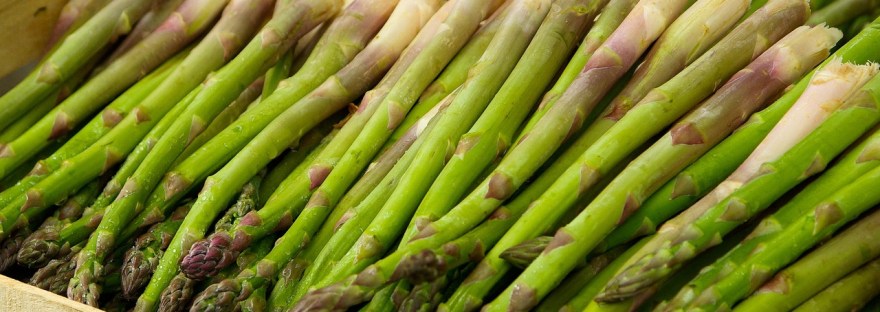
Image by jacqueline macou from Pixabay – A box of newly picked green asparagus

 literally stories
Harrison
Never seen the name Skookum written anywhere before except around here. It’s the name of the service that does the custodial work in the shipyard (or did for years, I haven’t seen their vans around for a while). A special organization for people with “workplace challenges.” Sort of fitting when you read this.
I know all about this sort of lifestyle, up close, yet still from just enough on the outside to avoid immersion. He has good ideas, but I feel that his inability to commit all the way, or effectively, makes me hope the kid self realizes his future by looking back at his ancestors. The horn will be nice, but symbols are not actions.
Great work once again.
Leila
LikeLiked by 1 person
There’s a book of short stories and poems called “Skookum Wawa,” which I’ve read a few times. Skookum means strong, brave, or impressive, so fitting for a cleaning company. Indeed, I also know this lifestyle from up close, and also avoided immersion. It’s a rough road to take. I agree totally with respect to the horn. I appreciate the comment, Leila.
LikeLiked by 1 person
I found this description of life passing by absoultely mesmerizing. I believe it is easier in America to move around and pick up living in another state or whatever than it is in UK. This story was sad in parts and yet, hopeful in the end and I felt that the MC had a lot of good in him and, as with so many, if he had been born to another family things would have turned out differently. Then again, he wouldn’t have been him! I enjoyed this read, thank you – dd
LikeLiked by 1 person
He is a bit of a train wreck… this guy’s always trying to start over again and ending back in the same place. For sure, someone who has good intentions, at the same time he keeps running away from commitment. He did stop drinking. That’s not easy. And maybe he can help his son, in some way. Glad you were absorbed into the story, that’s all a writer can ask for. Thanks for the comment, Diane.
LikeLike
Hi Harrison,
This is too well done to ignore!! There are some cracking observations in this and some very clever lines.
This will never win an award for happy story of the year but whenever you read any of your work, there is a reality to it that can’t ever be disregarded!!!
All the very best my fine friend.
Hugh
LikeLiked by 1 person
I agree, for sure not the happiest tale, however, based on true life events. When you’re at the side of the road living in your van and trying to pee into a bottle after midnight.. wouldn’t you know it? The police show up. Ay caramba! I wish I could write more cheery tales, lately I’ve been trying. Dark humour is always fun. Always look on the bright side of life, they say. I appreciate you taking the time to comment, Hugh.
LikeLike
Harrison
I really admire your use of the FIRST PERSON PAST TENSE voice in this piece. It reminds me of the Hemingway narrator, and maybe even more so, the Henry Miller narrator. Not the Henry Miller who wrote erotica for a pittance per page because he was starving. But the Henry Miller who wrote about being down and out in Paris and the USA, the Henry Miller who survived such a life and lived to tell about it with a gritty convincingness unmatched by anyone else. The First Person Past Tense voice was then taken up by other authors such as Jack Kerouac, Norman Mailer, Charles Bukowski and Hunter S. Thompson, but Hemingway and Henry Miller got there first. You do a great job in this piece of extending such a tradition. William Saroyan is another great author who works in this mode, in his case, like Hemingway, mostly and best as a short story writer.
Dale
LikeLiked by 1 person
I haven’t read Miller, but I understand he was kinda unpredictable. Hemingway’s short stories are some of my favorites, which I’ve read dozens of times over.. Bukowski freaks me out, but he writes so well of his true reality. His poem “Bluebird” is the best! Thanks for the comment, Dale.
LikeLike
Interesting observations, Dale – I was also thinking of Saroyan as I read this (and William Styron as it happens)
LikeLike
The relationship between Tucker and Cody is rendered with real precision — the deathbed scene especially. Tucker bolting from the room is one of those fictional moments that feels completely true. Tucker’s voice is dry, honest, never asking for sympathy. The monastery as a recurring presence on the hill, for me, was more ominous than hopeful. The ending with the cow horn is unexpected in the best way. Strong piece.
LikeLiked by 1 person
Thanks, David. You got it, the bolting moment is in fact a true one. Someone who’s been running away his whole life does it again. In the final scene, he’s moving towards something, trying to help his son. His intentions are good. That’s an interesting point re: sympathy. Thanks for the intriguing comment.
LikeLike
Harrison,
There seems to be NO decent options for anyone concerned — betwixt Cody, Tucker, and the gang — it seems the monastery is about it. Or is it? Of course, not!
Don’t you hate the righteous who tell us we deserve our destinies and everything depends on our life-decisions. A terrific, real-life story! — Gerry
LikeLiked by 1 person
It takes quite a lot of discipline to be a monk. Shorts are only the beginning. For sure, we are dealt certain cards in life, it’s how we play them that matters. How much free will has an influence over luck and circumstance can be debated, for sure. I appreciate the comment, Gerry.
LikeLike
Another rich slice! I loved the bit about the cow horn – the monastery did some good after all, shorts or no shorts. Wonderful!
LikeLiked by 1 person
He will come, bearing a gift. I only hope it’s appreciated. Thanks for taking the time to comment, Steven!
LikeLike
Really well narrated – the wandering between subjects was held together perfectly. The-monastery-on-the-hill, the symbol of salvation, was always going to be there but just out of Tucker’s reach. Great stuff!
LikeLiked by 2 people
Yes, there’s the wandering for sure, and the difficulty being focussed. I’m glad I didn’t have to live my life like that, always pursuing meaning yet it’s always a bit, or a lot, out of reach. His stopping drinking was something. Thanks for taking the time to write, I appreciate the comment, Mick.
LikeLike
A beautiful, gliding story, with the obvious sadness running through it, but honestly I found this one of the more ‘human’ stories I’ve read in a while.
LikeLike