
The Montagues’ and Capulets’ disapproval of an ill-fated union was mirrored by the opprobrium this couple aroused in their Australian families. She was practical and ambitious while he gave imagination a free pass, a kind of poor man’s negative capability. What he wanted to do and what others wanted him to do, were not the same. Feeling hounded, they found work together in the U.S. Always happiest when fleeing responsibility, the sheer glorious relief, he hadn’t faced this fact yet. Without telling any relatives, they left their troubles all behind, or so they thought. When the U.S. didn’t work out, visas cancelled, they crossed the Atlantic.
A dream ending his night’s sleep like a well-placed full stop, alone, he flew back in memory thirty-eight years to that time when cigarette smoking had its own language, mobile phones waited to be invented, and he felt so alive avoiding drudgery and disapproval. Since those days when they were still together his night dreams involving their travel situations and scenarios had waned, but daytime reveries? Yes. On his desk a photo of them in the U.K. then, abuzz with hope, doesn’t bear comparison with the blizzard of years hunting them now. He yearns to ghost back for another chance at life, remembers the Tube, how happiness hid in the humdrum when it was foreign. A dragon’s breath rush of scorched dust fanfared the imminent arrival of the train they rode just one stop to the laundrette with their sparse dirty gear in backpacks.
Leaving the dryers’ cosy humidity, rain often dimpling the pavement, they would window-shop in that hesitant light, wrinkles of sun poking through, before descending to the station’s shabby décor again, joining those waiting commuters who seemed shrouded in solitude, back to their bedsit, packs lighter, deliciously warm. His memory of food they ate disappeared now as though into a London fog from before their time, he feels they must have thrived on ale and fish ’n’ chips, hot parcels with vinegar and hope. They had bought cheap sheets, orange, stiff, for their bed upstairs where the view was of chimneypots until their vanishing point, in a boarding house where they whispered, their door locked on muttering corridors. Outside, the old city’s streetlights, lustrous, haloed by night, watched over a thousand dramas and dreams.
Decamping to the Cotswolds they worked as softly subversive servants part-time for pocket-money wages and bare but wonderfully situated accommodation, willow, willow-herb, and penny-cress on furrowed walks to remember. Downstairs in a grand house, as if acting in a TV series about class differences, she prepared breakfast for a party of sportsmen, consommé, before the shooters’ noisy departure, bowls left encrusted, doors agape, discarded clothing, condescension, flung awry. Assisted by friendly villagers she organised using common sense, they scrubbed and scoured. That evening she won a pub quiz teaming with him against them. When his sardonic humour tickled them to laughter she scowled. Offered extra, untaxed, work as a beater he had declined, seeing death in a slur of damp bracken. Not desperate enough to lurk before their jolly blazing at gossiping grouse, he later wrote a breakthrough story appropriately called Tiny Flightless Birds. There was something else off-putting, too, that utter waste of precious time: boredom in the company of boors. Brash was an adjective the English labelled him, but they wouldn’t now.
He sits by his fire that still holds some warmth. In its last burnished light, the way they lived, arguing, laughing, interrupting with shouts, echoes down the years. Back in Australia, subjected to tension due to their insoluble ethical differences, married to art, he prompted some critical relatives’ self-satisfied looks. They both still feel a sense of loss, of being short-changed. Their adventuring that now seems unreal to her, all done, she sometimes sees his ruinous fervours as her bitter burden. Recently speaking to her by phone his thoughts hearkened back to when one of those English sports had called with a cry for help. ‘Forgot my gun! Do scamper, old chap’, the gent had lisped. So he had ferried the firearm, driving fast to the game park, a short run, smirking, mentally filing words.
He thinks about how she kept those old sheets, now salmon-coloured, and he, their maps covered in arrows, asterisks, and creases, palimpsests from a blessed outdated time he has stored in last century’s bottom drawer. Although he could, and does, exist on little money, respecting writing more than earning, and they were both modestly successful, her in her normal business world, he was volatile and complex, and she could not grow wings, keep soaring to the coasts of his restlessness. Running out of future, slowed now, he nurses whatever can be gleaned despite this tiredness, signs from their far away nomadic days’ treasured material bearing him back incessantly.
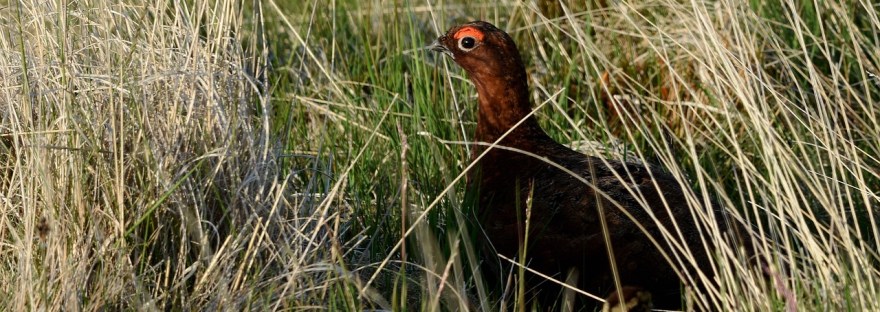
Image by David Pinder from Pixabay – Grouse hiding in the long grass.

 literally stories
I loved the tone of this. In my opinion it is beautifully written with lyrical vocabulary taking away the need for too many adjectives, which can be a problem sometimes in a more descriptive piece. An excellent example of classy writing. Thank you – dd
LikeLike
Ian
I could feel the mixture of dreams and reality flow by in their lives. To give feeling to so much in such short space is tremendous.
Leila
LikeLiked by 1 person
Probably accurate for those of us who awake to find we are old. What the hell happened? Didn’t that beauty just tell me to buzz off.
As the sands through the hourglass so are the days of our wives (not an exact quote). I think of Frank Sinatra – I did it my way. Did I do it right? Wrong in many ways, right in a few.
One of the good ways (odd segue) – I have no memory since I was abducted to Sunset City, but in case I have not mentioned it, Maysam is available again. I was worried.
LikeLike
Happy that Sam is safe!!
Hugh
LikeLike
Maysam has a lot of friends in The West. Old phrase which applies – stand up guy.
LikeLike
Hi Ian,
This was beautifully written.
There was a kinship but separation which was superbly balanced and enhanced by the imagery.
All the very best.
Hugh
LikeLike
Fine writing. Especially that last sentence: ‘Running out of future….’ Thank you, mick
LikeLiked by 1 person
Well-crafted in way that rewards rereading. Excellent imagery and use of language.
LikeLike