
As his hearing receded into the ethers, Frank’s days filled with numbing despair. He was going deaf, there was no denying it. He’d tried with what inner strength he possessed to stave it off, first by denying it completely like any sane person would do, then by telling himself he was only forty-two, things like this aren’t permanent at this age, of course it will pass.
But his eighteen-month-old daughter awoke cranky from her nap one day, she wailed and he, in the kitchen, never heard it until his wife walked through the door from shopping, or from wherever she was, and rushed to the crib to see what was going on. She came back with the baby in her arms, glaring at him with pity and a burning disgust.
Pity and disgust. Even at this early stage he knew this much to be true: pity and disgust are scars borne by the deaf.
While he wrestled with the idea that some unnamed, temporary condition was toying with his senses, perhaps mumps or something innocuous, his wife, after weeks of him not hearing her shouts or the doorbell or his own phone dinging, called his doctor herself, and he was referred to a specialist to sort it all out.
He’d resisted. He didn’t want to hear it, he’d told her, making light of his own joke and instantly regretting it. It made him seem weak, and of course what he got from her was more pity and disgust. In fact she heaped it on, almost spit it at him – it was his responsibility as a man and a father to take care of himself, make himself whole, he had responsibilities and a child, a child for God’s sake. How was he going to earn a living if he was deaf, had he thought about that? He was no Beethoven, you know.
Of course, this was a woman who was under some strain herself, one whose machinations around her extra-marital pleasures were perhaps not going as well as she’d hoped. And to be honest, she was a woman who enjoyed heaping great shovelfuls of disgust, specifically on people like him. They’d been married for ten years, his first marriage and her second, although “second” was a stretch. The affair in which she’d been enmeshed over the past two-plus years was really a reunion. She was trysting with her ex-husband.
Complicated, yes? How complicated? His green-eyed, curly-haired blond baby girl looked exactly nothing like him. His eyes and his wife’s were brown, and he hadn’t seen a wave in his black hair since his older sister had put him in curlers when he was five.
How he’d first found out about his wife’s first-husband secret was tedious, as these things go. There had been signs and hints–the missing afternoons, her extended business trips and conferences. A year ago he’d come home early from rehearsal one afternoon, stepped into the house and heard the baby upstairs bawling away. He went up to her room to see to her and passed the master bedroom where his wife was on her phone, a burner phone as it turned out, with her back to the door. The baby’s crying had drowned out his entry into the house. She leaned forward into the phone and what he heard was something like “…me too, and now he’s all ‘Guess what, I’m first oboe,’ whatever that means. He’s….it’s just too pathetic. Yes, exactly, a loser is all.” It now seemed ironic as everything else in his life. He’d heard her confess her faithlessness just in time for his hearing to fail.
The news from the ENT specialist was not good. He’d contracted a form of Usher Syndrome, not named after the hip-hop star, which featured inexorable loss of hearing, no cure possible. Near-complete deafness would come in about a year. The only mitigating actions he could take were to wear hearing aids for some time, and eventually move on to something more radical, such as cochlear implants, those Chernobyl looking things welded to the side of one’s head like a space alien’s ears.
The implants were not going to happen, full stop. He knew if he showed up to rehearsal or a recital with cochlear implants, there would be deep pity, and some disgust, among the rest of the orchestra.
Because Frank Buttons was the designated principal woodwind of the Chippewa Valley Wisconsin Symphony Orchestra, an accomplished oboist and occasional flautist (he preferred flutist).
He’d been with the Chippewa symphony for some twenty years, starting within a couple of months of returning home after graduating from Berklee in Boston. Playing oboe in an orchestra was all he’d ever wanted to do, and be.
His despair over losing his hearing wasn’t simply that he had a probable ersatz daughter to try to love and support, and a wayward wife to deal with, those things were true enough in their own right. What crippled him when he lay in bed at night next to his wife, if she was even there, whose snoring he could no longer hear anyway, was the music.
His music, his oboe. The instrument was him, was all he had, and in real ways all he was. He was haunted, in the same manner people are obsessed by the worst scenes of their nightmares, by the terror of losing the music he loved and played. It would bring him to his knees. His Bach concertos, the plodding Baroques, Beethoven’s No. 5 and Eroica, the thundering Wagners and Mahlers, and his favorite, the hypnotic ostinato of Ravel’s Bolero–all of it was melded to him. It was so much part of him he’d never once had thoughts of what he’d do if the music didn’t exist. It was as if one day he’d be Frank Buttons, respected concert musician, and lover of classical music, and the next day he’d be a deaf cipher, a ghost.
Soon enough, he got a call from the director-conductor of the symphony. After some pleasantries, the director said, “Frank, there’s something I need to say. I didn’t want to call it out at rehearsal today, but you were a bit off, a tiny step behind. I knew it was you, not enough to have stopped the whole thing, not yet, but enough for me to notice. Mostly during the second movement. And when it called for the diminuendo in the third, you were just a tone too loud for a moment, louder than the rest. The others noticed it, too. I mean, you should be leading them, Frank, you can’t be off base like that.”
Frank froze. It was beginning to happen. “Sorry, George. I’ve been distracted a bit.” Which was true enough.
“That can’t happen, though. We’ve got the Christmas concert in a couple of months, the Hallelujah Chorus and the whole bit and Christ, everybody comes to that one.”
“Did the rest of them really notice?”
“Of course they did,” George said. “Know why? Because they want your job. Look, this isn’t like you. What is it, is there something I can do to help?”
“We’ve know each other for, what, fifteen years?
“Sure, at least that. Good years, too.”
“And I’ve never had a bad day, have I?”
“Never, Frank, you’ve always been on top of it.”
“Then I can get it together again, trust me. I was distracted by some small things, but don’t worry, I’ll be good to go next time.”
George hesitated. “Fine. Just get some rest and let me know if you need anything.”
A week later Frank went to Costco and, after checking that no one from the orchestra was walking about, bought the cheapest pair of hearing aids he could find, ones he could drop into his pocket during rehearsal.
Which was a mistake. Who knew that if you put two live hearing aids next to each other in your pocket they would squeal feedback at a pitch a soon-to-be-deaf person was unable to hear, but which every trained ear nearby, from the woodwinds to the strings, would hear with clarity? Frank, being fresh to the hearing-enhanced cohort, did not know this until everyone stopped the music and turned to stare. George tapped his podium and looked around. “What the hell is that?”
“It’s a hearing aid thingy,” the first violin, a young woman, said.
“It’s Frank,” the second oboe said. He smiled at the director.
George turned to Frank with, yes, pity, and a small bit of disgust. “Whatever it is, please turn it off.”
Frank reached into his blazer pocket with all eyes on him, and switched off the hearing aids.
Busted.
After rehearsal, highlighted by a humiliating hour of stares and frowns from the woodwinds, Frank packed up his oboe, stepped up to George and said, “Can’t talk now, I’ll call later.”
“You’re using hearing aids?”
“Gotta go, we’ll talk.”
He walked away. This was, as the movies would say, the inflection point, the moment when things had to go one way or the other.
He popped the hearing aids back in, which, he had to admit, were helpful at this stage. He got into his car, and turned up the Sirius classical station. Bolero was playing. Any other time it would have been a strained cliché, but at that moment it signaled something. He reconsidered his wife’s Beethoven reference. Would the music exist when he was completely deaf? Of course it could. He had every note, every run, every key and every squeal of his oboe locked into his lips, fingers, breath, and memory. He’d played it all a thousand times, he’d heard it in his dreams. Why wouldn’t he be able to hear it if he played when he was deaf? It wouldn’t be imagined music, he knew he could play from learned techniques and muscle memory, and know exactly how it sounded. Real music, from him.
He pulled up a map on his phone, found the place he wanted, and drove across town.
Sometime after six, Frank Buttons punched a number in his phone and had a long, detailed, sometimes difficult talk with George. In the end, he’d put in a six-month notice of resignation, asked for two months of accumulated personal and vacation time, and requested a letter of verification for a disability application. All of this George agreed to, reluctantly but with the understanding that he’d try to get Frank a job in the symphony’s front office as soon as he needed it.
He then dialed his wife, who picked up almost immediately.
“Where the hell have you been?” she said.
“Plotting it all out. Is he there?”
She hesitated. “What? Who?”
“Bedroom Eyes. If he is, tell him to go home to his other wife, you and I have something to talk about.”
Silence. Then, “What do you mean?”
“Well, you’re not going to believe this, but we’re getting divorced. Isn’t that wild?” He clicked off.
When he arrived home he immediately went to the playroom to hug his daughter, who hugged back and called him Doodad. Where she got that he never knew, but it warmed him then as it always did.
He dropped his oboe case in the study and paused for a moment, staring. He felt compelled to speak to it, to say something. Maybe to comfort it, to suggest everything was going to be alright in the face of this volcanic change erupting before them. That they would still be together forever and a day. Instead, he winked at the case and walked to the kitchen.
He found his wife at the table with a glass of bourbon and an unlit cigarette between her fingers, drumming the table.
“No need to talk,” he said. “I’ve got the floor.”
“Frank, what’s this—”
“And no point in thinking about it,” he said. “So look, I’m going to Germany tomorrow, the flight is three in the afternoon. I’ve been to a travel agent, booked the whole thing. I will be back in nine weeks. When I come back, you will have to go. Old Valentino is still a realtor, isn’t he? I’m sure he can find you a nice condo or apartment somewhere.”
“Wait, Germany?”
“Bonn, to be exact, for the annual Beethovenfest. A month of pure Beethoven in Bonn, his hometown. All Beethoven, all day and night, with concerts, symphonies, tours, beer and sausages, the whole deal.”
“Alone?”
“Of course. And I’ll be taking a side trip to the Gebruder Monnig workshops, famous place that one, for a new oboe. Finest oboes in the world.”
She almost smirked but checked herself. “You’re getting a new…you’re going to be deaf, what do you need—”
“Don’t say it. Believe in the miracles of imagination, they happen every day. I’ll play it and hear it perfectly, if only in my head. Same with my old oboe. They will make me happy, happier than I’ve been in years, as a matter of fact. I will love it all the more when I’m deaf.”
“Love it.”
“Yes, I will. At any rate, then it’s on to Venice for the Vivaldi Festival, the same thing except it’ll be fine wine and cacio e pepe instead of beer.”
She sat with her mouth agape, the unlit cigarette idle between her fingers.
“What are you saying, Frank?”
“I thought I was clear. I am going away and when I get back we’re going to divorce. You’ll move out and I get the house.”
“You can’t do that. You can’t make me leave.”
“Don’t worry, I’ll buy you out, you’ll get half.”
“But—”
“Did I mention I’m keeping the baby?”
“What? You can’t be serious.” She stood up and leaned over the table.
“Whoa,” Frank said. “I can hear you just fine. What I mean is, I love that child and I want to raise her.”
“What can you possibly mean?”
“I have no idea, that was purely impulsive, I just thought of it now. But I’m keeping her because I just said so.”
“But I’m her mother. She’s my child.”
“But not my child. Weird, right? So why would I do this? She and I have something in common, as it turns out.”
She frowned. “What’s that?”
“We were both deceived by you. You lied to me and you lied to her. In the biggest goddamn way possible.”
“What the hell are you talking about?”
“I loved you, you know, loved you once. And I did think you loved me.”
“I did, I do.” She sat back down. “Don’t do this to us.”
“No, no, no, you don’t love anything, not even old Casanova over there. But don’t worry, I won’t tell her about your little tromp l’oeil. That story, or confession or whatever you want to call it, is up to you. Or him, or the two of you, whatever. But I am going to raise her because I love her and will never lie to her. Directly anyway. “
“You can’t do that, Frank.”
“I might be wrong, time will tell, but I feel right about it now. You can visit, maybe she’ll stay with you sometimes. At any rate, this clears the deck for you and Rico Suave to get married again, once he gets his own divorce. That should be an excellent time for all of you.”
“You can’t make me give her up.”
“Maybe not. Maybe we’ll go to court over it, get the judge to order some DNA tests, the truth comes out and you both get your baby. That should be a big old hoot for you and Mr. Slip Out the Back Jack.”
“Frank, no.”
“The reason I’m doing this comes down to me, really. It’s selfish of me, the most selfish I’ve been in my life. I don’t want you or anyone remotely like you looking after me as I go deaf and begin to lose it. I need to be alone for that.”
“But with our daughter.”
“True, but looking after her will be the same as looking after myself. It’ll be fine. I’ll teach her sign language, as soon as I learn it myself. Oh look, I already know some.” He took the first two fingers of his left hand and slapped them on the palm of his right.
His wife took a sip of her bourbon. “What’s that?”
“Loser. It means loser. Look, I’ve got to go pack. Have you fed the baby yet?”
He walked back by his daughter’s room where she played with a stuffed unicorn. He leaned in and said, “So what the hell do we do now?” She smiled and threw it at his feet.
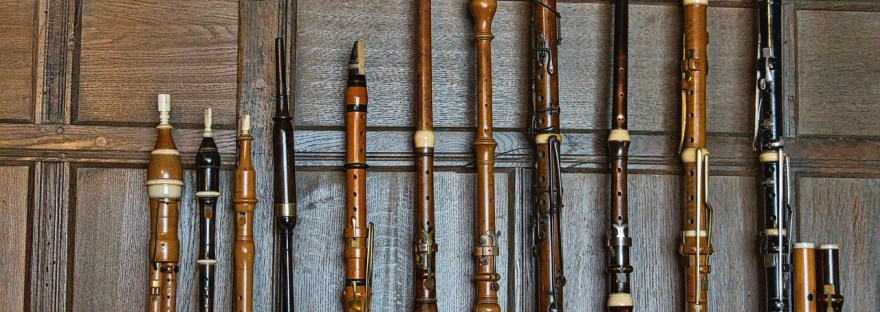
Image by Siggy Nowak from Pixabay – a row of wind instruments

 literally stories
Karl
Lots of characters give up and die, but Frank understands the difference between right and wrong. I wish him good luck. He will need it, but he deserves it.
Leila
LikeLiked by 1 person
What can you say but Three cheers for Frank. An entertaining read.
LikeLiked by 2 people
So many things to like in this story, from the title onwards. I particularly liked the stab in the back from the second oboe. Great stuff!
LikeLiked by 1 person
A usual sort of story but with an unusual twist that takes it into different territory. Who could help but feel sad for Frank but also admiration, he didn’t sit back and bemoan his fate, as he might well have done, but no, he grasped the nettle and strode on. An uplifting story. thank you – dd
LikeLike
Great story! Nicely detailed and I really liked how it went off on a more uplifting trajectory before the end (and I say this as someone who is similarly suffering – from sudden hearing loss not infidelity! – and loves music).
LikeLike
Hi Karl,
To lose something you’ve always had is a tragedy.
To lose what identified you as you is a travesty.
To re-identify is the best course of action.
Excellent!
Hugh
LikeLiked by 1 person
Karl
Sometimes it takes a brand of craziness to find one’s way in a seemingly impossible situation, like Frank is in. He might defy logic but pursues his own truth. As for the baby, he’s keeping her because he “just said so.”
A terrific story. — Gerry
LikeLiked by 2 people
Great story. Loved how Frank coped with his problem. A happy but totally believable twist, which is difficult to do.
LikeLiked by 1 person
What everybody else said. Maybe most think of Frank as a loser, but he decides to play by his rules, which makes him a winner.
LikeLiked by 1 person