
“What’s it like, being imaginary?” asked Lisa Hannigan.
She sat cross-legged on the edge of her bed, gazing down at her imaginary friends, Sally and Qney, who mirrored her posture on the carpet below, knees tucked neatly beneath their chins.
Lisa’s gaze drifted between the sisters. She reached down, took their hands—fingers laced—and gave a gentle squeeze.
“It’s great!” said Qney brightly. “It’s childhood, forever and ever.”
“It’s like a fairy tale come true,” added Sally.
“And we’ll be friends forever, right? No fooling?” Lisa hopped from the bed and joined them on the floor.
The word “fooling” made the girls giggle—it sounded oddly formal coming from an eight-year-old. They stood up and embraced in a group hug. Behind Lisa’s back, Sally winked at Qney. They were doing what they did best: playing along.
It had been a while since Sally and Qney were last assigned a case. The long break had left them rested, and this new home—so tidy, so bright—was a welcome change.
The Hannigan house sat in a leafy part of town, with a big backyard that opened toward Woolf Manor. The Woolfs were the oldest and richest family in Hope County. Their youngest, Irma, was Lisa’s best friend.
Lisa was the apple of her parents’ eyes—and whatever she wanted, she got. Her bedroom was drenched in pink, as though the walls had been dunked in Pepto-Bismol: pink chandelier, pink sheets, pink pillows, pink stuffed animals. Even the light glowed pink.
She was eight, going on eight-and-a-half. Her imaginary friends looked about the same. Lisa had imagined them in delicate dresses, soft as spun sugar, and when they gazed into her mirror, they resembled porcelain dolls.
“I could get used to this,” Sally said silently to Qney.
“Well, don’t,” Qney replied. “This is temporary.”
On Lisa’s vanity sat a neat row of unopened music boxes, each one with a tiny ballerina lying still in velvet-lined cradles, gathering dust. You could almost hear the lullabies they used to play—soft, slow, nearly forgotten.
Lisa wandered to her window, eyes drawn to Woolf Manor—to the third floor, where Irma’s bedroom waited. Sally and Qney exchanged a quiet look.
“It’s easier when kids have easy lives,” Sally said.
“Easier for us, you mean,” Qney replied.
She didn’t need to read minds to understand. Lisa’s parents, Veronica and Dan, had adopted her at five and spared no expense since. Both had grown up teetering on the edge of hardship—Dan the overworked lawyer with a soft belly and a love of soda, Veronica the poised head of Oncology at the Hope County Hospital, with laser-straight hair parted with surgical precision. Now that they had the means, they gave Lisa everything they never had.
They called her their little lifeline.
Sally and Qney had worked the imaginary friend circuit since Hope County’s founding in 1876. Each child’s mind was different, shaped by their own mix of reality and wonder. Imaginary friends adapted to the need, whatever form or story that took.
And always, one rule remained:
Beware the outliers.
Most children moved on. Imaginary friends came and went—gone without fanfare, no thank-you hugs, no teary goodbyes. Just another job, then silence.
But Lisa was different. Curious. Bright-eyed and full of questions. She loved pink, but she loved chemistry more. It felt like magic to her. Irma had introduced it, along with hushed stories of grown-up life no child should know.
“Adults lose their enchantments,” Irma once said, a tear glistening in her eye. “They replace wonder with numbers. They count their days in boring ways no spell can break.”
Lisa had clutched her pillow like a shield against the future. She didn’t want to grow up. She wanted to stay like this—forever. Like Peter Pan. Like Sally and Qney.
All she needed was the right kind of magic…
The kind laced with chemistry.
Qney, though not a mind-reader, had seen the signs. In Lisa’s eyes. In the hush of her movements.
“You think she’s okay?” Qney asked one morning.
“Why wouldn’t she be?” Sally said.
“I don’t know. Just a feeling. Doesn’t she remind you of Evelyn?”
Sally stiffened. “What? No. Evelyn was poor. Angry. From a broken home. Lisa’s nothing like her. And I thought we agreed never to say that name again.”
“You mean ‘evil child’?” Qney whispered. “Lisa just… lives in her head too much. It worries me.”
“Well, stop worrying,” Sally said flatly. “We don’t get paid to worry.”
Just then, Lisa reappeared with a tray in her hands. “Tea time!” she sang.
Sally and Qney sprang up and resumed their cross-legged spots. Lisa poured three cups—two invisible, one real. The girls sipped their phantom tea. Lisa drank deeply from hers.
“What shall we do today?” asked Sally, dabbing her lips with an imaginary napkin.
“Let’s play mailbox baseball,” Qney suggested.
“Hmm, no. Let’s ride bikes,” countered Sally.
Lisa listened quietly, knowing none of it would happen. She poured another cup of tea. The teacup rattled ever so slightly in the saucer. The girls declined more. She poured again. And again. Until the pot was empty.
Then her eyes glazed over.
She looked at Sally and Qney one last time, her smile wide and serene. Then she lay back on the carpet.
The thirty-third element on the periodic table is arsenic.
Lisa had studied it carefully—its bitter taste, its silent work, the way it paused a body mid-growth. That part had thrilled her most.
It offered stillness.
It offered forever.
Soon, she wouldn’t grow up.
Soon, she’d be just like Sally and Qney.
Imaginary. Forever.
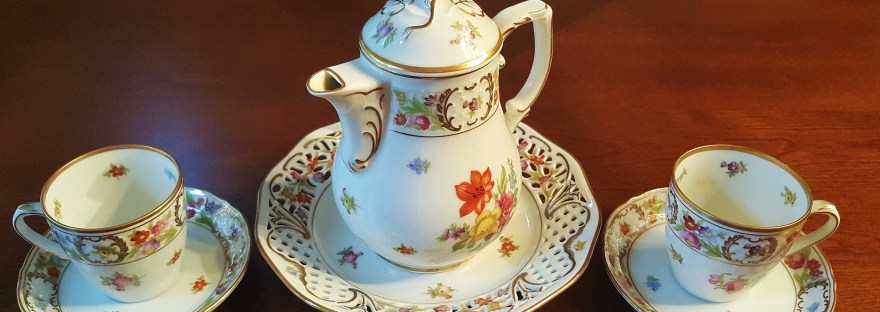
Image: Tiny Tea set with a tea pot and cups and saucers decorated with flowers. From Pixabay.com

 literally stories
Gareth
Such a jolt, yet upon re-examining all the parts it makes perfect sense. The complicated mind of the child is fascinating yet tragic.
Leila
LikeLike
Agree. Raises the old question do children have more fun in childhood than adults do in adultery?
LikeLiked by 1 person
Gorgeously told in a childlike voice with an end I honestly didn’t see coming – so with quite a sucker punch.
LikeLike
Creepy in a way that’s quite hard to pull off – well done!
LikeLike
This starts off pink and fluffy although even there the feeling of something in the background begins to grow and the ending is dark and shocking. Really well done – dd
LikeLike
Hi Gareth,
You have managed pace and reveal brilliantly!!
All the very best.
Hugh
LikeLike
Super spooky. Really surprising ending, Loved it.
LikeLike
A great twist, which upon rereading, was inevitable. That is the best kind.
LikeLike
Odd the number of literary versions of imaginary friends I seen and never knew a person who mentioned imaginary friends.
LikeLike
My daughter had several when she was small. They were Donny, Piggy, Johnny, Flowers and Teapot. they had to be allowed into shops when we entered and dried if they went out in the rain. She held them in her fist a lot of the time and then one day they simply disappeared.
LikeLike
That sounds like the ones I’ve read, but this is the first live account I’ve encountered. Not a whisper from any peers.
LikeLike
Sad story.
A sweet kind of sadness.
For some reason, arsenic is never linked to anything positive (that I know of). When I saw it, I thought “not again.”
LikeLike
An eight year old who got ahold of arsenic, she seems more imaginary than the friends, who seemed to have a fairly common sense hold on their reality.
LikeLike
Strong ending for sure; the idea that imaginary friends might actually be sentient is interesting, too. – Richard
LikeLike