
“Love is a zero-sum game. Pretty much.”
– Billy Olsen
When Billy Olsen first saw her, he behaved oddly, like a Cubist painting tumbling down a staircase.
It was Tuesday evening. The Parrot Lounge’s sole décor statement was a stuffed parrot in a cage hanging from the ceiling below a light bulb in cigarette smoke. It was not the place to take a date nor find a snug corner to brood in—too much light, too loud, substandard bar food, and flat pitchers of beer.
The Parrot stuck to the working class, backstreet tradition for sideways mobile singles and the struggling college crowd. People hung out with friends, some pushed tables together. Sixties folksy pop music was on the juke box: Simon and Garfunkel, Dylan, Jefferson Airplane, The Doors. It was a hangout to waste a few hours and punch in another day toward the weekend. Weekday nights were about nothing—talk, listen to music, leave early, get up for school or a boring office job.
The neighborhood was not the best. On the washed-out periphery of The City, the commute into Manhattan was an hour and you couldn’t see The Statue of Liberty even if you knew where to look. The district was also losing a bout of gentrification to pseudo-sophisticated eateries and half-ass woody pubs with cheap gas fireplaces named after romantic, mystical things: The Salmon of Knowledge, The Silver Apples of The Moon, and Where The Water Lilies Grow.
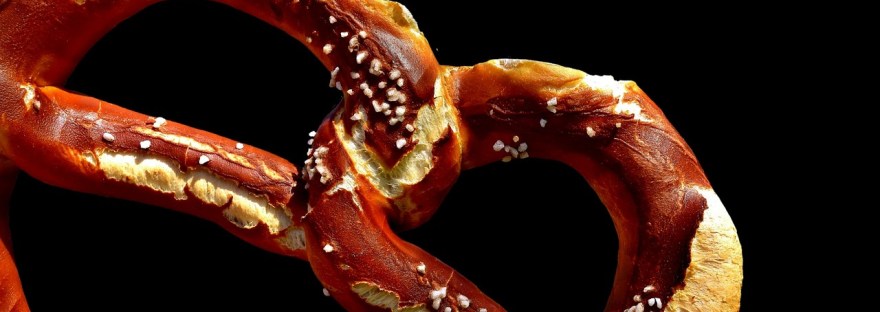
Billy Olsen looked at her through a three-ringed pretzel as she sat with her girlfriends. He had been looking at her for weeks. She was pretty and on the quiet side. She wore a red bandito-looking serape fringed with tassels that she fiddled with. Her chestnut brown eyes were highlighted by coral shadows of teal and cobalt blue under black penciled eyebrows. She was perfect. Maybe a little too.
He considered the salt crystals on the pretzel. Janis Joplin was complaining about something in the background—Awah, Awah, Awah—while his friends discussed how the Mets sucked. Each salt crystal was a tiny, white marbled geometric fragment that glowed dully from inside when angled in the artificial light. He wondered how it was done, getting the salt on the pretzel distributed evenly across the circumference of the rings. It was as though little workers attached each crystal separately. Intertwined, salted infinity loops tied in a bow.
Billy went incognito against the side window to cover a better view of the girl. He placed his glass on the sill and turned red next to the Rheingold Extra Dry sign. After staring at her long enough to get caught, he went to the bar for another pitcher.His friends, Eddie and Richie, presented their glasses like nestlings when he returned.
Billy Olsen conceded the Mets were not good, but more ironically not good rather than bad. Janis absorbed his bluesy mood whenever he played her on the jukebox, so he fed it coins to match the girl
She and her friends came every Tuesday night, always sat at the same chairs at the same table. Always she listened patiently, attendant to her girlfriends—her smile fixed during humorous stories or frowning thoughtfully throughout if sad. When she spoke, her comments were introduced by disclaimers and facial modifiers she tilted into.
“I don’t know, perhaps…”
“I guess, I think . . ..”
She felt out of place. Billy found that sweet. Perhaps she was out of place. Sometimes she would rustle for a moment, then reconnect with her friends. She had an extra pair of incisors on her top row of teeth that picked up smudges of bright red or pink lipstick. But the quality that leaped out, that was beyond interpretation—she was in a fashion universe of her own.
The Parrot was filled with people in jeans and t-shirts or sweaters, while she tried out an imitation Tang Dynasty Retro with flowing dragon sleeves for the first cool Tuesday night of autumn.
One week she wore A Roaring Twenties flapper dress with a long stole around and down her shoulders and arms with a rakish tilted Gatsby hat on her head. The next she arrived in a bright, curtainy Indian sari. Diaphanous like see-through clouds.
She was out of his league.
It was important to be in his league. Girls a little too tall or too short, too this or too that, were in his plans because he was a little too himself. Shoot too high, he was looking for trouble down the road. Go low, he already lost. Since his teenage years, he was more comfortable when his dates and he were more comfortable—in the same league. He had dates with girls with acne, for example, who applied foundation make-ups that would not necessarily match their natural facial coloration nor texture. By the time they were back at the girl’s door at end of the evening, her face would be cracked like desert sands. But suppose, just before he kissed her, the girl nudged forward a little teddy bear tongue from between her lips, ever so slightly. What pimples? Suppose she lifted her shoulder tips and tilted her face to await Billy’s first embrace.
He was glad to accommodate to the inconvenience of the blemishes and the flaking make-up if the girl was that nice.
Being in his league was a series of compromises and offsetting compensations, but he was hardly perfect. The girls on the receiving end did the same assets-to-liabilities assessments. His hair was thinning at twenty-one. He frequently suffered cognitive fogginess when anxious and was prone to maroon to childishly impish mood swings.
One Tuesday night in a steady snow in deepest winter, while Richie explained how his Army Reserve meeting went, Billy Olsen took a flat beer to his spot by the bar’s only window. The sill was a death destination for leafy, formerly flying insects to pile up for The Parrot’s weekly cleaning. He made a porthole with the heel of his palm in the condensation and squinted through the aperture into the unnatural neon redness. He looked through a life-sized reflection of his eye, which appeared outside in the storm, and imagined pigeons puffed along the cliff ledges of the apartments above the avenue. Billy checked the girl out through a pretzel ring to see what she was wearing, when she appeared in the middle of a loop looking back.
He made “Hi” with his lips. She made “Hi” back. He smiled. She looked away.
When he least expected it, he was in front of her. She was alone at her table. Perhaps that was why he got up.
“Hi. Sorry for snooping on you through the pretzel. Your outfit is very nice. What is it, a poncho?”
“I guess it’s a poncho. Or a wrap, perhaps.”
“Sorry.” He offered her his hand. “I’m Billy Olsen.”
Her left hand offered from under her wrap.
“Hello Billy Olsen.” She was Gabriella,
They talked about ponchos and wraps and sun colors, things Billy knew nothing about. When her girlfriends came back, he returned to his table. Before he left for the night, he looked for her through a pretzel to say “Bye,” but she was gone.
Next Tuesday, taking the great circle route to the bar with conspicuous nonchalance around her table, he said, “Hey, Gabriella. Nice cape, I think?”
“A cape. Maybe a blanket.”
“I believe it’s a cape.”
“Could be.”
It was a blanket, Lakota Sioux in design. A star quilt with bright reds, yellows, and oranges clipped with a clasp to hold it together self-crafted with her head in the middle.
Taking Billy’s lead, the guys without being asked carried their chairs to encamp at the girls’ table in a coordinated, peaceful occupation. They had girlfriends, but it was not that kind of move. The Parrot was not that kind of place. The Parrot wasn’t particularly any kind of place. Random conversation sparked around the table. People knew other people who knew someone else. This and that. Billy kept an eye on Gabriella, even though she was out of his league, even though he didn’t expect a promotion any time soon.
Richie lit a joint. Teddy and Sal were behind the bar. They were cool. Richie was cool. He took a toke and backhanded it waist high under the table to the girl to his left. The joint passed cupped by giver to receiver to preserve the spark around the table. It was accepted to gift to the next. Some declined, no offense, passing it on by the wettened tip. Others made it glow red in the grottoes of their palms. Peace be with you. When it came to Billy he took a draw, hoping not to fall into a coughing fit, which he did. Gabriella’s left hand came from under her Lakota blanket to rescue it into a lingering pull passed her brilliant red lips and extra teeth into her lungs, which she held.
Richie drove some of them home in his father’s 1960 Lark. Billy Olsen and Gabriella piled into the backseat with a girlfriend in between. He tried to make eye contact, but Gabriella was happy to be the center of his attention from a safe distance. John Lennon and The Plastic Ono Band joined them, jacked loud by Richie, who swayed with the wheel, and they all sang and swayed like the moon, the sun, and the stars along 3rd Avenue onto 97th Street and along Marine Boulevard.
Brownstones and row houses with stone stairs like miniature inner-city Aztec temples stood shoulder to shoulder on side streets to share laughter, nightmares, radio shows, and screams of love and anger. Constructed of sandstone extruded from condensed rock 250 million years old, the houses themselves were built in the late 19th and early 20th century.
Billy Olsen tried to close in on Gabriella around the immensity of her girlfriend’s overcoat, who continued to sway on and on, on and on with John and Yoko. He worked close enough to bombard Gabriella with battalions of photons shooting from his eyes, which he was unaware did not work that way, but so it felt to him, and so it felt to her. His eyes were deep bland gray, like the Brooklyn night sky in the clouds above the streetlights.
The girlfriend’s coat parted enough to allow him to touch Gabriella’s shoulder with his forearm. Billy Olsen was closer to her girlfriend’s head than to Gabriella when he said, “Tell me a story about you.”
He had waited way too long to ask her something meaningful.
“Please. You could make it up and I promise to believe you.”
“I don’t have a story. At least I can’t think of one
It was like her to say that.
“I can’t think of a story about me neither.”
Which was a lie.
So, he told her how he went to Newark to visit Stephen Crane’s grave. His arm was now on the back of the seat over her shoulder. He told her how rain whipped into his face. How he knew Crane’s poems. They were short and there weren’t many, so he recited what he could remember saying while standing over what was left of Crane underground. One he repeated to her about a man who ate his heart because it was his heart. And another about a man ready to leap to his death “. . . If thou and thy white arms were there, / And the fall to doom a long way.”
Billy Olsen didn’t realize how 19th century proper and corny this sounded to her.
“Just me and Crane,” he said. “The rain turned to snow crusting my head and shoulders and Crane’s grave white.”
Also, a lie.
Her drawn eyeline, black and perfectly curved, pushed into her forehead as she sat silently. Her eyelashes fluttered in the car window as she watched Brooklyn fly by—lashes designed to slice a young man’s heart.
They drove between cauldrons of sewer gas at the intersection near where the girls lived. Richie pulled up in front of their apartment building, turned to the backseat, his arm incidentally dropping over the girl next to him, “Here we are. Out you go.”
Out they were.
Billy had a long hike home in the storm. He had a brief chat with Gabriella, while her girlfriend fled in her overcoat into their building.
“Maybe see you next week?” he asked.
Her hair was parted perfectly down the middle and combed to slide alternatively from one side of her face to reveal the other if she tilted, which she did. Billy got the impression she wanted him tocome up stairs. When they were alone in the elevator, they no longer thought about what either meant.
The apartment door was ajar on her floor. “California Dreaming” drifted from her girlfriend’s room. Gabriella and Billy Olsen sat on the sofa. She unfastened the clasp of her Lakota blanket to reveal an embroidered, carnelian-red percale blouse.
Her right arm was willowy and handless, like the bud of an un-blossomed flower. Gabriella touched Billy’s cheek.
Image Image by Alexa from Pixabay – close up of a pretzel on a black background

 literally stories
Gerald
A different time and even a different world, yet undeniably still true about the ways of the heart.
Leila
LikeLike
Hi Leila,
Sorry it took so long to get back to you.
I think you’re right about world’s changing, but the ways of the world remaining the same. Especially regarding matters of the heart.
g
LikeLike
I like how this story somehow combines not much happening and perhaps the best moment of Billy’s life happening – there is a calm rhythm to this piece that remains down to earth, but also really quite poetic.
LikeLiked by 1 person
Hey Paul,
Sorry it took so long to get back to you.
Yeah. I find when my scenes or thinking get bigger, the effect is less. The characters get overtaken by events. The more focused on the little aspects of life I get, the more the individual matters.
Thanks
gerry
LikeLike
A wonderfully evocative piece that perfectly captures those moments when you feel that life holds so much.
LikeLike
Steven,
I’m sorry it took me so long to get back to you.
Yeah. I find that I get more out of a story, the more these moments are unique to the character. Where being touched on the cheek by a handless woman would only be so wonderful, if the man were Billy Olsen and the woman Gabriella — and at that moment.
Thanks,
gerry
LikeLike
Ah the torment of unrequited love. But also this constant feeling that we all have a ‘league’ and some people are too good for us and yet, how often is it that the most unlikely couples are the happiest. This made me ponder deeply about the laws of attraction. Ha, it also brought to mind a line from that song Breakfast in America – ‘Not much of a girlfriend – ‘ I never seem to get a lot’ a great story – entertaining and thought provoking.
LikeLike
Diane!
I’m sorry it took so long to get back to you.
I knew and loved Super Tramp and Breakfast in America for a while, BUT I never connected it with my story. Perhaps psychologically under the surface I did without knowing.
And yes, it does seem that couples who have ‘travelled’ the farthest to be together in terms of difference are the happiest. Perhaps they see in each other what others don’t.
Thanks,
gerry
LikeLike
Hi Gerald,
I can get bored with description but you judged this very well. It worked brilliantly as it was more observational from the MC.
This could have went into sleazy territory or finished off gratuitously but fair play to you, you left the whatevers to the reader and balanced what you said and what you didn’t perfectly!
I liked the idea of going into a pub with terrible beer, just because that was where he went. (I did that for years – I suffered draft McEwan’s lager in a local pub that I frequented. Weird, WcEwans made terrible lager but a really excellent Export!)
The description of the pub was well done and I always like some music context.
A well-crafted piece of story-telling!
Hugh.
Oh did I see a Steven Brown Giraffe in your bio photo??
LikeLike
Well-written and engaging. A mostly gentle story with a gentle surprise at the end.
LikeLike
David,
I’m sorry to have taken so long to get back to you.
Whenever I get into big moments wrapped in bold dramas, my writing tends to unhinge or I get totally lost.
I seem to get more when I write about less.
Thanks,
gerry
LikeLike
“Out of my league” is the usual reality, but why not shoot for the stars – but not too agressively? I’m proof that one can make it out of his league.
I wondered if Billy’s usual dates thought that he was out of their league.
Does the lack of a hand even it up?
LikeLike
Hey Doug,
Sorry to have taken so long to get back to you.
Yeah. There is that dilemma of being in the so called ‘comfort zone’ and what that entails. I have a friend who broke up recently with her lover because he was ‘too nice.’ He gave her the creeps because . . .. Who knows? Maybe he made her see her natural meanness in a negative way, whereas I saw it as her being her honest self.
Do you know Super Tramps ‘Breakfast in America’? Someone pointed it out to me in a recent Literally Stories email as a perfect example of the problem.
Does the lack of a hand even it up?
For Billy Olsen it would. [For me too, I think!]
Thanks,
gerry
LikeLike
Evocative of a time and a place. Some nice lines: ‘She was beautiful. Maybe too.’ Clever ending that I never saw coming, despite the left-handed handshake. Thank you.
LikeLike
Mick,
Thanks!
Sorry I took so long getting back to you.
Time is always on the move and in the city where I grew up, almost everything got repaved, torn down, rebuilt, rezoned, and its demographics replaced by other cultures and new people every few years.
If not for stories, there would be no ‘there’ there. [< I stole that line from someone I’m sure, I don’t remember whom.]
LikeLike
Gerry
Any protagonist who would tell made-up, or partially real, tales about visiting Stephen Crane’s grave and reciting his poetry has got my vote! Many know about The Red Badge of Courage but few are aware that Crane was also a great modernist poet before “modernism” existed, and, whether your main character was actually at the grave or not, the fact that he would use this as a go-to story in order to impress a woman says volumes about him!
All of the characters, the sense of place, the prose style, and the overall style of this story are winning, vivid, “real,” and “true to life” in the best story-telling sense. The narrative never stops moving, but also never tries to impress the reader in a false or fake way.
I also really like/d how music is used in this piece. Filtered through the point of view in just the right way, the “soundtrack” for this story is excellent at every level! Bravo!
Dale
LikeLiked by 1 person