
The summer I turned eleven the tiny fingers of creeks that ran off from the river went bone dry. It turned the red Georgia clay into a cracked mud, and the water line in the wells fell to a frightful low.
“Feels like hell has encroached upon us,” Aunt Sudy said. She sat in a rocker at the edge of our front porch, hoping and praying for a breeze. She had an old fan she swept back and forth. This one had a picture of Jesus in a garden with a white picket fence and flowers and a stick handle glued to the fan she clutched in her chubby fingers.
“Hell’s a superstition,” replied Ruth, “’tis drought has settled here.”
Aunt Sudy was a paramount believer and not one to play dice with salvation. This kind of heat dried up the good water and therefore was not a blessing, so it was the devil working up something no good.
“Some confession might do your soul some good.” she spit snuff off the porch, her eyes roving sideways toward Ruth.
I held my peace. I knew lines not to cross with my mother, and her confessing to sin was one of them. I pulled myself up and stretched to my full height, whistled for Gabe, and he came out of the shade of an old oak where he had been napping.
“Where you off to, you wild thing?” Sudy pulled her white handkerchief from her bosom and wiped the edges of her mouth.
“Off to capture June and go swimming down at the river.”
“Don’t stray from the north side of the bank, you hear me?”
“Don’t stray,” I repeated, but it wasn’t with much heart. I was born to stray. Ruth knew that full well. “Just trying to wash off some dust.” I felt their eyes upon me, watching me go, my bare feet purposefully kicking up the red dust as I walked along. The dirt was cooler than the air, but my t-shirt was wet and clung to my back, the sun blistering through the thin white fabric.
June’s my first cousin on my mother’s side, and we are the same age but we are not the same. She will not run toward trouble, not try to catch the train when it passes through or stand defiant on the tracks, the whistle blowing to high hell and damnation, but she is the closest thing I have to a friend.
The river was muddy when it rained and muddy when it didn’t.
June’s mama hollered at us, “You orta not go swimmin’ down there in that water. It’s snaky down there.” But we didn’t pay her no mind, although June did holler back, “We’ll be careful, Mama.”
What else were we to do being eleven years old and stuck in the middle of Truth on a drought of a Summer afternoon? This day me and June had changed into bathing suits at her house, put our cut-offs and shirts back on over them, and walked down to the creek, still barefoot, kicking at the dry, dry dirt along the way.
We eased down to the edge and put our toes in the water. In spite of the heat it still felt cold from the natural spring that bubbles up from beneath the mud. It isn’t a big one, mind you, but enough to keep the water cold. And maybe clean enough to drink. I studied the swirling mud as I edged farther in and thought about the Garden of Eden and how it had to be full of rivers and springs the color of glass.
“You reckon Joline’s gonna finally get outta here and leave things be?”
“Her kind can be stubborn when they’re after something.” I watched a dragonfly think about landing on June’s shoulder and then lift and fly away.
“Don’t make a lot of sense, does it?” She hit the water with her hand, throwing up a muddy spray.
“No, it sure don’t,”
She held her nose and disappeared under the water. I wasn’t sure she heard me, so I repeated myself when she came back up.”
“It sure don’t.”
I lay back in the water and let the backside of my head freeze while my nose felt like it was getting burnt but it wasn’t on account my skin turned brown sugar in the summer. I didn’t burn. I looked over at June and knew she’d be pickled like a little pig if she stayed out too long.
I pulled myself under the water, eyes wide open, watched the sunlight dancing just under the surface, listening to the sound of deep and dark underneath.
We waded farther out into the water, the mud rising between our toes, the cool of the river a shock to our hot skin as we swam upstream and floated back down to where we got in, then we rolled over and swam again. We forgot to look for snakes, but none found us that day. We held our breath under water and talked about who we’d be when we grew up. All I knew was that I wanted to be away. Beyond the borders of this life where I was locked down, held back. Where choices were few.
June acted like she would do the same, made plans to live with me, but the truth was she was content, and I could tell the way she talked she would never leave this city, not turn her back on her people but settle in among them.
When we had chilled ourselves until our fingers wrinkled, we sloshed out and climbed the bank of the river, lay down in the grass that crunched beneath us. We could see him from there as he tried to catch fish bare-handed. He was almost naked, wore a rag that looked more scrap than loin cloth, and was scrawny to the point he looked skeletal. Even from this distance I could count his ugly ribs.
No one snuck food on his account that I knew of with my exception. I wouldn’t have done it either if it hadn’t been for God whispering that one word to me from time to time – mercy. When He said it I felt a push. His ribs reminded me it was time to sneak more apples and potatoes and roll them down the hill. I tried to think of something else that I could roll. Biscuits would pick up the dirt. Head of cabbage might be all right. June nudged me to get on up so we could move farther up the river bank. Nobody swims around him. Nor talks to him.
June said, “I’m hungry and going home.” We both stood and pulled on our shorts and t-shirts. When she turned I looked back over my shoulder, then sat back down. “You comin?”
“In a little while.”
She looked toward the river where he was scratching in the dirt now at the water’s edge.
“You be careful,” she said, sounding grown up.
“Nothing to fear,” I replied.
“Still ….”
“I’ll be there shortly. Fix me a plate of something and I’ll come eat it soon enough.”
That satisfied her and she went on around the riverbank and up the road.
He kept scratching, moving south along the river’s edge toward his lean-to. I rose and followed him little by little from a distance, staying up on the higher bank where he wouldn’t see. I watched, both curious and bored, to see what he would do, the way someone might watch an animal in a zoo. He started declaring aloud to no one, but his voice came out in a croak. It had never been the same since his hanging. The scorched mark of the rope still ran white around his neck in a welted scar.
“This is my house. I built this house. Me in the right house. Pigs in the white house.” Then he looked down at his naked feet and studied them. “These are my shoes,” he said, “I built these shoes.”
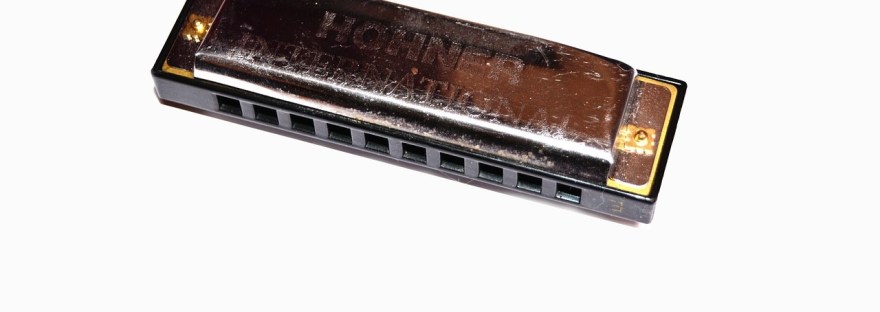
I laid down on my back and pulled Walter Reilly’s old harmonica from my pocket. My fingers ran across the metal and then I put it to my mouth, squeezed out the closest thing to a train whistle I could muster.
“Ack, who’s there?” he croaked out.
I rolled back on my stomach and watched him pace back and forth like a caged animal. He knew where his bars were even if they weren’t there.
“I said, who is out there?” He stressed the “who,” but I couldn’t tell him. I was breaking one of Ruth’s laws being that close to him. I rolled back over with a shudder and looked up at the cloudless sky.
Then on no account of nothing I said, loud enough to carry, “I’m Vida, from Virginia.”
“Ack, don’t know nothin’ ’bout no Vida.”
I could hear him scratching at the dirt like a chicken clawing for grubworms.
“Come out to where I can look at you straight on.”
“Vida doesn’t show herself on demand.”
I blew the harmonica again and drowned out the noise he was making stomping about and trying to scream a thousand things that would never come to pass. I quit blowing, rested the harmonica in my palm laid across my chest. It lay still and cool in my hand.
“I think I am an old man.”
“Well, thinking it will get you halfway there.”
“But I’m not a bad man.”
“That’s between you and the Lord.” I wanted to add and Ruth too, but I held my tongue.
“Ack!” he screeched, an animal caught in a trap — I’ve heard him do that in my dreams. “What does the Lord know?”
“He is Alpha to Omega and he knows everything that ever was or will become.” On some things I stick to being honest.
“Does he know where my apples come from?”
I wasn’t thinking apples. He took me by surprise and it took me awhile to respond. Surprisingly, he was quiet and patient in the waiting, as if he held his breath.
“Knowing everything includes about apples and everything in between.”
“Ack! How do you know that he knows about my apples when you’re from Virginia?” He spat out the last word like it tasted bad.
I played on the harmonica again to avoid his thinking. I could feel him pacing down there behind me, down on the river’s bank, the same way I could feel a storm coming in the air. Anticipate enough storms and you’ll be afraid all your life. Survive enough and you’ll never be afraid of anything. I was not afraid of storms, or of him. He was as broken as any outcast leper in the Bible. And it was all he’d ever be.
I let my eyes peek above the dry brown grass line. He was crouched and looking up the hill, his eyes crawled the space of the grass between us. He was contemplating crossing that distance. But he wouldn’t do it. I knew this as surely as I knew my name and Ruth’s power. As surely as I knew yes, and Amen.
Image: Pixabay.com – old harmonica with a worn brown wooden case and brass ends.

 literally stories
River
Great setting of place and the language is fantastic. The details, such as the mark on the man’s neck, intrigue as well as the attitude of the MC.
Leila
LikeLiked by 1 person
Irene,
Thank you for reading. That scar on the neck . . . another story. Thanks for your comments!
River
LikeLiked by 1 person
A powerful vignette that richly captures the atmosphere and hints at the brutality, leaving the reader wanting to know more. Really well done!
LikeLiked by 2 people
Steven,
Thank you so much. Will get to work on the more!
River
LikeLiked by 1 person
Mysterious and well-written with good dialogue, realistic dialect and excellent imagery. Excellent ending that’s open to interpretation. A very strong story.
LikeLiked by 1 person
David,
Thank you! And Aw, shucks, – drags toe through the dirt.
LikeLiked by 1 person
Beautiful to read. Really puts you in the story. Nice job!
LikeLiked by 2 people
Rachel,
Thank you so much for reading!
River
LikeLiked by 1 person
Reminds me – polio scare about that age for me. Avoided water, and didn’t have anything safe or close. Ball games instead.
LikeLiked by 2 people
Hi Doug, Ball games are always great!
LikeLiked by 2 people
Wonderful! Your writing always is.
LikeLike
A piece highly evocative of a place. So well described I could almost feel the heat and smell the dust. Great dialogue writing too.
LikeLike
Hi River,
Beautifully written, intriguing, poignant and every character is interesting in their own way.
Hope you have more for us soon.
Hugh
LikeLike