
—other news, after multiple years of delay, a final date is set for the first manned mission to Mars. This October, seven astronauts will embark to the distant red planet in a great scientific journey, a monumental achievement to welcome society’s next great leap forward. A better era—
Nathan Quinsy, despite his closeness to home, clicked the radio off, not in the mood to be serenaded by news stories about human progress and superior futures when his own life revolved around dull workdays and nights alone; a constant barrage of endless Microsoft Excel documents full of data numbers, followed by a microwavable dinner while The Andy Griffith Show or I Love Lucy broadcasted on the oldies channel. He pulled into his designated parking spot under the tan roof, stewed in the melancholic silence for a moment, then opened the car door to the bitter smell of gasoline fumes. Somewhere, an unseen child laughed. Elsewhere, rock music drifted on a hot breeze. He loosened his tie and boarded the sidewalk outside his apartment complex. A small jet tore across the cloudless sky.
He trudged up the outdoor staircase. The warm air weighed on his shoulders, and his feet felt as heavy as bricks. When he reached the third (and final) storey, he turned to scan the view: a distant mountain range, a congested highway, numerous crisscrossed chemtrails, a transparent pollution haze to the west. Once, the world had been made of color. Nowadays, the atmosphere appeared tinted, as if a gray veil had been draped over life’s every aspect, a bleak cloak to mask the landscape’s natural beauty… or imprison it. He tugged at his shirt collar. He sighed, unsure how or when—or why, even—the world decided to fade, to let its vivid hues vanish and be replaced with an austere backdrop of misery and despair and decline.
He went inside.
***
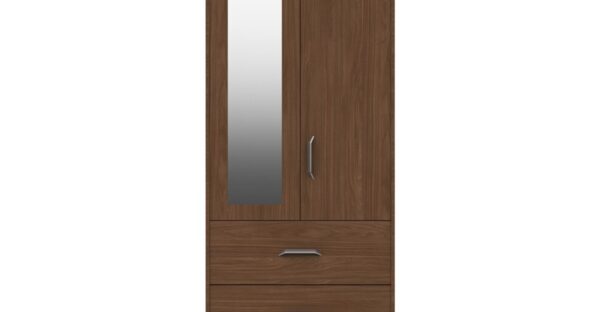
Nathan did not bother to slip his shoes off or put his keys on the hook in the foyer or peek at the kitchen (a mess, for sure; dishes piled in the sink, crumbs on the floor, a small milk spill on the counter) or glance at the digital clock in the living room, too preoccupied with slipping into a comfier set of clothes. He marched to his bedroom, head still full of mathematical equations and data graphs, and pulled his tie off and flung it onto his bed before he stepped to his walk-in closet and noticed an anomaly in the mirror-door’s reflection: no grown man faced him.
Rather, he stared at a kid—light brown hair, hazel eyes, a golden tan. Himself, just young and vibrant and… happy, a smile on his face and a twinkle in his white teeth, and he stood, hands behind his back, as if he had something to hide, head angled slightly down to radiate bashfulness, maybe mystery. His mere existence remained an enigma, after all, so the obscure personality did seem quite suitable for his youthful version, a flicker from the past.
Meanwhile, the background, despite the bedroom’s constant appearance, shifted from one location to the next, a fluid movement between scenes like clay transformed second after second. The boy stood in the apartment one moment, then transferred to a sunlit wheat field afterward for an instant, then to a blue playground hidden amongst large pine trees, then a red-bricked home in the Midwest while a mass bird migration danced in the distant blue sky. Each backdrop revealed a place from long ago, a memorable destination that triggered numerous graphic emotions, and it enveloped him whole, swallowed him down into a nostalgic abyss where photographic memories and familiar sounds lurked in patience:
graffiti underneath an abandoned railroad overpass on a midsummer night, a first kiss in the back of a sleek hotrod in the high school parking lot, an old Bob Seger record mixed with two clinking wineglasses, a game of tag in the backyard cornfield, a hot chocolate on a winter school day, theme park rollercoasters reflected on a calm lake’s massive surface, an ice cream truck at a hometown church festival sometime at the end of spring break, Capri Sun’s jammed into a fridge, melted popsicles on pavement, a faint clink of a baseball on a metal bat, piano lessons in evening hours, soda pop at the local Circle K.
Nathan saw the tears on his cheeks before he felt them. Like a flick of a switch, the small child vanished, and his adult self stared back at him: a desperate man on the miniscule edge of an attenuated wire, on the verge of destruction. He used the back of his hand to wipe his damp face, dragged it across his adult facial terrain in one clean swipe, then grabbed the mirror-door. He put all the force he could in it, swung it towards him as if to open the portal to his youth. However, a normal closet waited on the other side—no playground, no wheat field, no home. He slapped the mirror’s rear in an attempt to find his childhood, but it did not budge. Nor did it when he tried to claw it. Nathan, in sporadic movements, whipped the door closed again. He tried to search for a boy in his usual reflection, yet no sign remained, his innocent character lost just like his boyhood many years ago. He flung the door open for a second time, found the same interior, and let loose a loud sob. His hands clutched the doorway’s sides. His legs buckled underneath him.
“No!” Nathan shouted once. Then, in muffled whispers, “No, no, no.”
Image Wardrobe with a mirrored door. Google images

 literally stories
Well written thanks for your king effort!
LikeLiked by 1 person
Mason
Outstanding example of a moment of clarity. Let’s hope Nathan pulls himself together and tries to alter what must be to him a fated life.
Congratulations on the second appearance and praise to you for your own sticktoitiveness. (Wow, did that word catch a redline, but, still, sticktoitiveness is a valid word in my mind.)
Leila
LikeLike
Sometimes I like the redlining. When I see the hated “adulting” Word joins me in afirming its illegitamacy.
LikeLiked by 1 person
A poignant reflection on what we’ve lost, or let go or just haven’t fought hard enough for … nicely crafted!
LikeLiked by 2 people
Hi Mason,
I just want to echo what Leila has said.
The three of us know how hard you have worked and how determined you are.
You are a credit to the craft!
All the very best my fine friend.
Hugh
LikeLiked by 1 person
Mason – I feel this viscerally. The MC could be me. Just read the obit of a neighborhood and school friend from decades ago. At least I’m still childish, so I do have that.
LikeLiked by 1 person
I figure Nathan was fortunate to get that glimpse into his past. I like the comparison between the optimism of going to Mars and the look back to childhood…. all the dreams of a better world, whether it be in the past or in the future. Echoes of Ray Bradbury here, in the nostalgia for a better time.
LikeLiked by 1 person
I really like the kind of subversion here of how the sense of nostalgia is almost like a monster from the past rather than a pleasant memory – a testament to how we view the past in relation to our present. Clever and hugely engaging writing.
LikeLike