All Stories, Crime/Mystery/Thriller

You Don’t Remember Me, Do You? By Alex Kellet

We were in the same class at junior school. You were only eight years old, I was nearly nine when you moved. I sat behind you. You were so clever; you used to be the first one to answer the teacher’s questions. I used to try and get close to you so I could copy your work.

Continue reading “You Don’t Remember Me, Do You? By Alex Kellet”
All Stories, General Fiction

Rosa Rugosa by Thomas J Daly

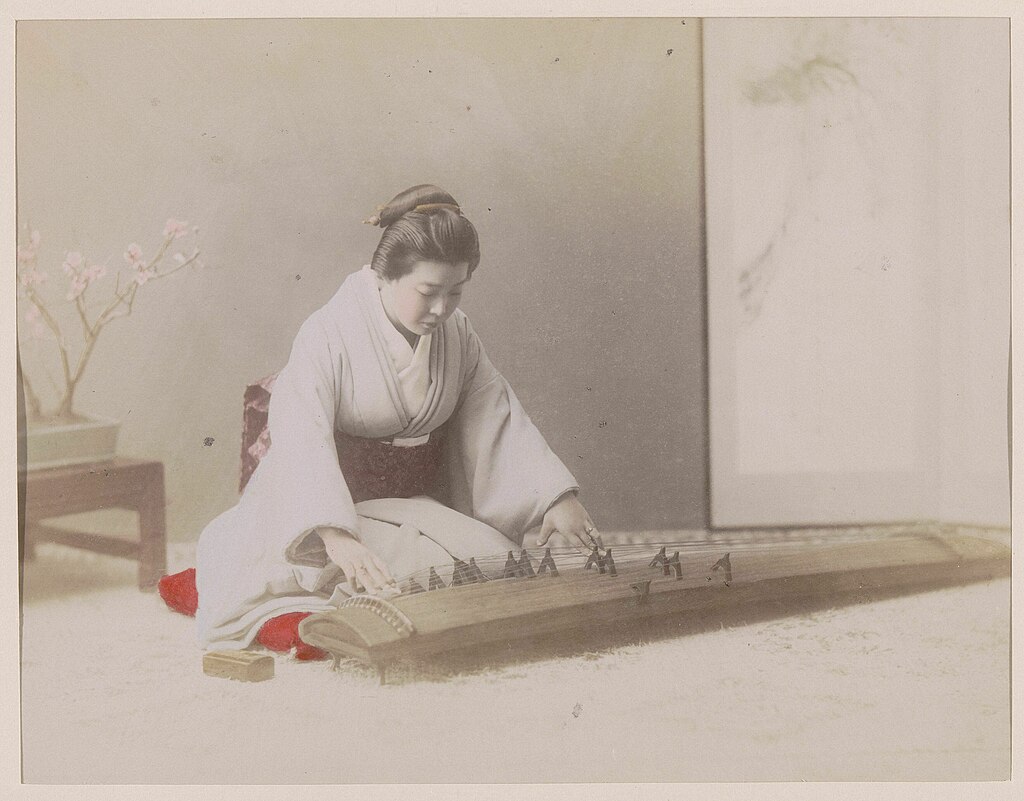
The spring sea lapped upon the shore of Yokohama. In the city a familiar New Year tune played over a radio. It had been ten years since I heard that song. I mouthed along the words half-remembered from nights when, in drunken stupor, my friend, the poet Sunokaze Heki, would recite tanka alongside the music.

Continue reading “Rosa Rugosa by Thomas J Daly”
All Stories, General Fiction

Reflection by Mason Yates

other news, after multiple years of delay, a final date is set for the first manned mission to Mars.  This October, seven astronauts will embark to the distant red planet in a great scientific journey, a monumental achievement to welcome society’s next great leap forward.  A better era

Continue reading “Reflection by Mason Yates”
All Stories, General Fiction

Half Moon Above Seoul Central Park by Yejun Chun

Everyone needs to cry. Everyone needs to cry because it is not easy to live by simply breathing in this modern world. Everyone becomes upset by something, usually the smallest things that went wrong. Something that was out of their control, something that was not scheduled. An argument with a lover on the morning breakfast table. A sudden insult from a close friend that went too far and the thoughts following the insult going even further inside the mind. It’s the small things. Usually.

Continue reading “Half Moon Above Seoul Central Park by Yejun Chun”
All Stories, auld author

Auld Author – Fahrenheit 451 brought to us by Thurman Hart.

Though this is not a particularly Auld or unknown piece it is obvious that Thurman Hart feels passionate about this and it has had a profound effect and that surely qualifies for a place in this occasional feature.

Much of what Bradbury saw has come true–social media and disaffected youth. Yet let us hope that words will still be precious to some in the worlds to come.

***

The work that I’m afraid will be forgotten is Fahrenheit 451 by Ray Bradbury. This is, of course, a flight of insanity on my part. The book is a true classic and will always (it seems) find its way into various literature-based curricula. However, the true masterpiece of the work is overlooked, at least in my experience.

Fahrenheit is a dystopian work, set an undefined length into the future where fireman are employed to burn books, the implication being that they control dangerous ideas that books contain. The general population has been dumbed down, too interested in the parlor wall families – i.e., characters portrayed on wall-sized televisions – to even notice that they are being controlled. In fact, Mildred, the wife of the main character, Montag, attempts suicide when he tries to force her and her friends to feel and think by reading them poetry. Even people who understand what is happening are too afraid to fight back, as evidenced by Montag’s very literate supervisor, Beatty, who goads Montag into killing him because he can no longer live as a tool for this governmental control. There’s even an aspect of invasive technology via the mechanical dog that tracks Montag, and what is now called “fake news” where Montag listens to the report that he has been tracked down and killed.

This is the obvious masterpiece of Bradbury’s work: that he can look at his contemporary and near-historical events such as the red scares of the 1950s and the Nazi book burnings of the 1930s and 1940s and make them seem like they are about to happen all over again. Like the portrait by a master painter will have eyes that seem to follow the viewer as they move, Bradbury’s predictions of society seem as near-future today as they did when I first read them in the mid-1980s. In this, Bradbury is a champion of free thought and artistic expression, and it is a good and proper thing that he is studied for that reason.

But Fahrenheit is not merely this. Tucked away in the third section, entitled “Burning Bright” is a passage that deserves a canonical place next to Shakespear’s “What a piece of work is a man.” Montag has escaped from the city and made contact with a small group of rebels who exist outside of society in order to keep alive the memory of written works. The masterpiece is delivered by Granger, when he tells Montag:

“Everyone must leave something behind when he dies, my grandfather said. A child or a book or a painting or a house or a wall built or a pair of shoes made. Or a garden planted. Something your hand touched some way so your soul has somewhere to go when you die, and when people look at that tree or that flower you planted, you’re there. It doesn’t matter what you do, he said, so long as you change something from the way it was before you touched it into something that’s like you after you take your hands away. The difference between the man who just cuts lawns and a real gardener is in the touching, he said. The lawn-cutter might just as well not have been there at all; the gardener will be there a lifetime.”

When I first read those words, I was dumbfounded. It was if a veil had been lifted and someone had shown me a timeless truth of existence. I sat on the edge of my bed, amid the dryland cottonfields of West Texas, and tried to fit the entire sum of my fourteen years into those words. Then, as now, the full measure of those words eludes me. They are a moving goal that I can only aspire to hit. It is why I turn my hand towards excellence in all that I do. It is why I write. It is why I sing. It is why, every year, I plant a new garden so I can watch the sky and worry and wonder. I know one day I will be gone, but I know my soul will live on in the things I have touched and passed along to my family and my friends.

It is this passage, above all others, that moves Ray Bradbury from someone who writes stories into the realm of an author. Here, he doesn’t just string together words, sentences, and phrases. He builds an idea. He presents a philosophy. He gives us his ability to reach through the written page and touch us. Not just for a lifetime, but, I hope, for many lifetimes to come.

Thurman Hart

Image: Pixabay.com – an old metal goblet on a dark background with a quill pen and a book

All Stories, General Fiction

Feathers by Lindsay Bennett Ford

The plasticity of the charity bag felt like another cruel humiliation to Marilyn. Her once fashionable flowered sleeved blouses and trim-line shift dresses had been taken down from their hangers in the wardrobe – only to be dragged out in handfuls by the spiky haired shop assistant with youthful enthusiasm while Marilyn’s cheeks burned. Bright colours clashing like layers of a trifle, chiffon and polyester laid on top of one another in the bag, pressed trouser legs are unseemingly wrapped around a starched collar, polyester and cotton acting like reunited accomplices caught and stretched out on the counter, inspected and held up against the harsh fluorescent light. Something bounces out the bag and with a loud ping, rolls across the floor.

Continue reading “Feathers by Lindsay Bennett Ford”
All Stories, General Fiction

Gravity Hill by Rob O’Keefe

There were worse places to be a teenager than New Jersey.

Teenagers, like vampires, are creatures of the night, sharing the same pallor, inward focus, and questionable fashion sense. Unlike the vampires of old, who lived their undead nights under dark, occasionally moonlit skies, your average New Jersey 18-year-old reveled in the neon glow of streetlights and store fronts. Both, however, had to be true to their natures, which meant constantly being on the prowl to quench an insatiable thirst.

Continue reading “Gravity Hill by Rob O’Keefe”
Short Fiction

No boy, no Tie by  R. P. Singletary

Three months later and back into my routine, I returned to church. I noticed all the families at early service. Little girls with exquisite ribbons, little boys all about their first ties. My father couldn’t teach me how to tie a tie. He was dyslexic. I was left-handed. Charming, the pair of us. Unsuccess greeted us at every skinned knee of childhood. Laces. Did it matter whether on new or old shoes, no. Scouting badges for all kinds of knots and things? Well, we attempted all that! Every sport imaginable involving foot or paw, naw. The neck tie was the worst. Eventually, I’d give up or stammer off. Or he would. Often crying throughout. He’d stopped cursing at some point. Sometimes, I would start cussin’ at another point. Only for Mom to intervene. She said she had to pray: “No boy, no tie, no boy.” I promise I remember that prayer.

Continue reading “No boy, no Tie by  R. P. Singletary”
All Stories, General Fiction

The Van by Peter O Connor

Claire Jones took my virginity.  It was in the back of her father’s 1968 Morris Minor van.  The van, an F-reg MK II, crouched on the drive of 68 Moor View on four splintering wooden blocks.  The engine removed, along with the bonnet, wings, lights and windscreen.  It perched blind and unmoving in that pose for five long years of my life. Even today, years later, the ghost dark patch of dripped, fluids can be seen on the drive of No 68.

Continue reading “The Van by Peter O Connor”
All Stories, General Fiction

Photogenic Memory by Santiago Márquez Ramos

Carlos López Andrade sat at a rickety red table, bathing in the sea of glowing colors that was Times Square. The luminous ads and billboards high into the night sky – ads of phones that ensured happiness and apps that promised love – trickled down white and blue and red colors that danced across his dusty brown skin. It was the texture of a ripe avocado, his skin, and the lights highlighted every ridge and crevice, every memory held within the rind. Even the ones that he didn’t want illuminated. He sighed.

Continue reading “Photogenic Memory by Santiago Márquez Ramos”