A Florida Fable for Our Time
When the Rainbow River began to speak, the remnant band of creatures eking out a living along its banks was dumbstruck. The waters they depended on to spawn fish and slate thirst had begun to gurgle and grumble in a quarrelsome, insistent pitch, as if complaining in a language no one could interpret. Divine Dominion being no competition for Manifest Destiny, the ranks of hangers-on were thinning by then, but the lone remaining panther, who was barely out of adolescence and a bit full of himself, summoned the hutzpah to organize a community forum. What is needed, he told the leader of the yellow-eared turtles, is an investigative committee. The old guy withdrew to his shell and considered, finally agreeing to send a representative. With the reptiles on board, the panther managed to assemble some shell-shocked deer and twitchy racoons, a patchy-feathered marsh hen among assorted wading birds, and the silver mullet king, who had suspicious spots on his fins and was not long for this world. Mama vixen promised to attend a meeting if she could bring her kits, humans having ruined her burrow by inserting mothballs and a blaring radio.
Initial discussion pegged the bellow of the fourteen-foot alligator as the culprit but no one had seen him for years. The great egret opined that the gator became dangerously addicted to sunbathing on a goopy mat of algae so substantial it supported his weight. “Thus making him,” said the egret, her aquiline beak in the air, “an easy target for those wishing to clear the way for squeamish tubers, drainage pipe layers and private dock erectors.” The red striped bass and the indigo snake, their glistening hues fading of late, insisted that the voice in the river had its genesis in man-made conspiracy. The rumbling vibration was the phosphate mine, the aquifer pump, the wave of base noise churned from speakers installed in gazebos that lined the shore. The racket seeped through skin, sabotaged the rhythm of blood exchanging.
Someone nominated the manatee to confront the voice but he was voted down—his kind were lumbering and slow and too dim-witted to avoid their fate. His wife had been killed by a boat with three Evinrude engines and still, he asked where she was. In the end, the task of conversing with the Unknown fell to the panther, who had the stealth and the speed and the smarts, it was generally agreed, to avoid human trickery.
At 3:00 A.M. on a void-of-course moon, the panther crept past lawns reeking of fertilizer. He combat-crawled beyond edgewaters clotted with knotweed. He waded in as far as he dared, which was far for a brash young male. He stopped when the roiling waters of the headspring began to pummel his legs like a riptide. “Who is here?” he called to the churning eddy. “What say you?” he demanded of the swirling vortex. There passed an eternal moment while the panther fought for his footing in fickle, shifting sands. Finally, there arose a grumble, a watery static that began to clear like fog at dawn. The panther deciphered words, then sentences and whole passages, propelled to the surface on the mighty exhalations of the river’s deepest boils.
“At last,” boomed the baritone voice with imperious tone, “a cognizant audience. You are a sentient being, are you not? And where are the rest of the minions who depend on moi for their living?”
The panther had an impulse to crow that he alone had the courage for this chore but with a nod to maturing judgement, he squashed it. “I will interpret your message,” he told the voice, adding that it was cold, standing in the river’s voracious suck.
“Ah yes, my flow is still strong and virile. However, I have noticed there are days when I feel a mysterious pull, an odd tug, as if a drain were—”
“What do you wish to tell us?” interrupted the panther. His claws were numb and losing their grip.
“My life has been the stuff of legends, you know. Did you hear from your great-grandfather or some long lost auntie, how my name was bestowed? My waters were so gin-clear, reflected rainbows arched in my depths, my aqualungs so robust, sapphire streams gushed from my vents. I was liquid light, a fathomless prism, a kaleidoscope of color, a sunken sun mirroring the rise, the dénouement of days.”
The panther retreated to a midstream islet once rooted in the native bullrush that had sheltered otters at play. “Do you wish me to tell of your fading beauty?”
“Why you whippersnapper! Open your eyes! Do you need sunglasses? If you do, there are plenty embedded in my bottom. No problem to flush a pair loose.” The voice surged with smug self-assurance. “I want all to know I am lovelier than in days of yore. I host a procession of technicolors that grows grander every summer!”
Though disconcerted to discover the river fancied himself to be art, the panther used his talent for treading softly. “Tell me please,” he said, “what evidence do you have for this renaissance? I want to understand, but I am not as wise, as experienced as you.”
“Indeed,” said the river, mollified. “If you weren’t so afraid to be spotted in daylight, you would see I’ve been upgraded, decorated, twenty-first century style. I’m blessed with a planet sized palette of hues, a plethora of neon radiance. Have you noticed the cans that bob in the wake of jet skis? Logos of royal blue and blood red, on a background of full moon platinum, dance in waves orchestrated by sea-doos. Lime-green floats and plastic dinghies figureheaded with fuchsia-haired mermaids and leaping pink dolphins ply my waters by day. Paddleboards with strip lights the color of sirens flash after dark, like the fireflies of yesteryear.” The river droned on in the flowery language of pride. He was, he told the panther, a veritable parade of wonder, a conduit for discarded beauty. Swirling in foam at his surface, were shiny bags with scarlet targets, striped swim goggles snagged in polka dot panties, bottle shards gleaming gold-amber in effluent. Best of all were oil slicks that slithered through waters where basking turtles once fed. “No one can deny, huffed the river, “petrol reflects every color of the rainbow!”
On the dark of the moon, which wasn’t dark due to halogen lights from a golf course that fogged the sky fluorescent-purple, the panther gathered his ragtag crew. They met in a small wooded glen that survived the backhoe. The panther reported the Unknown to be a simple-minded fool, the blustering voice of man-in-the-river, a deluded being blowharding foolishness. There were sighs of relief all around. The yellow-eared turtle said such silly speech sounded harmless enough; the voice should be ignored. A rabbit who wandered in from the ninth hole said the whole affair was sad. It sounded as if the river was suffering some form of aquatic Alzheimer’s. Catching sight of the hungry-eyed fox and her bone-thin babies, the rabbit sidled away towards a sand-trap. “No worries,” called mama fox, “I wouldn’t eat you if you were the last hare on earth. I’ve seen you munch fairway grass.” A mild commotion ensued, annoying the blasé egret who moved to adjourn. A battle fatigued racoon, who’d witnessed his daughter treed by dogs, thanked the panther. Then everyone faded into mist, which smelled faintly of Mickey D’s and mosquito truck.
In the seasons to come, most gave the voice in the river, rumored to be bat-guano crazy, a wide berth. On occasional forays down the springhead path, the panther hailed him with hello, how you doing, without lingering for serpentine answers. One night, the river asked if he would stop and talk. “I will,” said the panther, “but speak up. I’m not wading in your chilly water.”
The river gurgled a chuckle. “Oh, I’m not the temperature I used to be.” The nuclear plant’s tepid discharge crossed the panther’s mind but he knew the voice was too irrational to discuss the matter. “I wonder,” said the river, “if you’ve seen any beavers of late, or that oafish manatee. I need someone to trim the emerald green stems that sometimes…seem to stick in my throat, make me…a little short of breath. Just the merest cut, you understand. Have you noticed the lush, leafy arms that undulate in my currents? Why, some of my pools are becoming verdant gardens!”
“Old friend,” said the panther, “what you think luxuriant is dangerous. That fecund stuff is hydrilla. It spawns nothing but trouble.”
“But it flowers so beautifully! Unlike the dull eelgrass mullets adore. I was happy to host a newcomer. I’ve been nourishing eelgrass for ages.”
“You won’t be alive to feed the minions, if that overgrowth takes you over.”
Man-in-the-river whined in a petulant tone, like a child on the brink of a tantrum. “Oh, what would you know? It’s your kind that’s doomed. Everyone knows Florida cougars can’t find healthy mates. No doubt your line is in-bred.”
“If you’re going to insult me—” began the panther but he stopped. The voice lacked resonance, vigor. He heard a reedy quaver that told him the rabbit was right to pity the river. He turned on padded heels and silently disappeared.
Years passed. The river waned narrower, weedier, fainter in timbre. Visitors sought footing on crumbly, rootless banks. They frowned and shook their heads.
Choking on pondweed and silt, lungs slimed with water hyacinth, the voice could not muster volume to cry Help. He muttered, whimpered, and mumbled but humans were deaf to mother tongues. There came months of drought so relentless, the river knew he was gasping his last. “What I want,” he whispered to the cold, staring stars, the indifferent clouds scuttling past, “is a monument to mark my passing. If I must die a mudhole, too shallow to float flotillas, I want a billboard erected on the spot where my headwaters erupted. I want my name in LED lights every color of the rainbow!” The river prayed to an apathetic moon, pleaded with the heedless wind. No one relayed his final wishes.
The last generation of yellow-eared turtles, alarmed by increasing salinity, were grateful to be captured, glad to be inmates of the Tampa Zoo. The racoon relocated to the ‘burbs. Leftovers left on stoops for cats who supped on songbirds made him jolly and morbidly obese. The egret, with her bill above it all, claimed climate change was a hoax. She flew into a hurricane and was lost. Gator junior, son of the fourteen-footer, heir to king-sized beds of scum, died early from a monofilament mass. The panther, remembered as a talented translator, was killed long ago, hit by a jeepload of texting teens when he crossed Highway 20, looking for love.
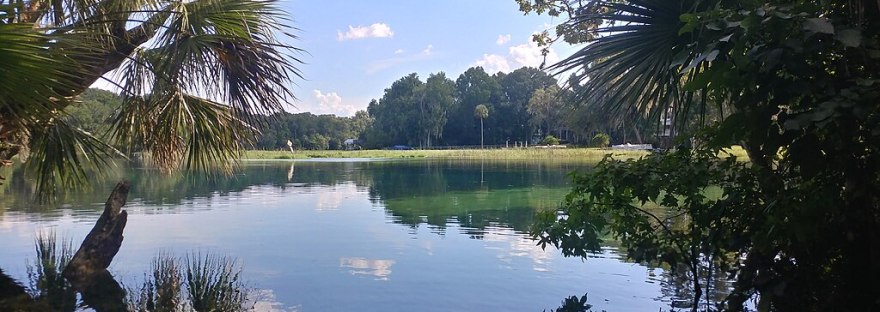
Image: A view of the river from a kayak. User:Best Kayak Accessories, CC BY-SA 4.0 https://creativecommons.org/licenses/by-sa/4.0, via Wikimedia Commons


Here in LS towers we run rapidly away from talking animals and speaking objects and we have had quite a number but this was simply too good to refuse. The tone of it is brilliant and the style is irrisistable. We don’t normally accept stories with a message that is so strong but this was so cleverly woven into the narrative and with such clever humour that again there was no way we were going to turn it down. Well done indeed for making us swerve from all of our usual dislikes with this wonderful story. dd
LikeLike
Thank you, Diane! You are correct that soapboxing, lecturing and op-eds seldom work. By letting the animals speak for themselves, I hoped to take a different tack.
Claire
LikeLike
Hi Claire,
You eased us into the message. When it comes to environmental issues we are normally dictated to. This is clever. The imagination you have is wonderful and it all comes together quite brilliantly.
As Diane has said, the talking whatevers have a hard time getting by us but we couldn’t let this one pass!!
All the very best.
Hugh
LikeLike
Claire
I rooted for the animals (and still do), but with people-like behaviors around, there was only one real ending. Absolutely brilliant–one of the best.
Leila
LikeLike
Keep rooting for the animals, Leila! The river in the story is real and the threats to its water quality and wildlife were not exaggerated. Many thanks for giving this story a wide readership.
LikeLiked by 1 person
Claire
What a well written and informative story, with a powerful opening establishing a confederation of affected animals against the humans bent on their destruction. I only wish we humans where that smart or coordinated. I’m afraid we don’t even care about our own welfare. Nice job! — Gerry
LikeLike
Thank you, Gerry! Our welfare is inexorably tied to their welfare. We tend to forget that when we Smash through the woods with our Caterpillars and ditch witches.
Claire
LikeLike
An imaginative environmentalist work. Excellent imagery and a complete narrative arc.
LikeLike
I am honored to be called an imaginative environmentalist. Thank you, David!
Claire
LikeLiked by 1 person
As a resident of Florida, and a respectful observer of its wild areas and wildlife, I really appreciated the knowledgeable and imaginative conjuring of this story. The clever wordplay and poetic nature of Claire’s writing is always a pleasure to experience.
LikeLiked by 1 person
I really enjoyed this story because it is so true and painfully applicable today. You feel the tragedy of our thoughtless actions on animals whose very lives depend on how we treat our Mother Earth.
LikeLiked by 1 person
With heart-breaking poignancy and superb detail, this story lets the river and the animals show the damage of human desire to enjoy nature. While reading, I envisioned an illustrated children’s book that would doubtlessly effect a change in attitude and help preserve of such prolific, wondrous, and irretrievable life and beauty. Beautifully written and conceived, Claire!
LikeLiked by 1 person