
“You are not here to become a man, because to become a man you must first learn the rules of love,” Vikram Paya, the best of us, began on the first day of the Dhoon School Weekly Newspaper class. “No, my old sons of Bombay, my riotous banchods of Delhi, you fish-eating Bengalis, and the rest of you celestial bodies, suburbanites, the few villagers—you are here to go to better places, because, after all, The Dhoon School is but a waiting-place for Cambridge, for Oxford… for the lucky few of you—here, you will not learn to be great men but exemplary boys…”
That was the first I had heard from Paya, but even then I knew that he was mistaken, his young, pernicious eyes hiding the truth about the place, the name of Dhoon, the history that lay in these red walls… I knew that it wasn’t a means to an end but an end in itself; I knew about this place, that I would forever long for it for years thereafter, not for enjoyment but for the feeling of being alive, of feeling flesh and bone with your fellow student and knowing that both of you were in solidarity in your undying, the palpable tension of it all.
The rules of love, the rules of love—how trivial it all seems, now, what old Paya was getting at! The Head Boy and the editor of The Dhoon Weekly, he was the amalgamation of the romantic ideals that burned in us all, those rich and those poor, the toppers and the flunkers; for what united us was the feeling, the sentiment, that we ought to be great, that we were not chosen at random but picked from this burning riot of a country to lead it into a new age—at least for those of us who did not flee for the New World! Aha, now some of you have been caught in my caw, you sellouts, you thugs….
“You kala southies are all the same with your rudimentary numbers and second-tier Catholicism, your beef-eating, Hindu-hating, Malyaman-speaking, tongue-clicking nonsense…” Vikram Paya, the best of us, in the day past his day, would say over our shoulders as we drafted articles on pages for print. “Bring me some good work. I should have known better than to assign scholarship kids to the goddamn centerfold.”
Pinku, the meekest of us all, quivered under Paya’s pressure, those longitudinal eyeballs scorching the poor Bihari as his mouse shifted on the pad. “Sisterfucker,” the young boy muttered under his breath, the palpations of syllables stretching out into dusty newsroom air. “Paya’s got a hard-on for us today.”
“Be quiet, you retard, ” I said. “He will skin your balls and eat them with his goat curry.” The boy was silent as Paya circled away, his figure creating a shadow from the light that came in through the windows.
“Boys, boys, boys,” Paya said, his voice booming in the small room, the light of the computers reflecting across his perfect, angled face. Then he paused, and silence enveloped all, for what is silence but the preposition to violence, silence like a curse, an omen of all that is worse to come. “You young bucks needn’t be afraid, for I only demand of you what I demand of myself… and if you are wise enough to listen then all of the promises of the West will be revealed to you: blonde-haired English girls, brunette Americans, and then you will be Kings again, like you would have been before the Ingrez arrived and raped our dear Hindustan…”
And then he went on, Paya, on his old anti-colonial rant, because, after all, it was his grandfather who was a highly-esteemed clerk before the British arrived and took over the bank and put their blonde-haired little pixies in charge, some genial sprites from the North of England where vowells extend until they threaten to break under the weight of their own excess. Then, the family fortune crumbled only to be slowly rebuilt by Paya’s father after Independence, but they, being the angry kind, never forgot what was inflicted upon them, their rage going against their Gujarati tendencies, even though Paya’s grandfather had walked with Gandhi, had held his hands in his own…
Yes, and it was I who had to comfort young Pinku after a particularly painful bashing, after Paya had gone in on him like a wolf to a dove, ripping apart sinews, making do with bones and feathers. That night in the dorm room, we had begun drinking and cursing the name Paya, the resentment that the old clan still held in their jowls as they scooped lamb biryani mournfully into their open, facetious mouths, the sides of their face twitching intermittently. Young Paya, young, industrious, Paya, how have you become this way?—we would ask in our drunken stupor, and the night would stretch out before us: the subtle clinking of glass and ice, then cold nectar poured in cups of snuck-in Vodka, sweet and bitter to the taste, that illustrious dichotomy of love and hate. Then, drunk on love, we would quietly resign to the night, wherein our respective futures would appear before us: the promises of Oxford and Cambridge, the phantasmagorical depravity of it all, receding to our limber, boned bodies. At last, all was quiet.
***
That morning, at breakfast, Paya was in a particularly good mood. I didn’t really understand why, but it was soon quickly revealed.
“Paya at Harvard, Paya at Harvard… you can keep all of your Oxford offers!” the boy sang as he served himself a waffle. “All will see jo tum kahate ho main vahee karata hoon.
What you say you do, I do myself. It was hard not to believe him, old Paya. A crowd began to circle. “Lo’ and behold my brethren, my lovers and my haters, my friends and my foes, my comrades and my concubines, for I have done it all right here, for you, to show you all that is possible…if only you just listen to me and follow my lead.”
His last syllable, that final, pregnant pause, was filled with so much deliberation that I knew Paya himself could hardly believe it, ascribe to it anything other than divine providence. He gave it all up in that last sound; that part of a word was all it took for me to realize that Paya had finally surprised himself, and now, to me, he had given it all up—he no longer believed like we all thought he believed, only I was the singular person to realize all this.
But if Paya could do it, I sensed that the masses of brown bodies cloistered around him were starting to think, they could as well. There were smarter boys in there than Paya, stronger ones, kinder ones, but the problem was that they weren’t raised like Paya—he had come into the world believing himself to be a King, and I really thought that he was until that final sentence showed me what he really was: a fraud.
***
The invitation was slipped under my room one day, by some indistinct, indiscriminate hand that I couldn’t recognize before it too slipped away, leaving nothing but the memory of a shadow. It read:
YOU ARE INVITED TO VIKRAM PAYA’S GRADUATION PARTY TOMORROW
12 PM SOUTH HALL. BE THERE OR BE A FOOL.
I laughed at the ego of old Paya. He was like an old dog that still barked mournfully in remembrance of better days. “How have you become this way?” I muttered sarcastically under my breath as I layed down in my bed and stared at the ceiling.
***
When I walked up to South Hall the next evening I was greeted with the sound of boys hollering. The edifice of the building, all red, stood out among the clear blue sky.
“Vishnu,” I heard come out of the room as I entered, my own name foreign to me as if it was another’s, as I had become, at some point, somebody else. “Vishnu you are here,” Paya said, and to that I had nothing to say because he was right, Paya, there was no debating that I was there. Even though, years later, I would argue to myself during perhaps the more desperate hours of night that I wasn’t really present on that auspicious day, that somehow I had gone somewhere different, that my soul had left my body for those cursed hours where breath became air and we all joined in celebration of Paya’s depravity, his accomplishment resonating in us as if we all would be going to New England that fall, as if we all had, with a resolute uncaringness, reinvented ourselves once more, cleansed the wretchedness of India from us and were born again into the new world, where caste was obstructed, where money was made—not like the money of India but new money, the kind that could really change you.
Paya handed me a red cup and put his hand on my back, leading me to the center of the party. There, the mass of linen shirts divided upon the sight of Paya as if his ambition moved bodies the way force moves mass.
“A lot of you may think,” Paya began, his voice resounding in the quiet room. “That I do this all for myself, but it isn’t true… He paused and was silent for some time, taking in the group of boys who watched him eagerly. “I do it really, for all of you. It has been the gift of a lifetime to know all of you boys.”
I thought to laugh for a moment, but I was able to restrain myself. If Paya loved us like he said he did, surely he would come back and visit? Surely this farewell would be unnecessary? Surely these sentimental moments, like all sentimentality, were useless in this world of hurt? I thought to myself for a while.
“But gifts aside, there is something to be done, because I do not want to leave you all without someone to lead you… And a true leader, as we all know, is someone who has suffered.”
Then, with a quick motion to a group of boys standing near the entrance, a chair emerged where Pinku was blindfolded and gagged with a satin ribbon. “Lucky for us, someone has volunteered, so righteously, to lead you all in this new era. Now, we are all witnesses to his trial.”
A cloth was placed over the face of Pinku who squirmed with discomfort. A bucket of water stood on the side of the chair.
“Vikram,” I said, my voice clear and desperate. “What are you doing?”
“Just watch Vishnu. The boy has to suffer, like I have suffered. If he wishes to take my place…” Paya stood to the side and motioned to the boys to begin. Slowly, the bucket of water was emptied onto the cloth, which was held on each side by a boy, their dark, angled faces shining under the lights.
It happened so quickly that I couldn’t even protest. But It wasn’t that it happened, it was that it happened again, and again, and again. The water kept falling and Paya kept laughing. Pinku squirmed, but he was held down by the boys. And I didn’t do anything about it, all of this, and I still don’t know why I didn’t. It was this thing in my life that happened, this horrible thing.
The water kept falling and my heart kept breaking. Paya was laughing. Pinku was dying and I was dying too, that day. And when he finally was motionless, when all of the laughter subsided, all I can remember is Paya’s face. A genuine sadness overtook him, and it was the most beautiful expression I had ever seen. His heart had finally broken. He had finally stopped believing. The schoolmaster was called. Pinku’s pulse was checked. When it came back flat all I could hear was Paya’s cry. I can still hear it, even now.
***
Years have passed. Time has overtaken us all. I have known many lovers since then, held many faces to my own. Yet it is Paya who I think of; it is Paya who has broken my heart the most. He fled in the wake of Pinku’s death, back to the coast of Gujarat where he is from. He never boarded the flight to America. I think of his empty seat, if the stewardess paused there for a moment and pondered to herself the story behind it, the vanquished nature of a dream. In these hours of night, he haunts me. If I wished to, I could see him, but I don’t think I can forgive him, yet I don’t think I can stop loving him either.
I live in New York now. I have one child with a woman who I was never in love with. The woman that I do love left me when I told her this story, about Paya, about how I had done nothing to save Pinku.
But I am starting to think that the three of us were fated to be lonely souls—me, Pinku, and Paya—that we were destined to be together and apart, that those hours we spent together signified something more. I try to discern it, but get lost in the confusion.
When I’m in New York, when the rain comes, all I can think of are the hours in those red walls, when the monsoon came and swept us all up in the history of a country we were all so eager to leave. For a moment, we were all together and everything was perfect. In constant motion, one can find stillness. In chaos one can find bliss. In wanting, there too is gratitude.
I pick up my son from Bronx Science and I see his face emerge in the mass of bodies, and I can’t help but feel the beauty of it all—of youth, of life, of wanting and breathing, of living and dying, and I am swept up in it completely.
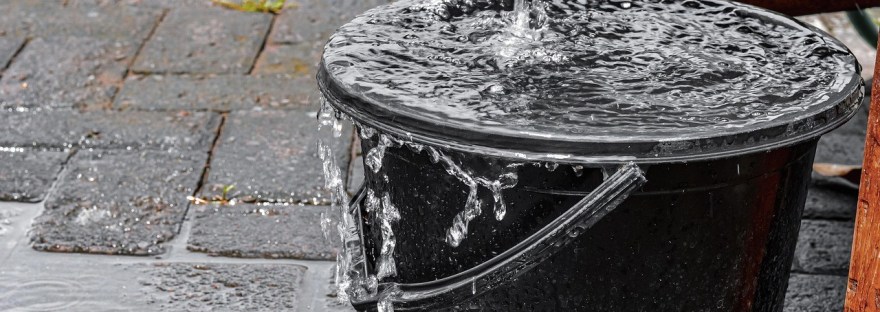
Image by Dhito 10 from Pixabay – a black bucket filling with water.

 literally stories
Hi Arjun,
This was a complex story within a simple scenario.
The leader for want of a better word in a hack-handed way was trying to prepare the other boys for, well, life, I take it. But as always, power is either abused or misused and I think that was what was at the crux of this.
I do wonder how many incidents of death by waterboarding has happened that we will never know??
Very well written and thought-provoking.
All the very best.
Hugh
LikeLike
Arjun
Tremendous depth here. The “incident,” although unexpected, makes perfect sense when viewed as a whole. The dialogue between the boys is perfect.
Leila
LikeLiked by 1 person
A disturbing story about rights of passage that can so easily go wrong when passion is mixed with inexperience and arrogance. Very thought provoking – thank you – dd
LikeLiked by 1 person
A strange story, well-told. And a moral lesson: we have all spoken when we should’ve been silent, and been silent when we should’ve spoken. Thank you.
LikeLiked by 1 person
A tragic tale, beautifully written. An evocative and disturbing start to the week!
LikeLiked by 2 people
A disturbing and haunting look at ambition, cruelty, and youthful longing. Morally complex, just like life.
LikeLiked by 1 person
Arjun
You know how a foreign touch improves the original language? Conrad. Nabokov. Achebe. How the diction isn’t quite right or is too right — and it’s so wonderful. I found your piece less about ‘coming of age’ or ‘rites of passage,’ but about colonialism and how we sapiens tribalize ourselves, put borders and armies up, separate our cultures one against the other. How can we ever understand each another even though we are essentially living the same confusing lives?
You write beautifully of the mystery “–of youth, of life, of wanting and breathing, of living and dying, and I am swept up in it completely.” — Gerry
LikeLike