The sirens didn’t bother me because I was busy thinking about ending things. On the morning of my 573rd cycle, we rolled out of our threadbare bed with a rumbling belly. Breakfast went down stale and seedy. Military rations were all we’d managed to trade for lately; a half-eaten block of Nutrient-Toast mocked us on the counter.
We peeled back the rags covering the red anti-UV windows, welcoming the early scorch. Shadows danced on the peeling wallpaper—a dark Victorian damask his ex-girlfriend had chosen lifetimes ago—and squinting, the place didn’t look half as shabby as it was. The apartment was designed in the twenty-second-century style with climate-resistant materials; it remained useful in its second life as squatter’s ruins. I liked it best out of all my homes because in the mornings, we lay in bed baking comfortably like lizards under a heat lamp. I’d grown so tired of utopia. He didn’t notice the beauty of the place because he had the rot: a brain sedated with the effects of radiation, his gray matter growing sticky around my body.
The glass moaned against the forceful morning heat, and my host reeled from a similarly unceasing cranial pressure. He knocked the crust of the Nut-toast to the floor and slammed our skull into the counter repeatedly. I allowed him to do it for a while. Mostly because I was imagining how another human, somebody better, might be out there who could look into the mirror, see me swimming around the pupil of their eyes, and smile. But there were more pressing matters to ponder on Day One of the new cycle. My scouting mission had ended, the hive ship had docked on Earth, and our cabinet was empty.
“Stop that,” I snapped on the fifth thud of skin on wood. “Focus on the deal. We need creds. I’m sick of Spam.”
He rose from the table, humming a tune from a faraway memory. I watched his thoughts on the big screen cinema of his brain, but the connection quickly turned fuzzy. Our first business in weeks was only a standard delivery. We were tired of living like rats, rooting in the garbage behind the apartment and swiping cans from the women’s shelter on 18th. The deal was for one dose; enough Pluto for the average fallout survivor to slumber for days—dreaming of a better life in a cloudy unreality—without up and dying. With quivering fingers, he packed an envelope of fine, yellow crystals into a paper bag. We didn’t say what we knew: he grew weaker by the day, and force-feeding him endorphins, cobbling together the fried wires of his brain, wouldn’t last us the entirety of the planet recolonization cycle.
The old woman who lived seven blocks down wasn’t one you’d pick for a Pluto user. She had cats and a porcelain doll collection displayed in the foyer. In the before days, she tipped us richly with sweet biscuits and Marlboro Reds. Afterward, we’d stop under the crumbling overpass to chain-smoke because I always managed to swipe an extra drag. It was easy; she was half-blind and hopeless when she got high.
“We should come back when old Lucky’s asleep,” I would say. The nickname tracked. Grocery stores closed, plagues developed new strains, cyber currencies crashed, and somehow, the wrinkled miser lived on.
“Don’t bite the hand that smokes you up,” he’d counter. Resistance was easier for him before the rot took hold. He used to tell knock-knock jokes and sing Sinatra in the shower. Then he was a body draped over me like a tablecloth.
The wind howled and the world hummed with sirens on this particular Day One. Delivery drones pierced the din, buzzing aimlessly above the ruin. They didn’t have contingency codes for when takeout orders ceased and docking stations burned to the ground. In comparison to previously recolonized cultures, the artificial intelligence on Earth was rudimentary. I loved it anyway. Humans made up for their stilted progress with pluck and a charmingly raw quality, like the feeling of voraciously gripping life with white knuckles.
I smelled a change in the air, a vile stench of burnt hair and metal that told me the consumption cycle had begun. We navigated streets overrun with screaming folks from a refugee settlement nearby. A woman with a baby strapped to her chest fell on all fours before us, retching onto the pavement. Two blocks over, past the chaos and the abandoned construction site on Shore Avenue, a man eyed us from the doorway of a corner store.
“You’re dead! It’s in your head!”
“Suck a fat one and die,” we said and walked on.
My host hesitated as we reached Kalorama Street, daring to look up. Cupped over the Earth like a steadying hand, the hive ship had appeared in the black expanse overnight. It cast a reassuring shadow over the city. I smiled, gazing up at her, having missed the familiar lines of her shape. Hunger pangs urged us forward. Our kind of love had a way of devouring everything it touched.
Our last regular buyer greeted us with a wink and a flash of yellow dentures. We entered a small sitting room and placed the Pluto on a dusty coffee table. Lucky rushed into the kitchen.
“Sugar and cream?” The three of us liked to observe the niceties and pretend we didn’t see the gnarled horror on each other’s faces. We sat on the sofa in a patch of cat hair.
“If you got it.”
Lucky returned with a tea tray, chatting it up about the midwestern family hiding out two houses over and the end times. We slurped our mug and wondered when she’d shut up and pay, where she found the dairy cream, if it was a dupe, and what she traded for it. Lucky didn’t hold out long enough for a second cup. She retrieved a healthy pinch of Pluto and smeared it into her gums.
Her dentures click-clacked. “Nothing like a hit at the end of the world.”
Lucky slumped against the sofa. We waved the metal gadget on our forearm against hers, swiping fifty extra creds.
“Consider it a tip for stellar service,” I said.
“Mmmm.”
Our journey home welcomed a meek sunset.
“I love you,” I hissed, out loud this time. The rest of my kind had entered the atmosphere, exciting something strong and capable within me. We might be okay after all, remaining lovingly entwined until this cycle was complete.
“Please,” he whimpered.
Lucky’s creds were good. We traded with the female couple in 14B for six cans of corn, a half-eaten box of Cracker Jack, and two potatoes. I laughed; it was a good con. Any existing currencies–from SachsGold™ to black market creds like citiyen–would cede meaning once human civilization fell rapidly and irreparably apart.
He didn’t laugh with me, which was upsetting because we used to enjoy being cruel together. He ate his twin in the womb, you know. I only found out after we’d met: my scouting capsule had sliced open, and I’d careened invisibly through the sky, falling into his open eye like a raindrop. Just like that, our DNA spliced and I became half of him. I explored his past as one would leaf through a crate of old records. We were a good match. I liked to think I could sense a kindred soul in him from the beginning.
#
We stood in the ramshackle vestibule of our apartment building, gazing out. A sulfuric haze blanketed the ground, seeping through the broken glass of the front door. The temperature climbed steadily. Earlier in the day would’ve been better, and I had told him that, but he overslept anyway. He was absent-minded when we first got together, and it only got worse with time.
We arrived at the park sometime in the late evening; I didn’t know when precisely because it was always dusk by Day Six of the cycle. We roamed the grass with molasses legs until the buyer emerged from the shadowy treeline. Lucky had vouched for her; we hadn’t heard from our favorite regular since.
“You’re late. You got it?” Her voice wobbled. A curly red tendril escaped her hood.
“Come over and find out,” we said, and her eyes grew as wide as saucers in Lucky’s tea set.
The girl dropped a pillowcase—lumpy with unknown foodstuffs—at our feet. We tossed her the bag of Pluto and seized our spoils. Deal done. Our insides gurgled, gnawingly empty, but we lingered because the girl was strange, clean, and unencumbered by a parasitic glint in her eye. She settled on a park bench, jaw hard and unyielding like the whole world rested on her shoulders. Like the cacophony of sirens and falling debris didn’t scare her, and maybe she was strong enough to watch civilization molt, unveiling something better.
“It doesn’t help,” my host coughed. I usually did the talking.
Red glanced up. I gestured to the bag of Pluto wrapped in her fist to complete his point. She gave a hollow grin that didn’t reach her eyes. We joined her on the bench, inching closer as if approaching a housecat. She was a slight human buried under a large jacket that could’ve been her father’s. It was easy enough to imagine pushing her down, snatching the Pluto, and dashing away to our shabby oasis. We pulled out a smoke instead and all three of us relaxed with a hit of the good stuff. We parted after a while when a crescent hitched in the sky. The girl called to us over her shoulder, raising the bag of Pluto in a salute.
“Thanks. My mom needs it.”
We didn’t ask why she bought four doses.
“Hope you make it,” she said.
“You, too.”
We trudged home. I thought about Red and then Lucky’s talk before she took Pluto: refugees and the parasitic infestation in the city center. He tried to hide his thoughts, darting delicately on the periphery of mine, feigning indifference, but I saw through him.
#
Day Sixteen was a tough one. He wanted to stay in bed, wrapped up in a homemade quilt we’d swiped from a grave two weeks prior. The rag-tag resistance weakened, and the sun became a dim, leaking balloon. The world was nearly ready for us, but he didn’t care. He thought a lot about wasting away in our tiny apartment and his old college girlfriend, all the sweetness of the before times. His memories were hazy around the edges and riddled with holes. I watched them like a montage.
“No one understands you like I do,” I reminded him. “And they never did.”
He shrank away, feeling irreparably melancholy, grieving something he thought I couldn’t understand. The Nut-Toast had a strong, desiccated taste that night. We tried to share the last piece, but I was starving.
“Hey,” I snapped our fingers to pull him from a painful reverie. “Did you hear me? You ruined your world first. We’re just trying to love you back to life. Who else would do that? Who? Tell me who?”
We began lassoing rogue food delivery drones and pilfering their contents. He became alarmingly gaunt and cloudy-eyed, staring listlessly into the mirror like he’d forgotten I was there at all. We didn’t leave the bed all morning on Day Twenty-Nine because the air tasted unlucky, like static and ash; instead, we tracked the cycle from the window. It was a quiet view. Most survivors dared not expose themselves to the weather; scattered showers fell from our hive ship, carrying imperceptible bodies yearning for hosts.
The sky cracked open around midday, and someone appeared beneath our window. Red lay still on the grass, a starfish with wily scarlet tendrils growing from her head. She didn’t care about the hive ship or how it looked at her knowingly, biding its time. I carried us down the stairs, out the side door with the broken lock, and into the wetness. Red squinted as we approached, eyes bleary with synthetic melatonin and slow-down chemicals.
“You again. S-sup,” she said with Pluto’s fat-tongued signature. We laughed and joined her on the dead lawn. The three of us reclined, talking and saying nothing like young lovers do when words fail, and feelings rush like a monsoon. Red wagged her chin at the black shroud hanging above us.
“What’s your bet for the end of humanity? I say two months, generously.”
“I’ve been thinking about this,” I said. “The Earth is so beautiful. Perhaps it’s the people who ruin it.”
“A little morbid, but I can’t argue.”
“That’s what makes you so smart,” I said. My host chugged along after our conversation, forgetting what to say as soon as he found it. Red chuckled and then grew still. She reached for our hands.
“My mom passed on yesterday. I’m all alone now.”
“You don’t have to be,” I said. Something colored Red’s gaze. Maybe she knew then there were three of us instead of two, recognizing the wriggling in our eye, the way our smile looked too bright, uncanny against our wilting face. She really might’ve been the last one in the world who was truly alone.
#
I worried someone else would claim Red before I could end things; she glowed like a flower to a honeybee, and our hive was a romantic species. I forced him out of bed early on Day Fifty-Six of the cycle, and he complied readily, a limp marionette. We skipped the secret path under the bridge and took the quicker exposed route down 16th Street. The resistance had been reduced to a fable; a prayer whispered on the winds near survivor holdouts. Surely, someone in a bunker somewhere mumbled a plan about rebuilding, but they said it softly around a mouth full of dehydrated potatoes like they already knew we’d stripped their dying world for something new.
We curved the corner and entered the park to meet Red. It wasn’t the portrait of romance we pictured. She jerked around on the grass, her face withered into a gray-skinned cherub. The corners of her lips were stained yellow with Pluto. I hated seeing a host wasted like that. I hated him more for leaving me alone to witness it. By then, my host was only a meek presence in the dark, diluted and used up like all the rest. All the love ran out, belly empty, and head full of rot. We did our best to forget about it, but the end inevitably appeared, having become a third lover, a quiet divide blooming between us. It was time to settle up, and the price was always one-half.
He died when I left him. It was sad. Blood spilled from his eye socket, and the body hit the ground like a shed skin. Our lifeblood spread outward into the grass and Red’s hair, wetting the dirt into maroon clay. I was swimming. A crashing void closed around me, and when we opened our eyes again, Red and I smiled. It was easier to have company. We were in love, and we had the world to ourselves. It was always beautiful at the beginning.
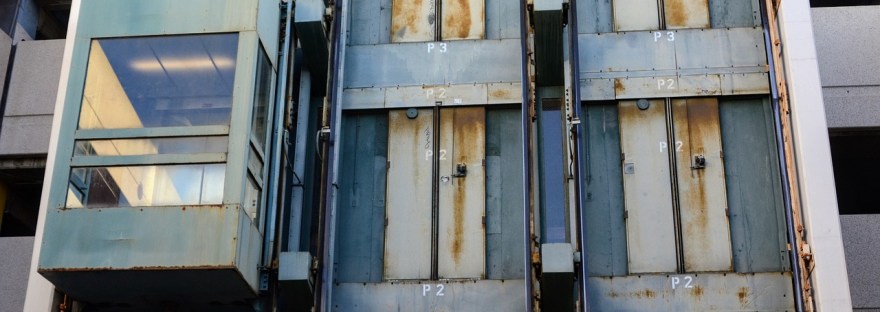
Image by jacobcook from Pixabay – Ruined building with boarded windows.

 literally stories
Karley
This is a great little story that is loaded with metaphors yet entertains on the surface level as well. The caring, well, Parasite, has seldom been as well presented.
Leila
LikeLiked by 1 person
Highly inventive and a very well described world. I like the savvy touches such as ‘SachsGold™’. I’m not generally a big reader of sci-fi, but the slightly cryptic love story in this really carried my interest as did the excellent writing style.
LikeLiked by 1 person
Really well-drawn world. A sort of matter of fact acceptance of the happenings that are scary and a terrible sadness on the fate of the ‘victims’ this really did evoke emotions and I don’t normally have that reaction with apocalypse stories. Well done
LikeLiked by 2 people
I wasn’t really in the mood for some horror/SF but this drew me in on the details and the skill in conveying these particular ‘end times’ – very well done!
LikeLike
Hawking thought either AI or aliens would do us in. I’ve always believed it would be ourselves – this story implies it could be both our selves and aliens. An interesting touch here which makes sense is that drugs would be a big part of end times, only a slight extrapolation from the present.
LikeLiked by 1 person
Excellent world-building and descriptions that create an immersive reading experience. The characters are fantastical but somehow believable. Very well done.
LikeLiked by 2 people
Such a fun read!
LikeLike
Hi Karley,
This is very inventive and visual.
Brilliantly paced and an excellent overall read!
All the very best.
Hugh
LikeLike