
Nothing, she thought, could make her feel better than having a nice, long cry in the shower. Nothing felt better than water flowing over and out of her, releasing every negative emotion that drifted into her mind. Hot, cold, she didn’t care; it was the best medicine. The blaze of an inferno and the frost of an avalanche purging every impurity. The only equal? A full day lying in bed, listlessly flipping through childhood memories.
She had spent all her life trying to figure out how to be happy. She wanted to live a fairytale of rolling hills and towering turrets and endless fields of flowers. Poppies would be nice. She wanted to float through life and watch clouds turn into birds and music boxes. Everything pretty and melancholic. A dream world that could never be confused for reality and its mundane horrors.
She believed that bliss–or the closest she could get to it–was found in being surrounded by all her favorite things, the little trinkets she collected and adored. She found a part of herself in the tarnished silver and threadbare fabrics; she held them, and, for a moment, felt connected to the self she longed for but would never be.
She contemplated defenestration, spontaneous combustion, and drowning like Ophelia; she wanted to go out singing madly. She’d love, one day, to disintegrate into stardust, to have a nursery rhyme written in her honor. She strove to embody an angel–a religious icon, a saint–but angels don’t die. They have no physical body, so they experience no physical death. Since her death was inevitable, she wanted it to be lovely.
And she looked lovely, walking the rows of a haphazardly thrown-together flea market, her beloved white dress rippling in the breeze. She’d been there but ten minutes and had already grown attached to a brass candlestick holder and a small statue of a cat.
The people there were beautiful, she thought. The man with the long, gray beard selling antique rifles was charming. The half-dressed woman with missing teeth and a cigarette held carelessly between two fingers was delightful. She was even convinced the baby in the stroller winked at her.
She’d always preferred the company of strangers. Without talking to them, it was easy to imagine they were her friends. She didn’t need anyone to talk to, just someone to acknowledge her existence and make her feel that living might be worthwhile after all. She thought that walking the stalls of these sellers was almost as much fun as her shower cries; she would have to implement more of both of them in her life.
“How much for this?”
She was now admiring a battered butter knife, the handle engraved with roses.
“75 cents for that old thing,” the old woman responded, not unkindly. “Been lugging that around for years. I don’t know what’s made me keep hold of it.”
She’d kept it all this time for me. Just for me, the girl thought. I was meant to find it.
She hugged the knife to her chest, felt overwhelmingly happy, but only said, “Here’s a dollar. Keep the change. You have just made my day.”
The two women exchanged smiles. The older woman thought the younger was the quaintest thing she’d ever seen.
––––––––––––––––––––
Weeks passed, and she was found buttering her bread, knife in hand, gracefully swaying to the Bach she had playing in the other room. This had become a regular morning for her. Since that day at the flea market, she had felt as if her life truly was a dream. The wistful smile had yet to leave her lips.
If anyone had been watching this scene unfold through the cracked, nine-pane window directly across from her, they’d have gone running from the startling, mechanical way her eyes followed the motion of her hand. If anyone had been watching the scene for longer than a few seconds, the urge to run would have disappeared entirely. They would soon be taken by the otherworldly aura that filled and expanded past the room. It was anything but a fleeting feeling; it was a trance that one knew one was under but could not escape from.
But the girl could not take credit for the strangely enchanting quality she exuded. She believed it was the rose-handled butter knife that tinted her world pink. She was not responsible for creating this dream world, a dream within a dream. It was the doing of the knife that now never left her side. She slipped it in her boot when she left the house and kept it under her pillow while she slept at night. In this time, it had already seen as much of the world as she had, maybe even more.
Though the knife had lost much of the visible luster it must have possessed in its earlier life, she could not bring herself to polish it for fear of diminishing its power. Even the thought made her uneasy. She could not imagine going more than a few minutes without it, and she wanted it to stay just as it was, forever. She thought eternity might be had as long as the butter knife remained with her. It was more than a creature comfort; it was a gift from the deities above, an object that held a spirit meant to protect her from all earthly evils. Her particular manitou.
The knife was now set aside, finished with the task of buttering her bread. Her eyes were drawn to it, the handle and the dull blade, only looking away to set her bread down and take a sip of her tea.
Her present lack of inner turmoil faintly reminded her of the time she found a tooth on the sidewalk outside of a gas station. For being such a small remnant of the human body–a molar she thinks it was–it held more power than she ever would have expected. It put her in an abstract state of mind, looking outward and back in time to the event that led the tooth to find a home on the cement. Slipping the molar in her pocket, she had felt airy and almost immaterial. Her life was no longer a concern or responsibility. Her only obligation was to observe the world around her and the inhabitants that made existence all the more surreal.
But now, outside, clouds must have parted, for she and the knife were bathed in sunlight. Is this what divinity feels like? She thought it must. To be suffused with the divine, that was her ideal vision. She felt, in that moment, that she would never feel this good again. She would never feel this light.
Back in the kitchen, the music changed. Bach was replaced by something with low, heavy drums, gradually becoming louder. High on satisfaction and an ensuing pleasure, she stood and began twirling around her kitchen. She spun faster and faster, not thinking of what she was doing. The drums grew louder, almost Amazonian sounding, a war song. Everything a blur, everything a dance. The music became so loud, it had nearly become its own silence.
And then her darling knife was in her hand. Had she been holding it all along? She couldn’t remember. Visions of knights in shining armor and huge trees with gnarled branches and deep voids with glinting spots whirled around the room with her. Or rather, she traveled to these places and back again in a never-ceasing revolution.
They spun together, the girl and her knife, and centuries went by. Men emerged from a Trojan horse. The Silk Road expanded. Murders introduced the Roman Empire. Thieves died by crucifixion. Organized religion spread. Mustard gas was invented. Boys shot their brothers over something called freedom. Students risked their lives to attend school for an education that neglected their own capabilities.
Death and destruction flooded the room as the girl and her knife became an inseparable fog, only stopping when the pain hit, and the room darkened. The walls continued to move, the images bleeding into one another, yet she was still. She was sprawled on the kitchen floor, in a pool of her own blood, an engraved rose handle sticking out of her chest.
She had reached the epitome of beauty, her ideal vision, and a reflection of all that has come before and all that will follow. She became eternal.
––––––––––––––––––––
The body was found a week later, a bloated, bloody mess. Evidence of a physical form that is anything but eternal, definitely finite. But undeniably, the corpse didn’t seem quite dead.
When the coroner had finally arrived, he didn’t feel as if he was walking in upon a scene of death. Compared to all the other dead bodies of which he took care, he was almost inclined to think this one still had a chance at life. It didn’t make sense; he knew there was no heartbeat, no pulse. The corpse showed all the usual signs of decay when left in the open for many days.
The coroner stood there, sadly examining the loss of the good soul before him, when he came to a conclusion that had never crossed his mind before: this isn’t a loss at all. The soul still exists somewhere. The energy of this young woman echoes through time and space. The reverberation was palpable in the very room in which he stood.
He could feel a strange sensation beginning to overtake the rational part of his brain. He felt compelled to dance around the body like a tribal member around a fire. He wanted to partake in a symbolic action of life, death, and rebirth. His job revolved around death, but, this time, he believed life and rebirth were present too. He felt more grounded in his own mortality than ever before.
The coroner had just enough self-control to not break into a frolic. As much as he wanted to, he refrained, conscious that someone might be watching him. Instead, he leaned down to gaze into the open eyes of the corpse. Beautiful, beautiful. His eyes traveled down to the nose, but then he realized there was no putrid smell in the air. He should be wrinkling his face in disgust, but, if anything, the room smelled faintly of homemade bread. And rose petals.
Looking around, he imagined this kitchen being a place of utmost comfort. There were floral teacups on a shelf and a jar of dried oats on the table. To further this thought, he imagined hearing classical music drifting in from down the street.
Everything wonderful and nice could be had in this place, this one little corner of the world. Even stirring a pot of soup on the stove would be an experience of all-consuming serenity. It must have been this body’s–this young woman’s–doing. She poured her heart into creating a heaven on earth, a place no one would be tempted to leave.
But she did. She died in this earthly heaven, and the coroner could only hope that she had found another, something more celestial.
Just as he was wondering how long he could stay in this room without drawing suspicion, the light changed. Something was glinting in the sun, flashing him right in the eyes.
Holding his hand up as a visor, the coroner saw something he had overlooked: an engraved rose handle. It made him think of baking cookies at his grandmother’s house, an activity he loved so much as a child but made him miserable with nostalgia to think of now.
With his sense of caution blown through the cracks in the room and out on the gentle breeze, the coroner snatched hold of the handle and pulled. The knife came out of the corpse’s chest in a deep, unsettling flow of sound, something very much like a sinkhole swallowing a part of the earth.
For a moment, all remained the still. But then, in a burst of air, the most horrific smell flooded out of the body and engulfed the coroner. Thinking this to be a portal to Hell, he ran out of the door with the knife in his hand, fire and brimstone close on his heels.
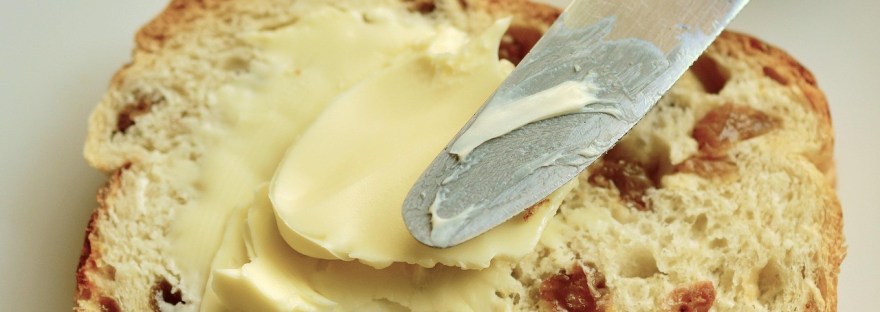
Image by congerdesign from Pixabay – knife blade spreading butter on a slice of bread.

 literally stories
This is a wonderful example of imaginative writing. The prose is lyrical and pleasant to read and the magic flowing through it is enthralling. Lovely stuff. dd
LikeLike
Thank you! My favorite part of writing (and reading) is creating sentences that are beautiful, even if they were to be separated from a plot.
-Jordan Eve
LikeLiked by 1 person
Absolutely astonishing! So lyrically powerful it takes the breath away. I’ll not quote any neon lines as there’s barely a line that doesn’t shine. A writer to look out for, no question – & with more to come in LS one hopes.
Geraint
LikeLike
Thank you for the kind words. I hope to make LS a home to more of my work too.
-Jordan Eve
LikeLiked by 1 person
Jordan
Brilliant, sense making look at an injured mind making a long crash. At first the ending seemed divergent, but it soon made sense as well.
Leila
LikeLike
Thank you. At times, it both does and doesn’t make sense to me too. It all depends on my mindset, surroundings, and even what I ate for breakfast on the day that I read it.
-Jordan Eve
LikeLiked by 1 person
Hi Jordan,
This is a story that could be studied. It is magical but with a human reality regarding hopes and wishes.
There are so many ideas in this that the reader is bombarded with images and ideas.
I thought on hope, fears and infatuation around outcome was at the forefront.
As Geraint says, there are so many lines in this that are quotable and memorable.
I will however point out this one:
She’d always preferred the company of strangers. Without talking to them, it was easy to imagine they were her friends.
This covers all the times of life when loneliness niggles!!!
Excellent!!
Hugh
LikeLike
Thank you so much. I like to think the quote you chose can make us feel more connected to living, breathing things, in general. Even with family and friends, living in this big world can be quite isolating. It’s rare to be truly and properly perceived by another human.
-Jordan Eve
LikeLike
Beguiling with that touch of fantasy leaching into horror at the end – very well written!
LikeLiked by 1 person
Jordan Eve
You created a great character in this piece. She reminds me of the protagonist in a Tennessee Williams play, the Glass Menagerie or Streetcar Named Desire. Your character is completely unique, but also seems to have connections to other literature that are not obvious. That is the best kind of character to have, by far.
I was super-impressed by the prose style in this piece. It fits the consciousness of the character perfectly. It has a wild sweep that’s also wonderfully under control. Images, thoughts, reflections, and actions all merge into one, just like in life.
I love how this story relies on the prose style and the character, and NOT on an outwardly driven plot. Short stories are perfect for exploring the interior worlds of unique, individual human beings, and as such, you have created what could (or should) turn out to be an award-winning short story.
The shift at the end of this piece also works perfectly. The introduction of a new character from the outside was skillfully done and it adds great layers to this piece, like in a David Lynch movie.
This is a story about the human mind, and the human soul, which in both ancient Hebrew and Greek meant “life,” or “breath.” The drama is the drama of a life, and the focus here is intense, and beautiful, even in the pain. (“Death is the mother of beauty,” wrote Wallace Stevens, and by that he meant literal death, AND other kinds of death.)
Truly impressive work at all levels! Bravo!
Dale Barrigar
LikeLike
Thank you, Dale! Even though it is a creative endeavor–or maybe especially since it is a creative endeavor–all writers need validation. We need to know we create human connection through our works, and you have just done that for me. All your praises and comparisons of “And She Was” make me feel like I can do anything. Thank you so much.
LikeLiked by 1 person
Jordan Eve
So glad you found my comments valuable! As you say, all writers need validation some time or other just like everyone else, and one often feels like one is only shouting into another void; so it’s great to know you found the comments valuable.
Because of its mysterious power, I was drawn back in for a second full reading of “And She Was.” (I had already reread certain sentences and paragraphs before that.) This is, truly, one of those pieces that catches the reader the first time, but must be returned to in order to get its full effect. Your main character in this story is an awesome blend of the typical, or representative, and the individual, or idiosyncratic and unusual, in the best of ways. The effect is uncanny, like meeting someone you both know and don’t know simultaneously on the street.
I also had a chance to explore a little bit of your website, “Perpetual Girlhood.”
My amazement continued as I was knocked out by the beauty of it, both the writing and the visuals. Anyone reading this should check it out – wonderful, wonderful work at all levels.
You are, clearly, an unusual writer with unusual levels of both talent and spirit. (When I say “unusual” again I mean that in the best way possible, because it gestures toward both rarity and originality, almost but not exactly the same thing/s.)
Best of luck on everything you do, you deserve it and then some!
Dale
LikeLiked by 1 person
“Unusual” has officially become the best compliment I have ever received. Thank you again!
Jordan Eve
LikeLike
Jordan Eve
I want to put in another plug for your wonderful website Perpetual Girlhood. Anyone reading this should check it out.
It’s filled with already-brilliant work by an up-and-coming writer who will surely be heard from big time, I do believe.
And it is absolutely “unusual” (in the best of ways) because of both the spirit in the work, and the quality of the prose style. And the visuals are beautiful, creating great atmosphere and tone, interacting with the prose in a dynamic way.
(The website is also wonderful for all the things it isn’t, such as filled with the usual B.S.)
Thank you!
Dale
LikeLike
Atmospheric, memorable, and poetic. Love the ending where the coroner resisted the compulsion to dance and ended up engulfed by the stench. Life’s a lot like that.
LikeLiked by 1 person
A memorable piece. The connection between the two pieces – the rose-handled butterknife, a most memorable object in itself. Wow.
LikeLiked by 2 people